Apollo 14 🌖 : un RETOUR triomphant vers l'exploration lunaire | FS𝕏 #32
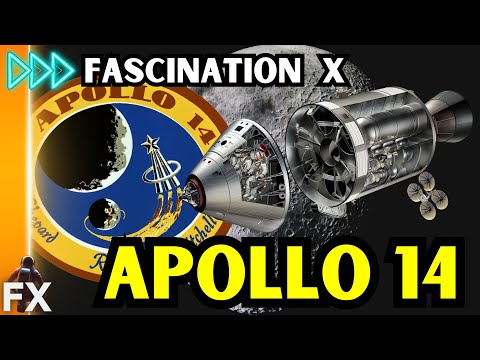
Video from the channel Fascination X about Apollo 14, linked on its Above Ten Thousand entry. Duration: 9:59. Language: French. Video type: Documentary.
What it's about
A recap of the Apollo 14 mission, the first to explore the lunar highlands. With it, Alan Shepard, the first American in space, flew again and became the fifth American to walk on the Moon. He was accompanied by Edgar Mitchell, lunar module pilot, and Stuart Roosa, command module pilot.
Historical context
The video contrasts Shepard's 15-minute suborbital flight in 1961, aboard a modified Redstone, with this nine-day journey aboard a Saturn V. After the near-disaster of Apollo 13, and during a 10-month pause, NASA redesigned the oxygen tanks and added a third one, a backup battery and emergency water. With the lowest budget since 1962 and two missions canceled, the mission could not afford to fail.
Key facts
The launch, on January 31, 1971, was delayed 40 minutes due to weather. Roosa needed six attempts and nearly two hours to dock with the lunar module; the most likely cause was a small piece of debris blocking the latches. Before the descent, an erroneous abort signal was resolved with a patch that Don Eyles, an MIT engineer, wrote in under two hours and that the crew keyed in by hand. Antares landed at Fra Mauro closer to its target than any other Apollo mission, tilted nearly 7 degrees. On two excursions, the crew deployed the ALSEP, debuted the Modular Equipment Transporter, the first wheeled vehicle on the Moon, and covered nearly 2.5 km on the second, without reaching the rim of Cone crater. Shepard took golf swings with an improvised club. After just over 33 hours on the surface, they returned with nearly 46 kg of samples. They splashed down in the Pacific on February 9, 1971, and the command module went to the Smithsonian in 1974.