Did you know…
Why does an astronaut?
Short answer
The question is cut off, so here are the three it usually is. Astronauts float because they are in free fall around Earth, not because gravity has vanished. They wear pressure suits because vacuum would empty their lungs of oxygen and boil the water in their tissues within seconds. And we send them because people still improvise better than robots.
Why they float
Because they are falling. An orbiting spacecraft and everyone inside it are pulled by Earth's gravity at practically the same strength and accelerate together, so nothing presses on anything else. There is no floor pushing back, and weight, which is what we actually sense, disappears. Gravity has not gone anywhere: at the height of the International Space Station it is only slightly weaker than at sea level. Astronauts float for the same reason the occupants of a falling lift would, except that the spacecraft's sideways speed means the fall never ends.
Why they wear the suit
Outside the hull there is nothing to breathe and almost no pressure. Unprotected, the gas in the lungs would rush out within seconds, dissolved gases would come out of solution and water in exposed tissue would vaporise; consciousness would go before any of it finished. A spacesuit is therefore a vehicle rather than clothing: a sealed pressure vessel with its own oxygen supply, carbon dioxide removal, water cooling, radio and micrometeoroid shielding, and it must still let the hands work for hours. That last requirement, not the vacuum, is what makes suits so hard to build.
Why send people at all
This is the version worth arguing about, since robots are cheaper, lighter and do not need to come home. The case for crews is not strength or endurance but judgement: a geologist on a slope decides in seconds what a rover would need days of ground commands to attempt, and the Apollo samples that reshaped our picture of the Moon's origin were chosen by people who understood what they were looking at. Repair is the other half, as Hubble showed when it was rescued and rebuilt by hand. Against that stand cost and risk, which is why sensible programmes send both.
More questions
- Image pending
Astronauts and life in space
Why does astronauts float in space?
Because they are in free fall, not because gravity is absent. At the International Space Station's altitude of about 400 km, Earth still pulls almost as hard… more…
- Image pending
Astronauts and life in space
Why did yuri gagarin die?
Gagarin died in an aircraft crash, not in a spacecraft. On 27 March 1968 the MiG-15UTI trainer he was flying with instructor Vladimir Seryogin went down in… more…
- Image pending
Astronauts and life in space
How much an astronaut is paid?
NASA's civilian astronauts are ordinary federal employees, paid on the General Schedule grade-and-step scale with no bonus per flight, per spacewalk or per… more…
.png)
Astronauts and life in space
Why is blue origin so slow?
Blue Origin was built on deliberate, owner-funded incrementalism: its motto is Gradatim Ferociter, step by step, and it spent its first two decades on… more…
Astronauts and life in space
When did astronauts last walk on the moon?
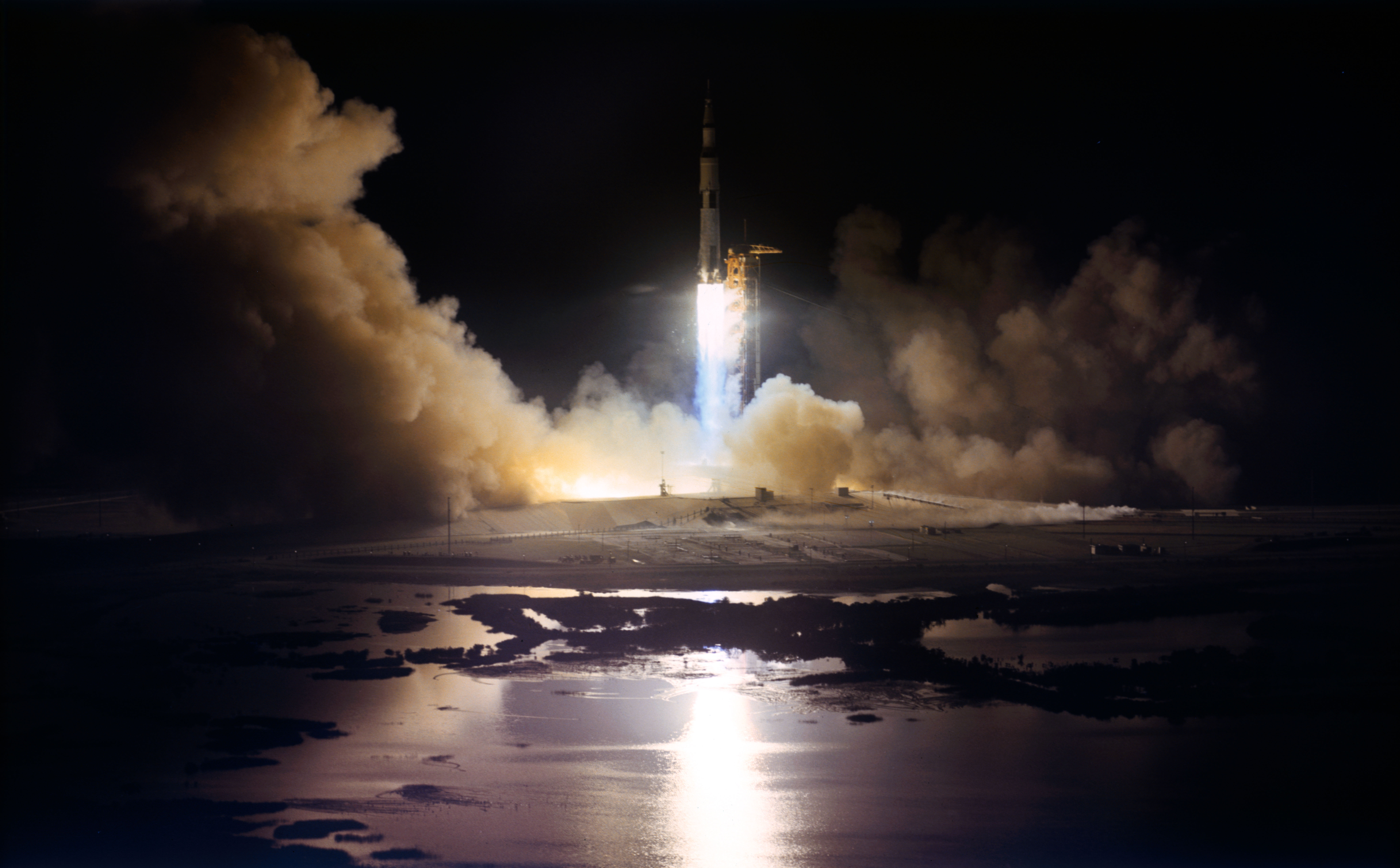
Apollo 17, in December 1972. Eugene Cernan and Harrison Schmitt landed in the Taurus-Littrow valley on 11 December 1972, worked on the surface for three days… more…
- Image pending
Astronauts and life in space
How high do astronauts orbit the earth?
Crewed spaceflight today happens a few hundred kilometres up. The International Space Station orbits at about 400 km, lapping the planet roughly every 90… more…
