Did you know…
Why does an astronaut float in space?
Short answer
Not because gravity has gone. At the International Space Station's altitude of about 400 km (250 mi), Earth still pulls almost as hard as at sea level. The station and everyone inside are falling around the planet at some 28,000 km/h (17,500 mph), and because they fall together nothing presses the crew against a floor.
Falling, and never arriving
Orbit is not a place where gravity stops. At the height the International Space Station flies, roughly 400 km (250 mi), Earth still pulls almost as hard as it does at sea level. What has changed is that the station is moving sideways at about 28,000 km/h (17,500 mph). It falls towards the planet continuously and continuously misses, because the surface curves away beneath it as fast as it drops. Newton described exactly this with a thought experiment about a cannon fired hard enough from a mountaintop.
Why nothing presses on you
Weight is not gravity; it is the sensation of something stopping you from falling — a chair, a floor, the ground. In orbit the crew, the walls, the tools and the water in a drinking bag all fall at the same rate along the same path, so nothing pushes against anything else. The result is the feeling of the half-second after stepping off a wall, extended indefinitely. The proper name is microgravity rather than zero gravity, because small residual accelerations remain: atmospheric drag, the crew moving about, the slight difference in pull between one end of the station and the other.
What the body makes of it
Deprived of a direction to resist, the body begins unlearning. Fluid that gravity normally keeps in the legs migrates to the chest and head, bones lose mineral and the postural muscles weaken, which is why crews spend hours a day strapped to treadmills and resistance machines. The inner ear, receiving no cue about which way is down, argues with the eyes for the first days in orbit.
More questions
- Image pending
Astronauts and life in space
Why does astronauts float in space?
Because they are in free fall, not because gravity is absent. At the International Space Station's altitude of about 400 km, Earth still pulls almost as hard… more…
- Image pending
Astronauts and life in space
Why did yuri gagarin die?
Gagarin died in an aircraft crash, not in a spacecraft. On 27 March 1968 the MiG-15UTI trainer he was flying with instructor Vladimir Seryogin went down in… more…
- Image pending
Astronauts and life in space
How much an astronaut is paid?
NASA's civilian astronauts are ordinary federal employees, paid on the General Schedule grade-and-step scale with no bonus per flight, per spacewalk or per… more…
.png)
Astronauts and life in space
Why is blue origin so slow?
Blue Origin was built on deliberate, owner-funded incrementalism: its motto is Gradatim Ferociter, step by step, and it spent its first two decades on… more…
Astronauts and life in space
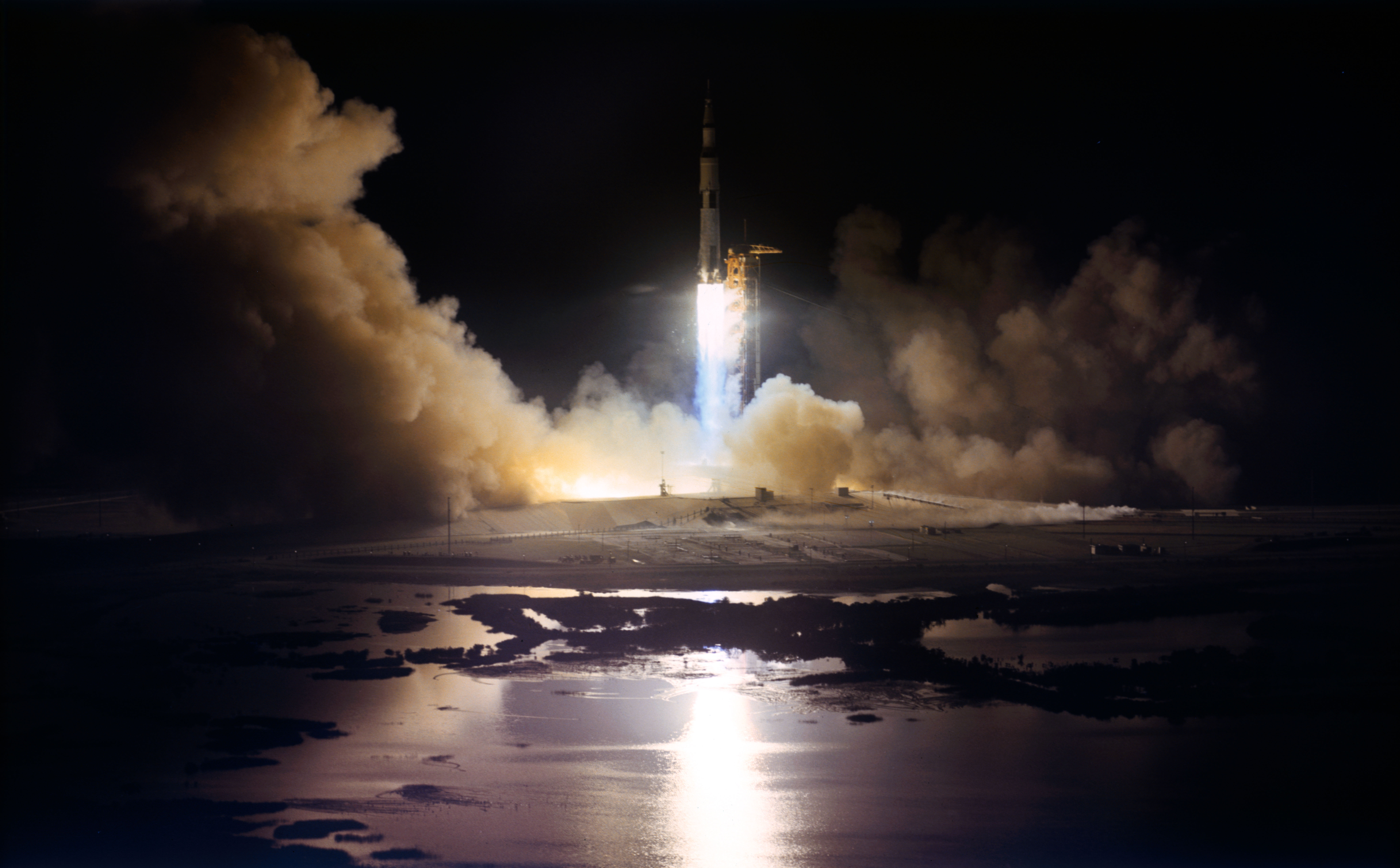
When did astronauts last walk on the moon?
Apollo 17, in December 1972. Eugene Cernan and Harrison Schmitt landed in the Taurus-Littrow valley on 11 December 1972, worked on the surface for three days… more…
- Image pending
Astronauts and life in space
How high do astronauts orbit the earth?
Crewed spaceflight today happens a few hundred kilometres up. The International Space Station orbits at about 400 km, lapping the planet roughly every 90… more…
