Did you know…
Why do astronauts float in space?
Short answer
Because they are falling, not because gravity is missing. At 400 km (250 mi) up, Earth still pulls with about 90% of the force felt at sea level, but the station moves sideways at some 28,000 km/h (17,500 mph), so it curves around the planet as fast as it drops. Crew and vehicle fall together, with nothing to press against.
Falling forever, sideways
Weightlessness aboard the International Space Station is not caused by the absence of gravity: at that altitude Earth still pulls with roughly 90% of the force felt at sea level. The station is simply travelling sideways fast enough — about 28,000 km/h (17,500 mph) — that the curve of its fall matches the curve of the planet beneath it. A lap takes some 90 minutes, and the ground never gets any closer. Orbit is often described as a balance between speed and gravity, but it is better understood as a throw that never lands: launch a projectile fast enough and the surface drops away beneath it exactly as quickly as it falls.
Why your body reads it as floating
What we call weight is the sensation of a floor, a seat or a pair of boots pushing back. Take that contact force away and the body loses its main cue for up and down: fluids shift towards the head, faces puff, legs thin out, and the balance organs of the inner ear stop reporting any direction for gravity. Astronauts often describe the first hours as a feeling of endless falling, and space adaptation syndrome — nausea and disorientation — is common until the brain learns to trust what the eyes see instead. Anything released in mid-air stays put, so tools, food and laptops must be strapped, clipped or velcroed down.
The same trick without leaving the atmosphere
Parabolic aircraft flights reproduce identical weightlessness for seconds at a time, a few kilometres above the ground, where gravity is essentially unchanged. Drop towers manage a shorter burst. The physics is the same; in orbit the only difference is that the fall never ends, because sideways speed keeps the ground from arriving. That is why zero gravity is a misleading label: there is plenty of gravity up there, it just has nothing to press the crew against.
More questions
- Image pending
Astronauts and life in space
Why does astronauts float in space?
Because they are in free fall, not because gravity is absent. At the International Space Station's altitude of about 400 km, Earth still pulls almost as hard… more…
- Image pending
Astronauts and life in space
Why did yuri gagarin die?
Gagarin died in an aircraft crash, not in a spacecraft. On 27 March 1968 the MiG-15UTI trainer he was flying with instructor Vladimir Seryogin went down in… more…
- Image pending
Astronauts and life in space
How much an astronaut is paid?
NASA's civilian astronauts are ordinary federal employees, paid on the General Schedule grade-and-step scale with no bonus per flight, per spacewalk or per… more…
.png)
Astronauts and life in space
Why is blue origin so slow?
Blue Origin was built on deliberate, owner-funded incrementalism: its motto is Gradatim Ferociter, step by step, and it spent its first two decades on… more…
Astronauts and life in space
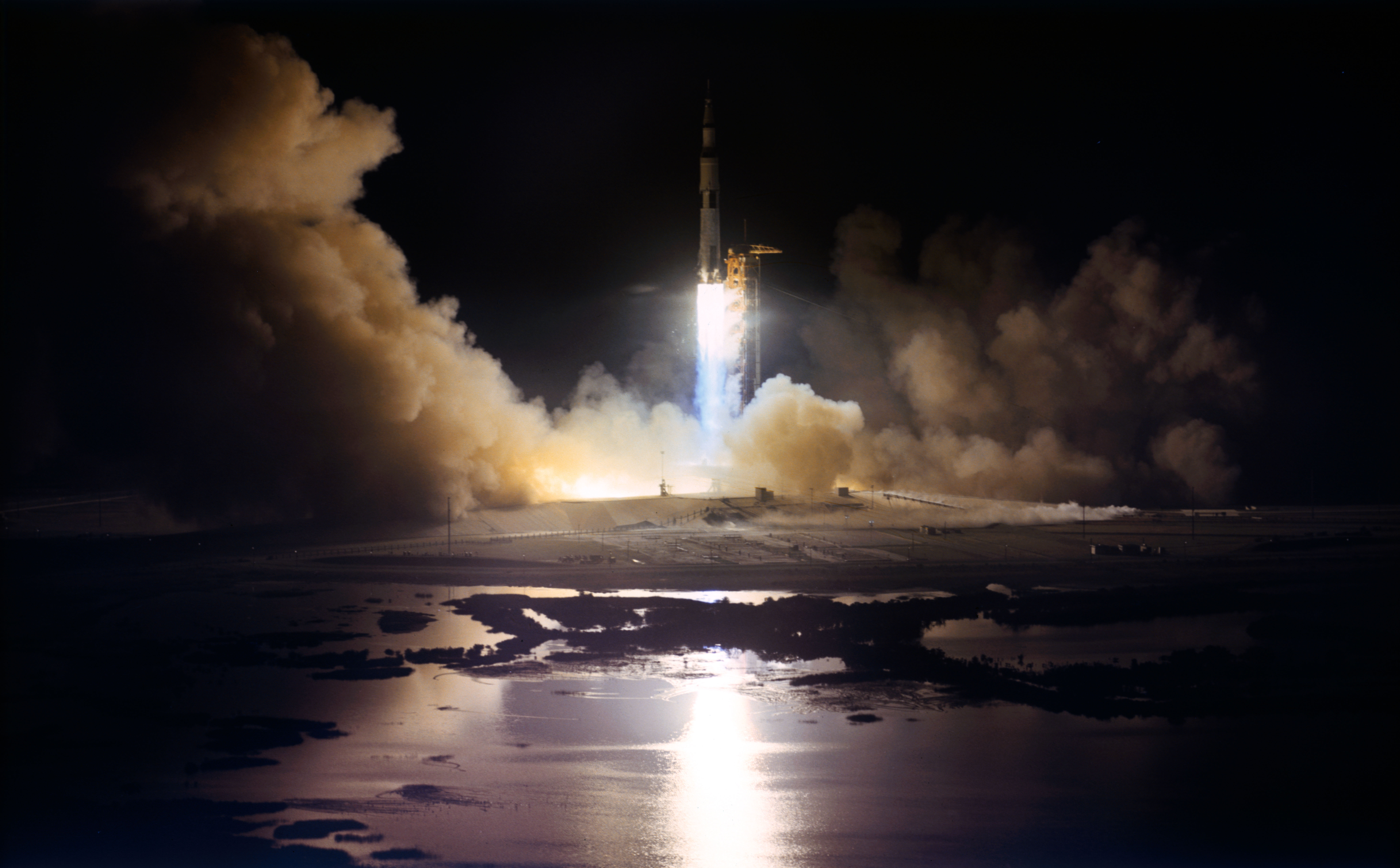
When did astronauts last walk on the moon?
Apollo 17, in December 1972. Eugene Cernan and Harrison Schmitt landed in the Taurus-Littrow valley on 11 December 1972, worked on the surface for three days… more…
- Image pending
Astronauts and life in space
How high do astronauts orbit the earth?
Crewed spaceflight today happens a few hundred kilometres up. The International Space Station orbits at about 400 km, lapping the planet roughly every 90… more…
