Did you know…
Which Navy Constellation was going to carry missiles for self-defense?
Short answer
The XW2V-1, an early-warning aircraft planned for the US Navy based on the WV-2, with the Starliner's wings. It was to carry four Allison T56-A8 turboprops and missiles for self-defense against attackers, under the Lockheed factory designation L-084, but it never went beyond the project stage.

From the WV-2 to the XW2V-1
The United States Navy was one of the major military users of the Constellation. Its long-range radar aircraft began life as the PO-2W Warning Star, based on the L-1049 Super Constellation and powered by Wright R-3350-34 or R-3350-42 engines of 3,400 hp (2,536 kW) each; it was later redesignated WV-2. Building on that base, Lockheed planned a radar version very different from its predecessors: the XW2V-1, which received the factory designation L-084.
Turboprops, new wings and missiles
The XW2V-1 was set to change almost everything essential. Instead of piston engines, it would carry four Allison T56-A8 turboprops, and instead of the Super Constellation's wing it would use the Starliner's, the last and most refined evolution of the family. Flying an L-1649A Starliner, TWA flew from Los Angeles to London on September 29, 1957, in 18 hours and 32 minutes. The most striking novelty was the armament: the project envisioned missiles so the aircraft could defend itself against attackers. The result was so different from its predecessors that Lockheed gave it its own model number instead of making it just another L-1049 variant.
A project without continuity
The XW2V-1 appears in variant lists as planned: it never reached production. The early-warning family carried on with Super Constellation derivatives, and the last version produced was the EC-121 Warning Star. The US Navy and Air Force kept those aircraft in service until 1978, nearly forty years after work began on the original L-049, and many of them are preserved in museums today.
More questions
L-Bit (CC BY SA), vía commons Military aviation
How many Anson Mk I were built?
6,688 or 6,742 Avro Anson Mk I were built, according to different sources; History of War, which gives the second figure, places 3,935 at Woodford and the… more…
Military aviation
Which flying boats rescued the crew of the Kensington Court in 1939?
They were two RAF Sunderland flying boats: according to uboat.net, an aircraft of Squadron 228 and L5802 of Squadron 204 landed on the water next to the… more…
Military aviation
How long did Catalina convoy escort flights to the USSR last?
Many of the Catalina flights protecting convoys to the Soviet Union lasted between 15 and 20 hours and ended at Gryaznaya Bay (Murmansk) or at Arkhangelsk… more…
Military aviation
How many aircraft did the Axis lose in Crusader?
Around 332 aircraft destroyed and around 228 abandoned in the operation's tally, which took place between 18 November and 30 December 1941. According to their… more…
Military aviation
How many victories did No. 604 Squadron, the RAF night-fighter squadron, claim?
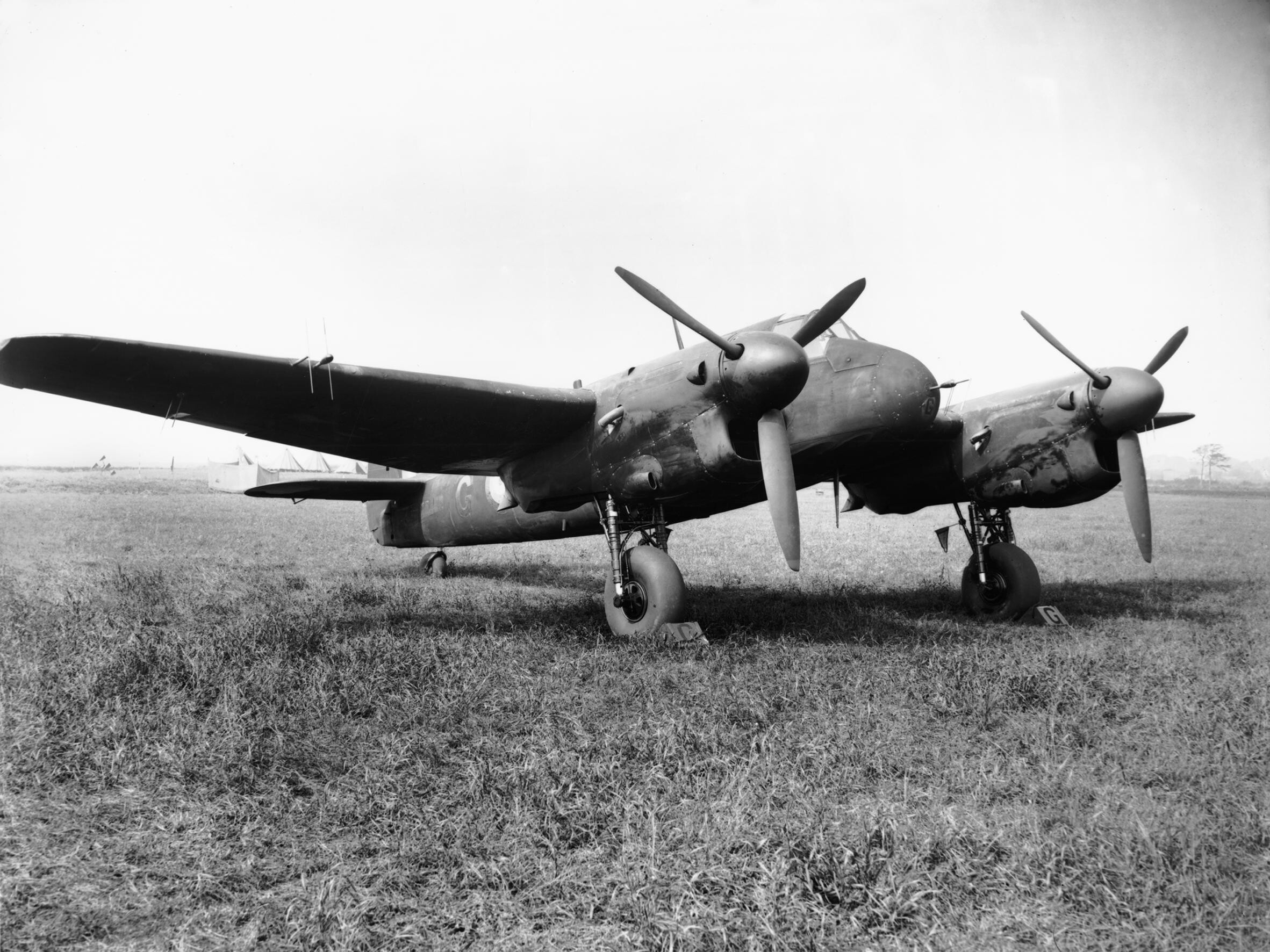
Around 127 aerial victories over the course of the war, 41 of them since May 1944. No. 604 (County of Middlesex) Squadron RAF spent most of the Second World… more…
Military aviation
Why did the "Torch" P-40Fs carry a flag on the fuselage?
To deter Vichy French forces from shooting them down: aircraft with yellow-outlined roundels sometimes had an American flag added in front of the roundel. The… more…


