Did you know…
What is artificial gravity in space how it form?
Short answer
No crewed spacecraft flying today produces artificial gravity; the station and every capsule in service are in permanent free fall. The only practical recipe is rotation: spin a vehicle and the outer wall pushes its occupants inward, producing an acceleration that grows with the radius and with the square of the spin rate.
Spin is the only recipe that works
Gravity itself cannot be manufactured: it comes from mass, and no spacecraft will ever carry enough. What can be reproduced is the sensation of weight — the steady push a floor gives the soles of the feet. The method is rotation. Turn a vehicle about its axis and anything resting against the outer wall is forced to travel in a circle; the wall supplies that force, and to the occupant it feels exactly like weight, directed outwards. The acceleration produced grows with the radius and with the square of the rate of spin, so a designer can trade a large, slowly turning structure against a small, fast one.
Why nobody has flown one
The small, fast option is the one that fits inside a rocket, and it is also the one that makes people ill. In a tight circle the head and feet travel at noticeably different speeds, and every movement of the head meets a sideways Coriolis push that the inner ear reads as a lie. Comfortable rotation implies a structure tens of metres across, assembled in orbit, with the mass, complexity and failure modes that follow. Set against that, weightlessness is itself a research asset, and the International Space Station was built to exploit it rather than cancel it.
What is tested instead
Brief spin has been tried in flight: a Gemini crew once tethered their capsule to a target vehicle and set the pair slowly turning, producing a barely perceptible tug. Most current work is on the ground. Volunteers lie head-down in bed for weeks to reproduce the fluid shift and bone loss of orbit, then spend part of each day on a short-arm centrifuge to see whether a daily dose of simulated weight protects them. Small centrifuges aboard the station do the same for cells and plants.
More questions
- Image pending
Astronauts and life in space
Why does astronauts float in space?
Because they are in free fall, not because gravity is absent. At the International Space Station's altitude of about 400 km, Earth still pulls almost as hard… more…
- Image pending
Astronauts and life in space
Why did yuri gagarin die?
Gagarin died in an aircraft crash, not in a spacecraft. On 27 March 1968 the MiG-15UTI trainer he was flying with instructor Vladimir Seryogin went down in… more…
- Image pending
Astronauts and life in space
How much an astronaut is paid?
NASA's civilian astronauts are ordinary federal employees, paid on the General Schedule grade-and-step scale with no bonus per flight, per spacewalk or per… more…
.png)
Astronauts and life in space
Why is blue origin so slow?
Blue Origin was built on deliberate, owner-funded incrementalism: its motto is Gradatim Ferociter, step by step, and it spent its first two decades on… more…
Astronauts and life in space
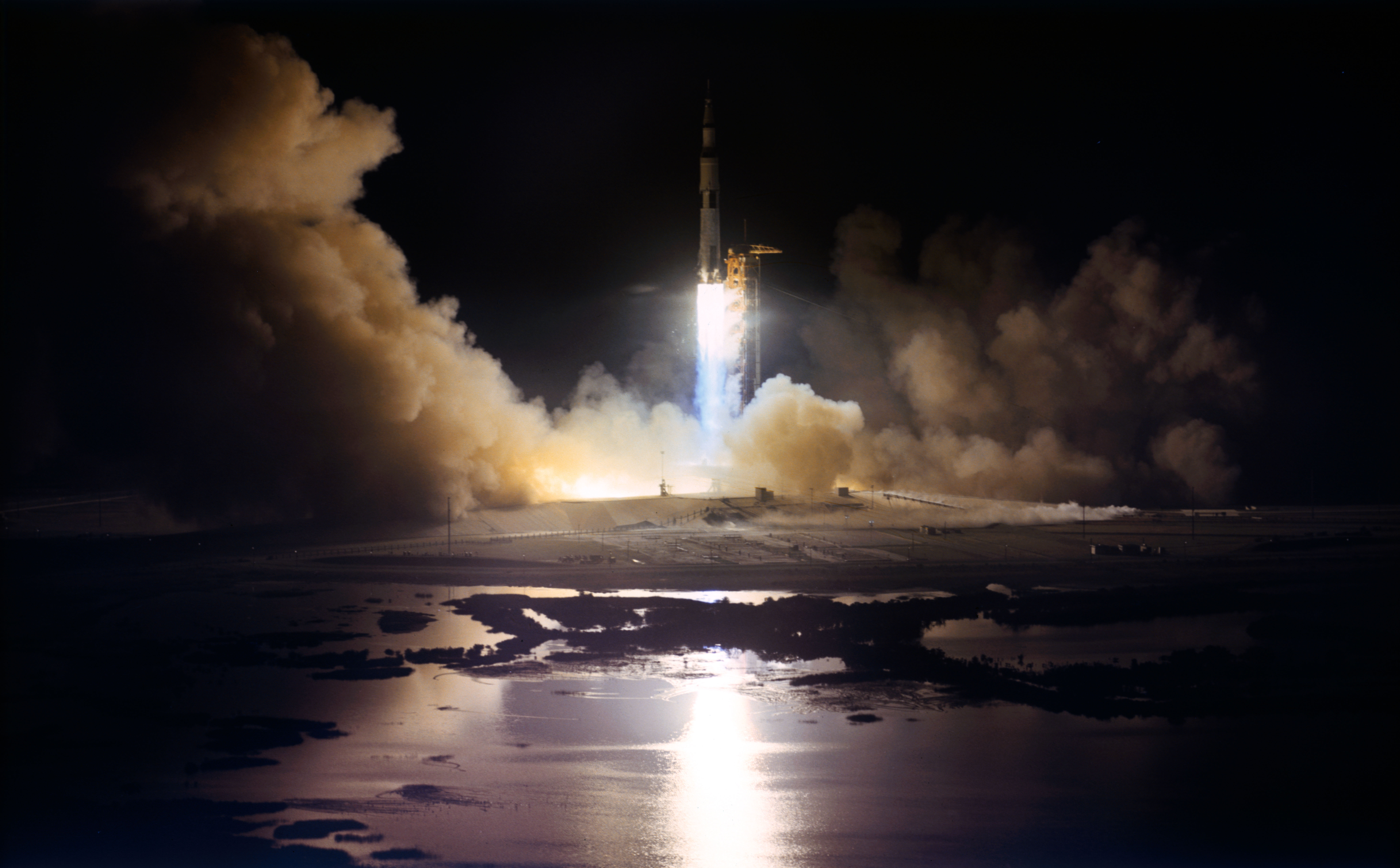
When did astronauts last walk on the moon?
Apollo 17, in December 1972. Eugene Cernan and Harrison Schmitt landed in the Taurus-Littrow valley on 11 December 1972, worked on the surface for three days… more…
- Image pending
Astronauts and life in space
How high do astronauts orbit the earth?
Crewed spaceflight today happens a few hundred kilometres up. The International Space Station orbits at about 400 km, lapping the planet roughly every 90… more…
