Did you know…
What is an astronaut's maximum absorbency garment?
Short answer
The MAG is the absorbent undergarment worn under a pressure suit — in plain terms an engineered adult diaper. It is used during launch, re-entry and spacewalks, when getting out of the suit is impossible. A superabsorbent polymer turns urine into a gel, keeping skin, cooling garment and suit electronics dry for hours.
What it is for
A pressure suit is a sealed system. Once a crew member is inside it and the gloves and helmet are locked, there is no route to a toilet for as long as the operation lasts, and a spacewalk routinely occupies most of a working day once pre-breathe and airlock time are counted. The Maximum Absorbency Garment solves that in the least glamorous way available: the wearer relieves themselves inside the suit, and the garment holds the result.
How it works
The MAG is a close-fitting brief filled with sodium polyacrylate, the same superabsorbent polymer used in infant nappies, which binds many times its own mass of liquid into a stable gel. That property is what makes it usable in weightlessness, where free liquid does not stay where it is put. Gelled urine cannot migrate, pool against the skin or drift into the water-cooled undergarment and the suit's electrical connectors, where it would be a genuine hazard rather than a nuisance. A fresh garment is normally donned for each phase.
From roll-on cuffs to a unisex brief
Apollo crews used a roll-on cuff feeding a urine collection device, plus a faecal containment bag that nobody remembers fondly; the whole design assumed male crews. When the Shuttle era brought women into the astronaut corps, a containment trunk and then the MAG replaced that arrangement with something unisex that worked for both kinds of need. The garment is also worn strapped into a seat during launch and entry, phases where a crew can spend hours suited with no realistic alternative.
More questions
- Image pending
Astronauts and life in space
Why does astronauts float in space?
Because they are in free fall, not because gravity is absent. At the International Space Station's altitude of about 400 km, Earth still pulls almost as hard… more…
- Image pending
Astronauts and life in space
Why did yuri gagarin die?
Gagarin died in an aircraft crash, not in a spacecraft. On 27 March 1968 the MiG-15UTI trainer he was flying with instructor Vladimir Seryogin went down in… more…
- Image pending
Astronauts and life in space
How much an astronaut is paid?
NASA's civilian astronauts are ordinary federal employees, paid on the General Schedule grade-and-step scale with no bonus per flight, per spacewalk or per… more…
.png)
Astronauts and life in space
Why is blue origin so slow?
Blue Origin was built on deliberate, owner-funded incrementalism: its motto is Gradatim Ferociter, step by step, and it spent its first two decades on… more…
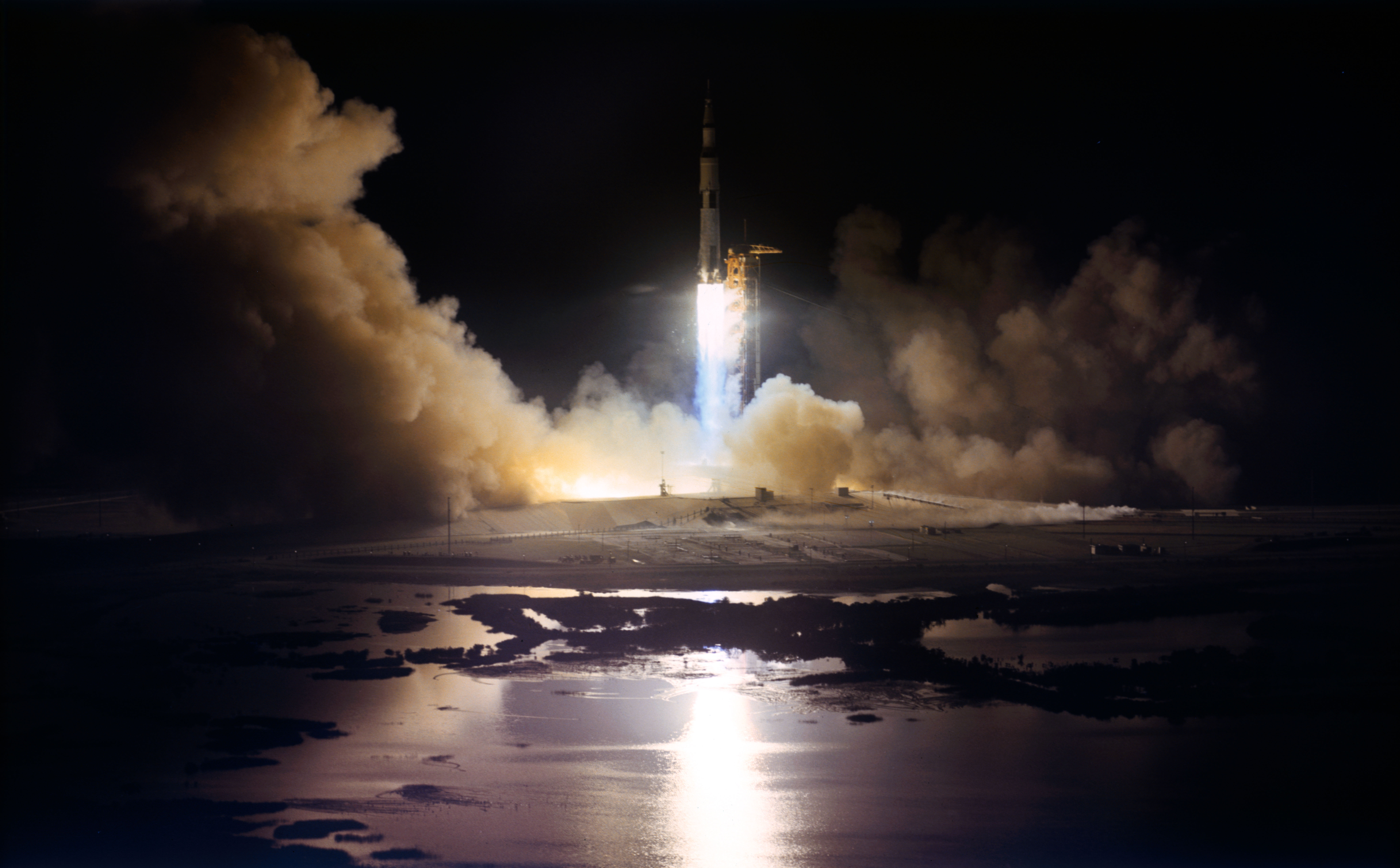
Astronauts and life in space
When did astronauts last walk on the moon?
Apollo 17, in December 1972. Eugene Cernan and Harrison Schmitt landed in the Taurus-Littrow valley on 11 December 1972, worked on the surface for three days… more…
- Image pending
Astronauts and life in space
How high do astronauts orbit the earth?
Crewed spaceflight today happens a few hundred kilometres up. The International Space Station orbits at about 400 km, lapping the planet roughly every 90… more…
