Did you know…
Why did the Royal Aircraft Establishment ask Airspeed to fit flaps and air brakes to its Courier?
Short answer
Because the Courier was so aerodynamically clean that, once in the air, it was very hard to bring back down. Thanks to that advanced aerodynamics the Royal Aircraft Establishment used it as a research aircraft, and Airspeed fitted it with slotted flaps, air brakes and modified controls to test them.
Too clean to land
The Courier combined a low cantilever wing, a retractable undercarriage and a fuselage of very carefully drawn lines for its day. That cleanness, which gave it speed, had a drawback noted by the Enciclopedia ilustrada de la aviación: once in the air, it was very difficult to get back onto the ground. Because of that same advanced aerodynamics, two Couriers ended up as research aircraft: one for the Royal Aircraft Establishment (RAE), the British aeronautical test centre, and another for Napier, which used it to develop its Rapier engine.
What was added
Airspeed modified the RAE aircraft with high-lift devices, drag-producing elements and modified controls, for test purposes. According to the same encyclopedia, the work was done in 1935 and consisted of Handley Page slotted flaps on the trailing edge of the outer wing sections, air brakes in the centre section next to the fuselage, and drooping ailerons. Used judiciously, they served to increase the aircraft's lift or its drag, precisely what an aeroplane that was hard to slow down was lacking.
RAE or RAF
The Spanish-language encyclopedia attributes the order to the Royal Air Force, which had acquired a five- or six-seat AS.5A in February 1934 as a communications aircraft and returned it to Airspeed in 1935 for the modification. English-language works place the modified Courier with the RAE. The two acronyms designate different institutions: the RAF is the air force and the RAE the research establishment. The RAE's link with the type went back further: George Stainforth, an RAE pilot, had made the prototype's first flight in April 1933.
More questions
- Image pending
Physics of flight
How much cruising speed did the Airspeed Courier gain by retracting its undercarriage?
About 32 km/h (20 mph) of cruising speed. Sources attribute the gain to the lower drag with the main wheels retracted, at the cost of roughly 30 lb for the… more…
Physics of flight
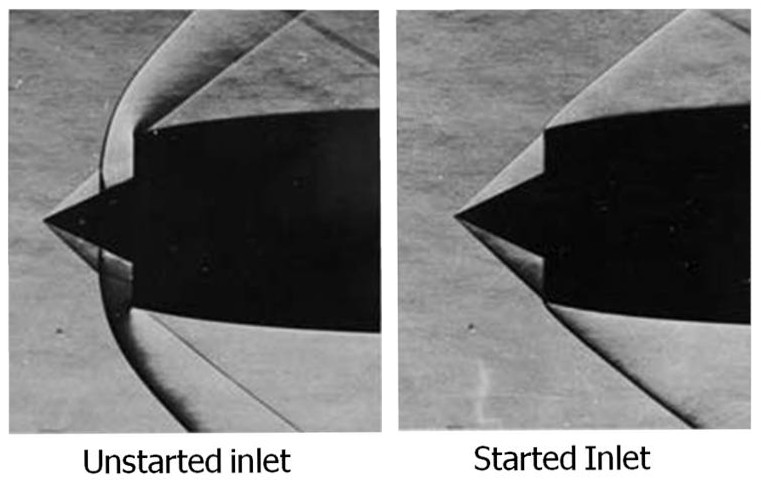
Why does the sound barrier exist?
The sound barrier exists because pressure disturbances travel through air at the speed of sound. Below Mach 1 the air ahead of an aircraft receives warning… more…
Physics of flight
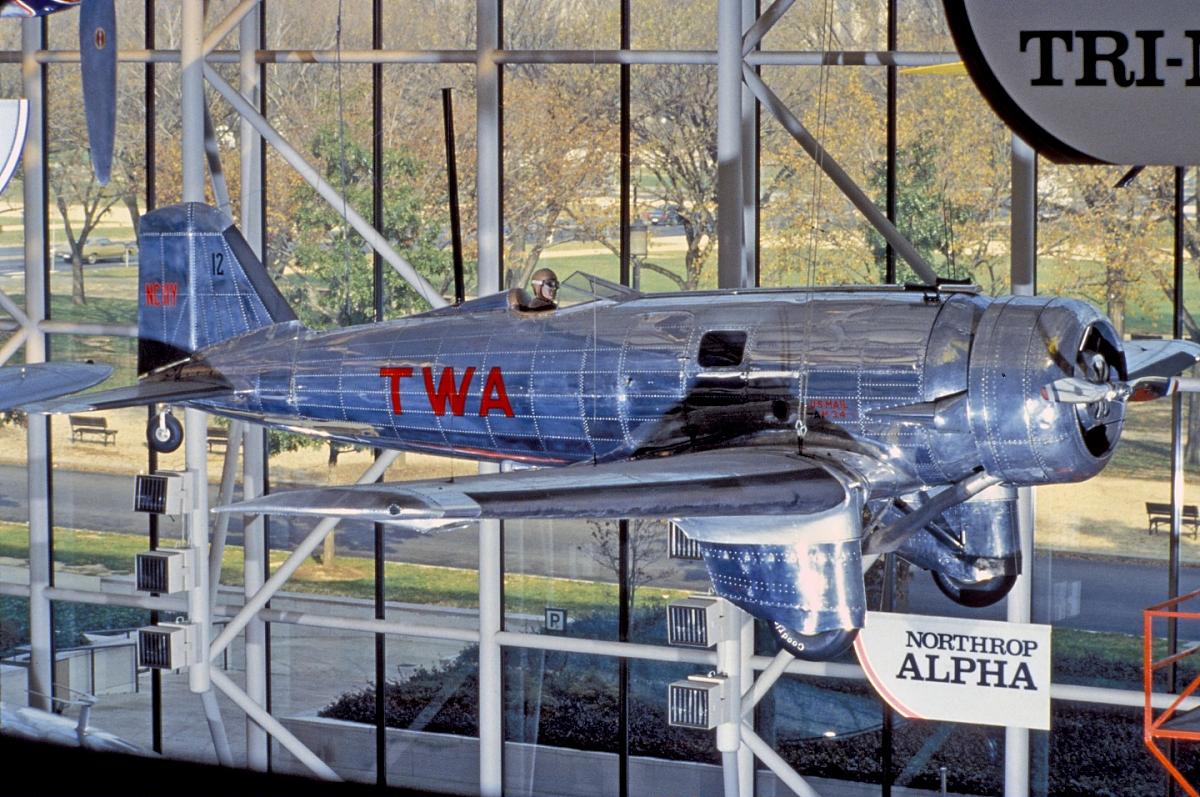
Why does the speed of sound change with altitude?
The speed of sound changes with altitude because it depends on air temperature, and temperature falls as you climb through the troposphere. Colder molecules… more…
Physics of flight
Why do planes need airplane mode?
Airplane mode is required mainly by regulation and caution, not by a proven history of accidents. Regulators such as the FAA and EASA require devices to stop… more…
Jorge Láscar from Australia (CC BY), vía commons Physics of flight
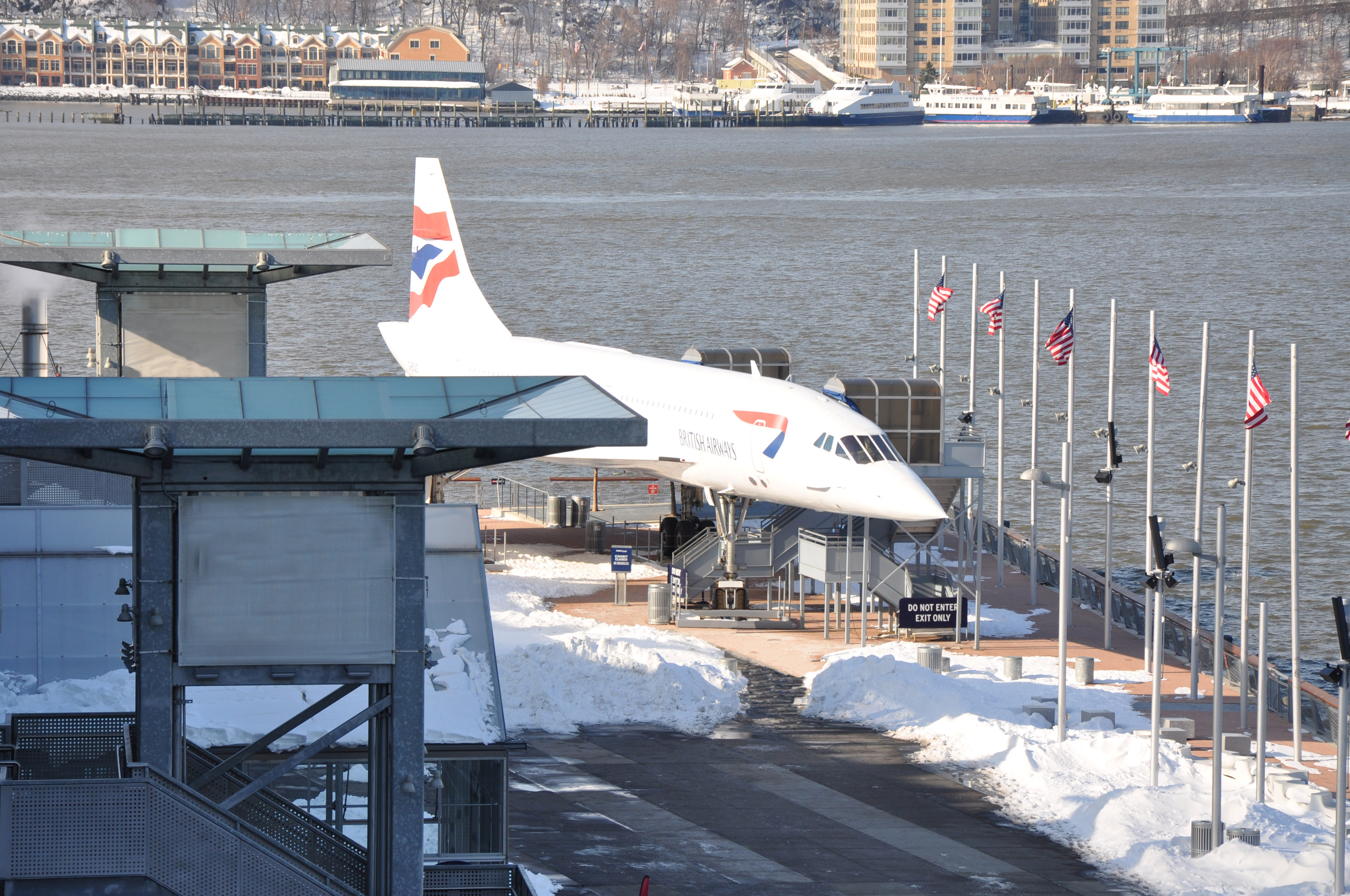
How far is the speed of sound?
The speed of sound is a speed, not a distance: in air at 20 °C and sea level it is about 343 m/s (1,235 km/h, 667 kn), so sound covers one kilometre in… more…
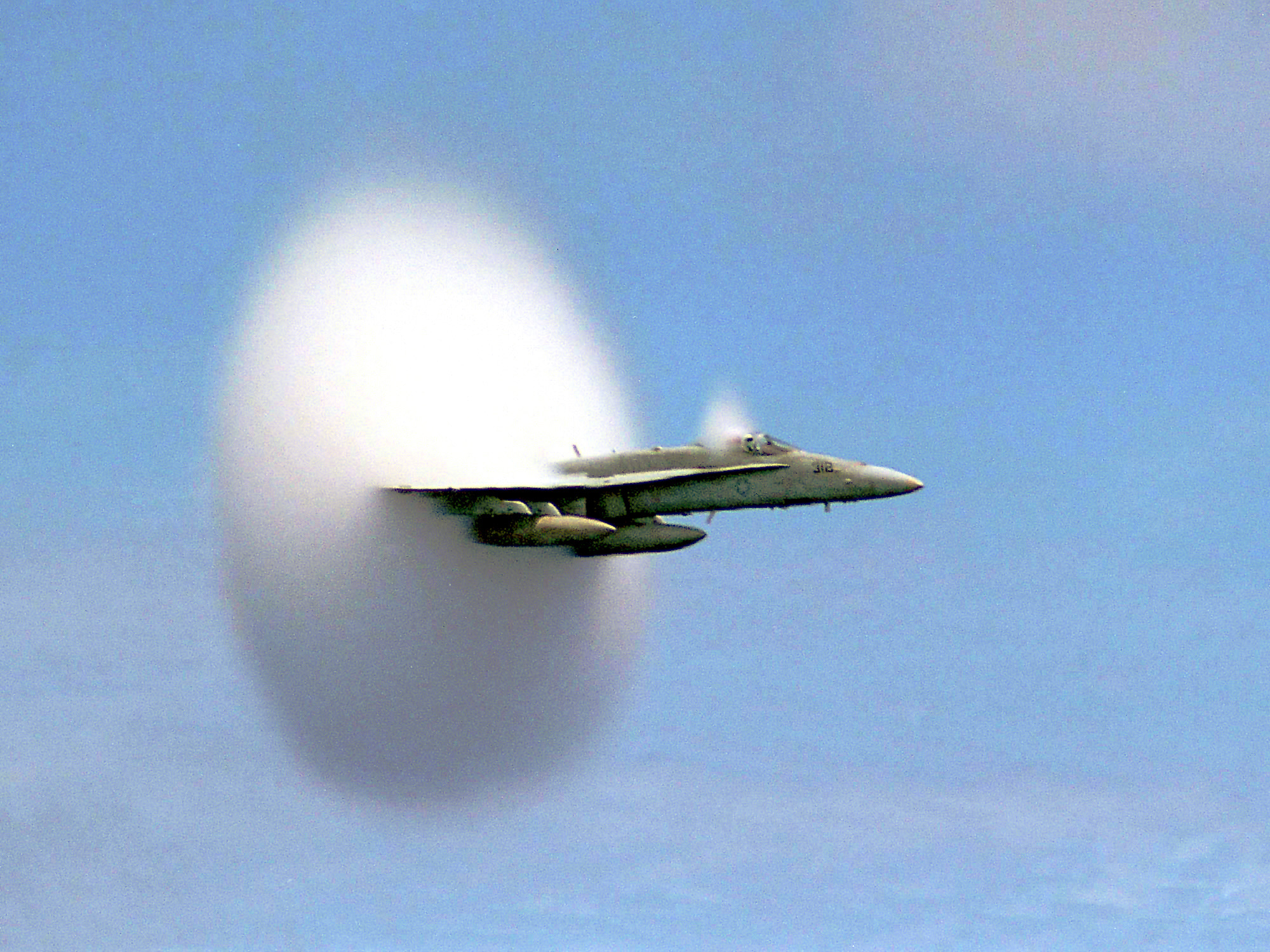
Physics of flight
How much is the sound barrier?
The sound barrier is not a price or a quantity: it is the speed of sound, which an aircraft meets at Mach 1. That speed is about 343 m/s (1,235 km/h, 667 kn)… more…


