Did you know…
Why do planes need airplane mode?
Short answer
Airplane mode is required mainly by regulation and caution, not by a proven history of accidents. Regulators such as the FAA and EASA require devices to stop transmitting so they cannot interfere with navigation and radio systems, and because a phone hunting for towers from altitude strains ground networks. Well-shielded modern aircraft have made the rule looser.

Where the rule comes from
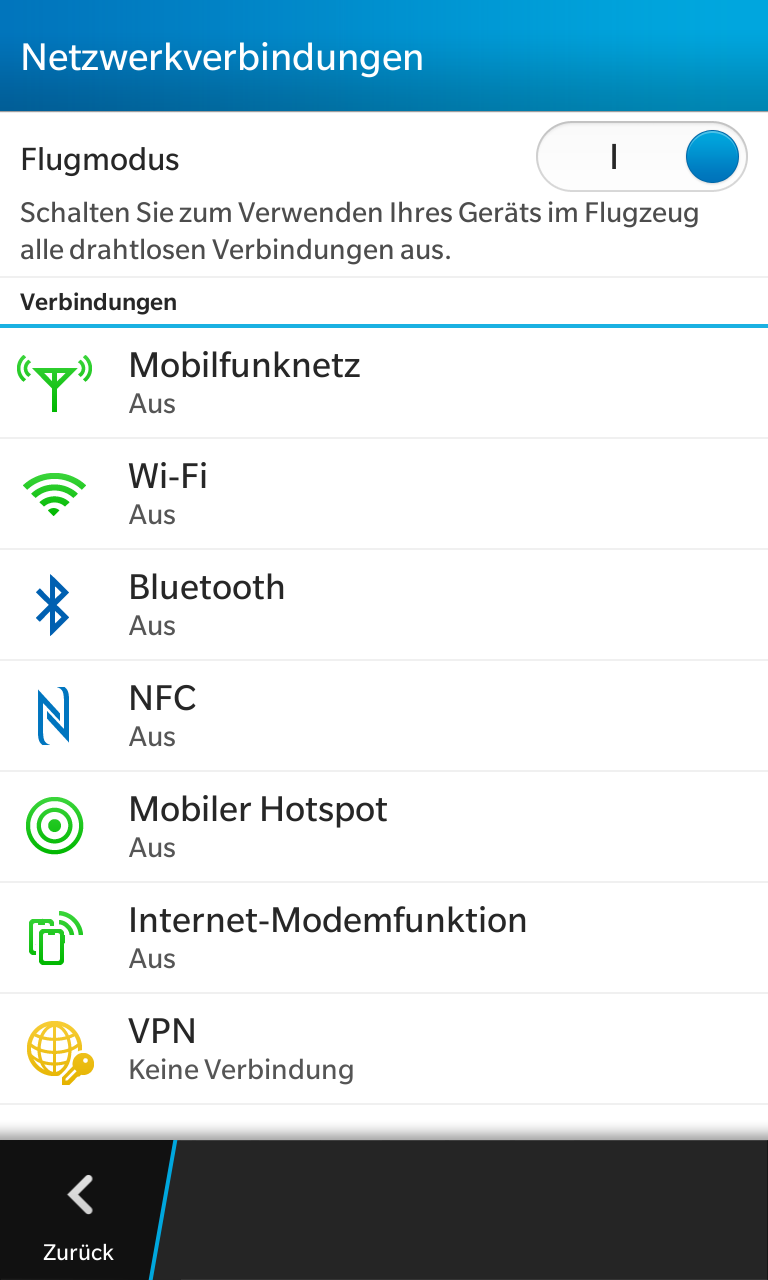
Two separate authorities lie behind the request to switch on airplane mode. Aviation regulators, the FAA in the United States and EASA in Europe among them, are responsible for the safety of the aircraft and have long treated any portable transmitter as a possible source of electromagnetic interference with radios, navigation receivers and flight instruments. Telecommunications regulators have a different concern: in 1991 the US Federal Communications Commission banned the use of cellular phones aboard airborne aircraft because a handset at altitude has line of sight to dozens of ground cells at once and can disrupt the network's ability to hand calls between them. Airplane mode satisfies both, because it turns off the cellular, Wi-Fi and Bluetooth transmitters in a single step.
What the actual risk is
Interference from a phone has never been established as the cause of an airline accident, and the wiring and receivers of modern aircraft are shielded and tested against far stronger fields than a handset produces. The concern was always about the margin: a few hundred devices of unknown quality, some faulty, all transmitting during the approach when crews rely on instrument landing signals. Crews have reported occasional anomalies over the years that could not be reproduced, which kept regulators cautious. After a review of the evidence, the FAA concluded in 2013 that most aircraft could tolerate personal electronic devices in all phases of flight, and airlines were allowed to permit them gate to gate provided the devices were not connecting to cellular networks. EASA reached a similar position and, from 2014, allowed airlines to let passengers keep devices switched on without airplane mode once the operator had shown its aircraft were not affected.
Ground networks and the future
The cellular half of the problem is being solved from the aircraft side. Onboard picocells and satellite links let phones connect to a small base station inside the cabin at low power, which keeps them from reaching the ground network directly. In 2022 EASA confirmed that airlines could allow 5G and other mobile technologies through such systems. The request to select airplane mode therefore survives for practical reasons: it is a simple instruction that works on every device, it keeps hundreds of handsets from transmitting at full power in search of towers, and it preserves a safety margin during the most demanding phases of flight at a cost of nothing more than a few minutes without a signal.
More questions
Physics of flight
Why does the sound barrier exist?
The sound barrier exists because pressure disturbances travel through air at the speed of sound. Below Mach 1 the air ahead of an aircraft receives warning… more…
Physics of flight
Why does the speed of sound change with altitude?
The speed of sound changes with altitude because it depends on air temperature, and temperature falls as you climb through the troposphere. Colder molecules… more…
Physics of flight
How far is the speed of sound?
The speed of sound is a speed, not a distance: in air at 20 °C and sea level it is about 343 m/s (1,235 km/h, 667 kn), so sound covers one kilometre in… more…
Physics of flight
How much is the sound barrier?
The sound barrier is not a price or a quantity: it is the speed of sound, which an aircraft meets at Mach 1. That speed is about 343 m/s (1,235 km/h, 667 kn)… more…
Physics of flight
How does the sound barrier break?
The sound barrier is not broken so much as crossed: an aircraft with enough thrust and a shape that tolerates shock waves accelerates through Mach 1. Chuck… more…
Physics of flight
How does the sound barrier work?
The sound barrier is the sharp rise in drag and control difficulty an aircraft meets as it nears Mach 1, about 1,062 km/h (573 kn) at cruise altitude. Air… more…