Did you know…
Is there gravity in deep space?
Short answer
Yes. Gravity has no edge: it weakens with the square of the distance but never falls to zero, so even the emptiest interstellar space is threaded by the pull of stars and galaxies. Astronauts float not because gravity has gone, but because they and their vehicle are falling together.
Gravity has no boundary
Newton's law of universal gravitation says that every mass attracts every other mass with a force that falls off as the square of the distance between them. Squaring a large number makes that force very small, but it never makes it zero. A spacecraft halfway between the stars still feels the Sun behind it and the mass of the Milky Way around it. That is why the Voyager probes, far beyond the orbit of Pluto, still follow paths curved by the Sun rather than travelling in perfectly straight lines.
Floating is falling
The weightlessness seen aboard the International Space Station is often blamed on an absence of gravity, which is wrong. At the station's altitude of roughly 400 km, Earth's pull is still about 90% of its strength at sea level, where it produces an acceleration of about 9.8 m/s2. The crew floats because the station is in continuous free fall around the planet: vehicle, people and water droplets all accelerate together, so nothing presses against anything else. Engineers call what remains microgravity - the tiny residual accelerations from atmospheric drag, thruster firings and crew movement.
What actually changes far from home
Deep space does differ from low Earth orbit in one respect: no single body dominates. Near Earth the planet sets the local acceleration; between the planets the Sun does; out in interstellar space the combined pull of the Galaxy takes over and local accelerations become minute. Those faint forces still govern navigation, because over months and years they bend trajectories enough to decide whether a probe arrives at its target or misses it entirely.
More questions
- Image pending
Astronauts and life in space
Why does astronauts float in space?
Because they are in free fall, not because gravity is absent. At the International Space Station's altitude of about 400 km, Earth still pulls almost as hard… more…
- Image pending
Astronauts and life in space
Why did yuri gagarin die?
Gagarin died in an aircraft crash, not in a spacecraft. On 27 March 1968 the MiG-15UTI trainer he was flying with instructor Vladimir Seryogin went down in… more…
- Image pending
Astronauts and life in space
How much an astronaut is paid?
NASA's civilian astronauts are ordinary federal employees, paid on the General Schedule grade-and-step scale with no bonus per flight, per spacewalk or per… more…
.png)
Astronauts and life in space
Why is blue origin so slow?
Blue Origin was built on deliberate, owner-funded incrementalism: its motto is Gradatim Ferociter, step by step, and it spent its first two decades on… more…
Astronauts and life in space
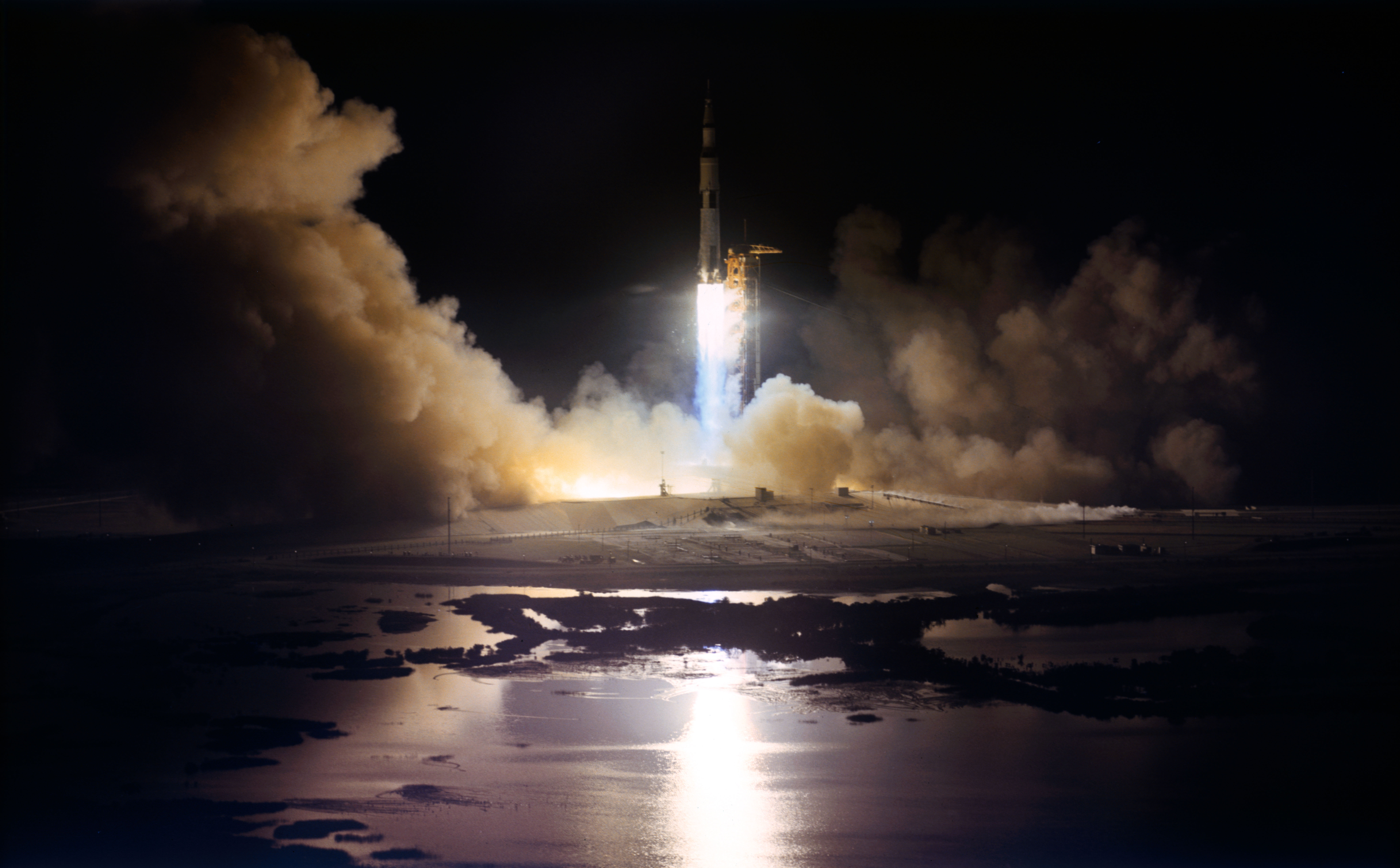
When did astronauts last walk on the moon?
Apollo 17, in December 1972. Eugene Cernan and Harrison Schmitt landed in the Taurus-Littrow valley on 11 December 1972, worked on the surface for three days… more…
- Image pending
Astronauts and life in space
How high do astronauts orbit the earth?
Crewed spaceflight today happens a few hundred kilometres up. The International Space Station orbits at about 400 km, lapping the planet roughly every 90… more…
