Did you know…
How much astronaut make a year?
Short answer
There is no single figure, and no payment per flight. NASA astronauts selected as civilians are federal employees paid on the General Schedule, so their annual salary depends on grade and years of service like any other civil servant. Military astronauts keep their armed forces pay according to rank instead.
Salary by grade, not by mission
Asking what an astronaut earns per year is really asking a civil service question. Civilian candidates selected by NASA join the agency as federal employees and are slotted into the General Schedule, the pay system used across most professional US government posts. Their annual figure therefore follows the published grade and step tables, adjusted by locality, and rises with time in post and promotion rather than with flights logged. Nobody is paid extra for launching, and nobody is docked for a mission that slips by two years.
Military officers make up a substantial part of the corps. They remain on active duty while detailed to NASA and continue to be paid by their own service according to rank and years of service. A Navy captain assigned to Houston is paid as a Navy captain.
Why the pay looks modest against the job
Astronaut candidates typically arrive with a doctorate, thousands of hours of jet time or both, and many could earn considerably more in industry. The pay reflects the public payroll they sit on, not the scarcity of the skill. It is also worth remembering how the working year is spent: language courses, survival training, spacewalk rehearsals in a large water tank, robotics, geology and long stretches of ground support between assignments.
A different market alongside it
Commercial human spaceflight has changed the picture at the edges. Companies employ their own flight crew and mission specialists on private terms, and on some private orbital flights the people aboard are customers rather than employees. Those arrangements sit outside any public pay scale and are rarely disclosed.
More questions
- Image pending
Astronauts and life in space
Why does astronauts float in space?
Because they are in free fall, not because gravity is absent. At the International Space Station's altitude of about 400 km, Earth still pulls almost as hard… more…
- Image pending
Astronauts and life in space
Why did yuri gagarin die?
Gagarin died in an aircraft crash, not in a spacecraft. On 27 March 1968 the MiG-15UTI trainer he was flying with instructor Vladimir Seryogin went down in… more…
- Image pending
Astronauts and life in space
How much an astronaut is paid?
NASA's civilian astronauts are ordinary federal employees, paid on the General Schedule grade-and-step scale with no bonus per flight, per spacewalk or per… more…
.png)
Astronauts and life in space
Why is blue origin so slow?
Blue Origin was built on deliberate, owner-funded incrementalism: its motto is Gradatim Ferociter, step by step, and it spent its first two decades on… more…
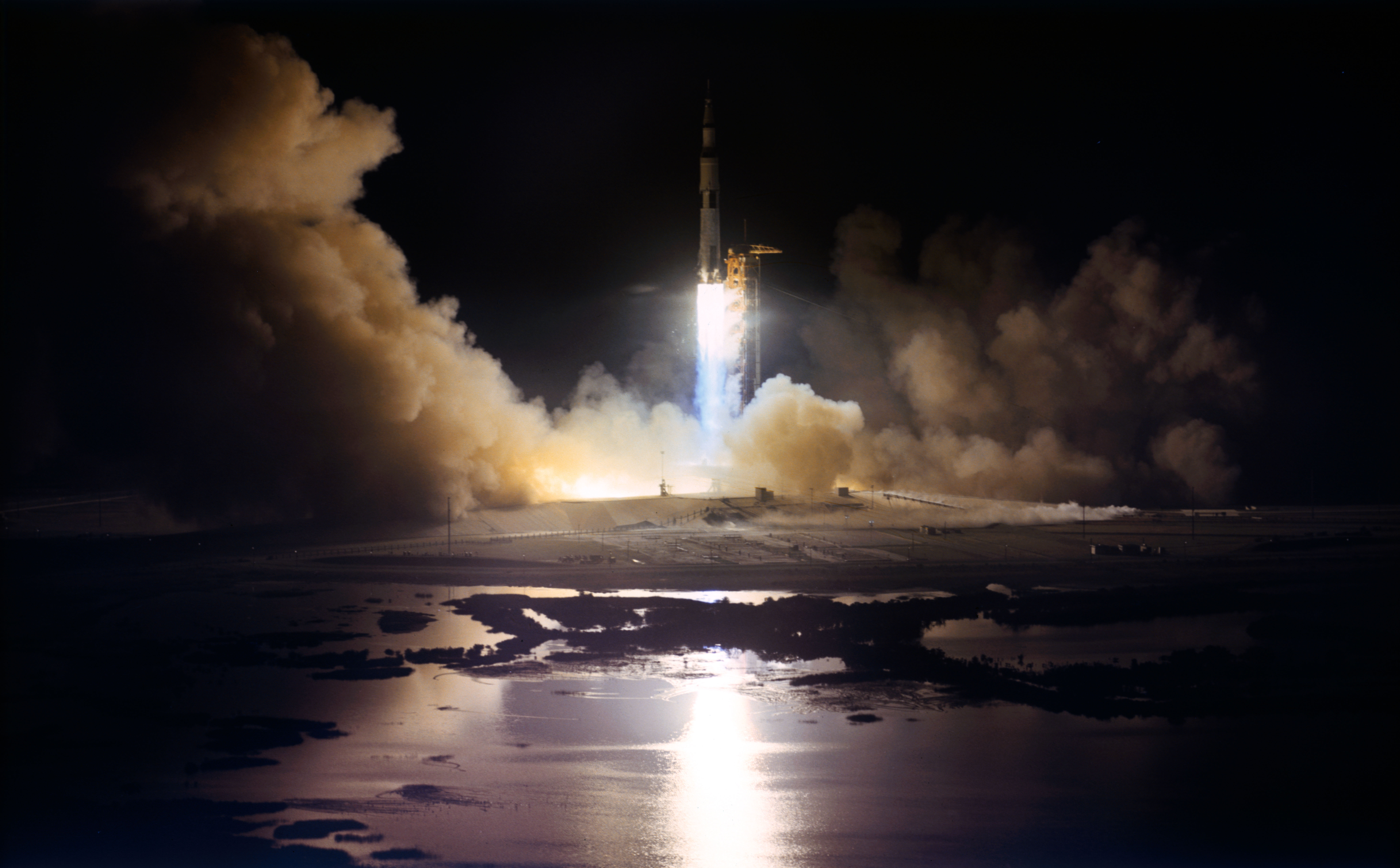
Astronauts and life in space
When did astronauts last walk on the moon?
Apollo 17, in December 1972. Eugene Cernan and Harrison Schmitt landed in the Taurus-Littrow valley on 11 December 1972, worked on the surface for three days… more…
- Image pending
Astronauts and life in space
How high do astronauts orbit the earth?
Crewed spaceflight today happens a few hundred kilometres up. The International Space Station orbits at about 400 km, lapping the planet roughly every 90… more…
