Did you know…
How much an astronaut get paid?
Short answer
NASA civil-servant astronauts are federal employees paid on the standard General Schedule, and the agency states that astronaut candidates start at the GS-12 grade and can progress to GS-13. Military astronauts stay on their service pay and allowances, while astronauts employed by private companies are paid on company terms that are not published (data as of September 2026).
A government salary, not a hazard premium
The most persistent myth about astronauts is that flying to orbit commands extraordinary pay. It does not. NASA hires civilian astronaut candidates as ordinary federal employees, and its recruitment material places them on the General Schedule, the same pay system that covers most of the United States civil service, beginning at grade GS-12 with progression to GS-13. Grade and step, not spaceflight, set the figure, and a locality adjustment tied to the duty station in Houston applies exactly as it would for any other federal post there.
There is no bonus for launching. Time in orbit is duty time, and NASA has historically paid only a nominal per-diem-style allowance for days spent off the planet, an amount smaller than a business traveller's hotel budget.
Military detailees and commercial crews
Roughly half of the corps has traditionally come from the armed forces. Those officers are detailed to NASA and remain on military pay, retaining their rank, allowances and promotion path; the agency reimburses their service rather than issuing a separate salary. Their total compensation therefore depends on rank and years of service.
Commercial spaceflight has opened a third category. Astronauts employed directly by SpaceX, Axiom Space or Blue Origin are private-sector employees whose contracts are not disclosed, and equity or bonus arrangements may form part of the package. Private astronaut missions invert the relationship entirely: the customer pays for the seat.
What the job actually costs
Selection is brutal — NASA has received tens of thousands of applications for a handful of places — and candidates commit to two years of basic training before any assignment. Pay is not the incentive, and never has been.
More questions
- Image pending
Astronauts and life in space
Why does astronauts float in space?
Because they are in free fall, not because gravity is absent. At the International Space Station's altitude of about 400 km, Earth still pulls almost as hard… more…
- Image pending
Astronauts and life in space
Why did yuri gagarin die?
Gagarin died in an aircraft crash, not in a spacecraft. On 27 March 1968 the MiG-15UTI trainer he was flying with instructor Vladimir Seryogin went down in… more…
- Image pending
Astronauts and life in space
How much an astronaut is paid?
NASA's civilian astronauts are ordinary federal employees, paid on the General Schedule grade-and-step scale with no bonus per flight, per spacewalk or per… more…
.png)
Astronauts and life in space
Why is blue origin so slow?
Blue Origin was built on deliberate, owner-funded incrementalism: its motto is Gradatim Ferociter, step by step, and it spent its first two decades on… more…
Astronauts and life in space
When did astronauts last walk on the moon?
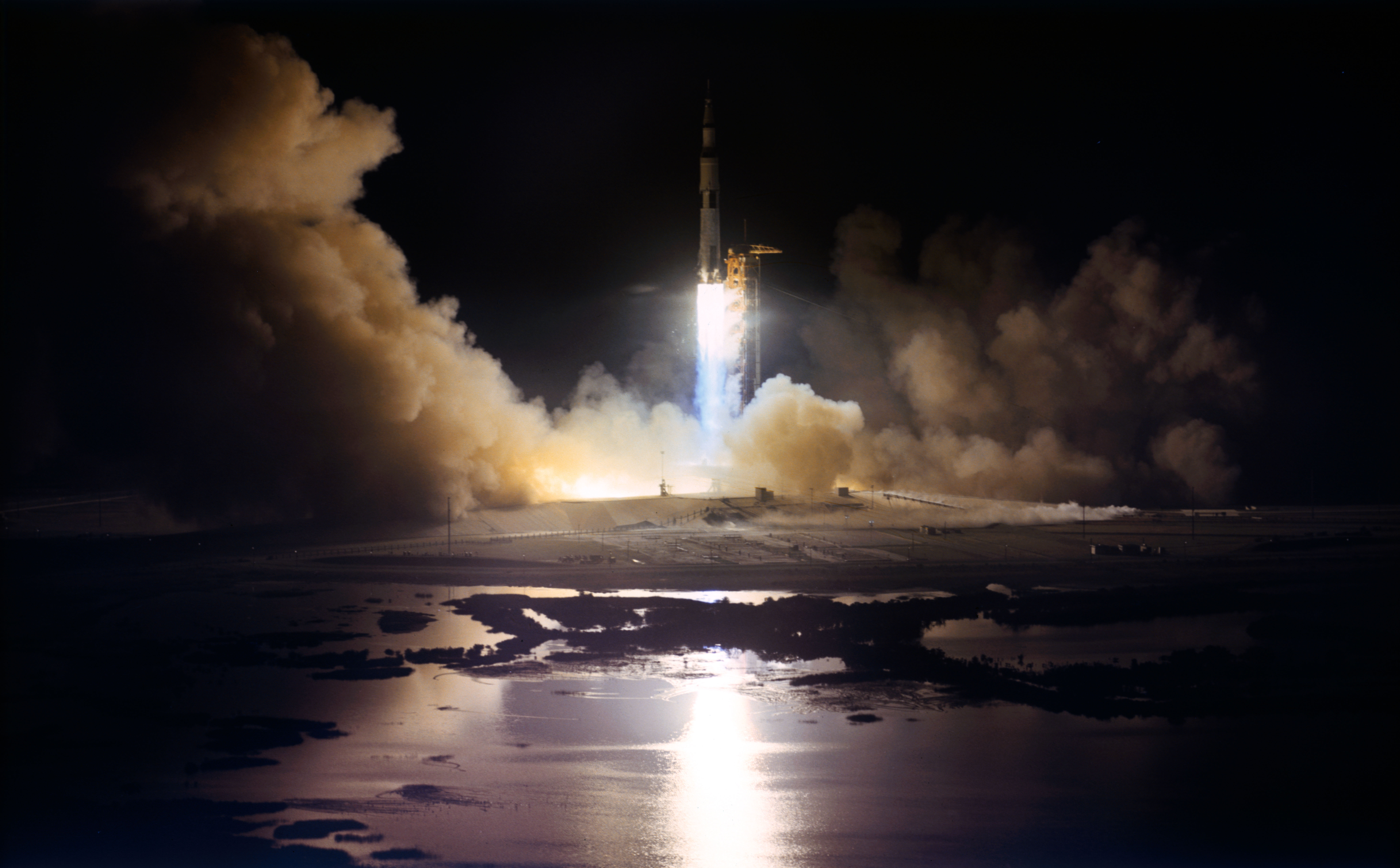
Apollo 17, in December 1972. Eugene Cernan and Harrison Schmitt landed in the Taurus-Littrow valley on 11 December 1972, worked on the surface for three days… more…
- Image pending
Astronauts and life in space
How high do astronauts orbit the earth?
Crewed spaceflight today happens a few hundred kilometres up. The International Space Station orbits at about 400 km, lapping the planet roughly every 90… more…
