Did you know…
How much an astronaut earn?
Short answer
NASA's civilian astronauts are ordinary federal employees: they draw a General Schedule salary set by grade and step, with no bonus for a launch or a spacewalk. Astronauts detailed from the armed forces stay on their service pay. NASA states the exact range in each astronaut-candidate vacancy announcement.
Who signs the cheque
NASA's astronauts are federal civil servants. Candidates apply through the same public vacancy system as any other government job, and their pay follows the General Schedule — a grade-and-step table that rises with experience, seniority and the cost of living where they are posted, which for astronauts means the Houston area. Officers seconded from the armed forces do not change payroll at all: they keep their military salary, allowances and rank while assigned to the agency. European, Japanese and Canadian astronauts are staff of their own agencies and sit on those agencies' scales.
No danger money
There is no bonus for launching, no per-spacewalk supplement and no share of mission revenue. Time in orbit is treated as ordinary duty travel, which is why the old stories about astronauts filing modest expense claims after historic flights ring true: the job pays a solid professional salary, not a fortune. What it does carry is considerable non-cash value — years of funded training, employment security, and a career that continues in flight operations, management or industry long after the last mission.
Where the real figure is published
Because the number moves with grade, step and locality adjustment, the only trustworthy source is the announcement itself: every NASA astronaut-candidate call states the salary range being advertised, and the agency reissues it each selection round. ESA does the same when it opens a recruitment window. Figures quoted in the press are usually a snapshot of one grade at one moment, which is why two reputable outlets can print different numbers for the same job in the same year. Commercially flown crew members are a separate case: they are paid by the company that employs them, and private passengers on suborbital or orbital flights pay rather than earn.
More questions
- Image pending
Astronauts and life in space
Why does astronauts float in space?
Because they are in free fall, not because gravity is absent. At the International Space Station's altitude of about 400 km, Earth still pulls almost as hard… more…
- Image pending
Astronauts and life in space
Why did yuri gagarin die?
Gagarin died in an aircraft crash, not in a spacecraft. On 27 March 1968 the MiG-15UTI trainer he was flying with instructor Vladimir Seryogin went down in… more…
- Image pending
Astronauts and life in space
How much an astronaut is paid?
NASA's civilian astronauts are ordinary federal employees, paid on the General Schedule grade-and-step scale with no bonus per flight, per spacewalk or per… more…
.png)
Astronauts and life in space
Why is blue origin so slow?
Blue Origin was built on deliberate, owner-funded incrementalism: its motto is Gradatim Ferociter, step by step, and it spent its first two decades on… more…
Astronauts and life in space
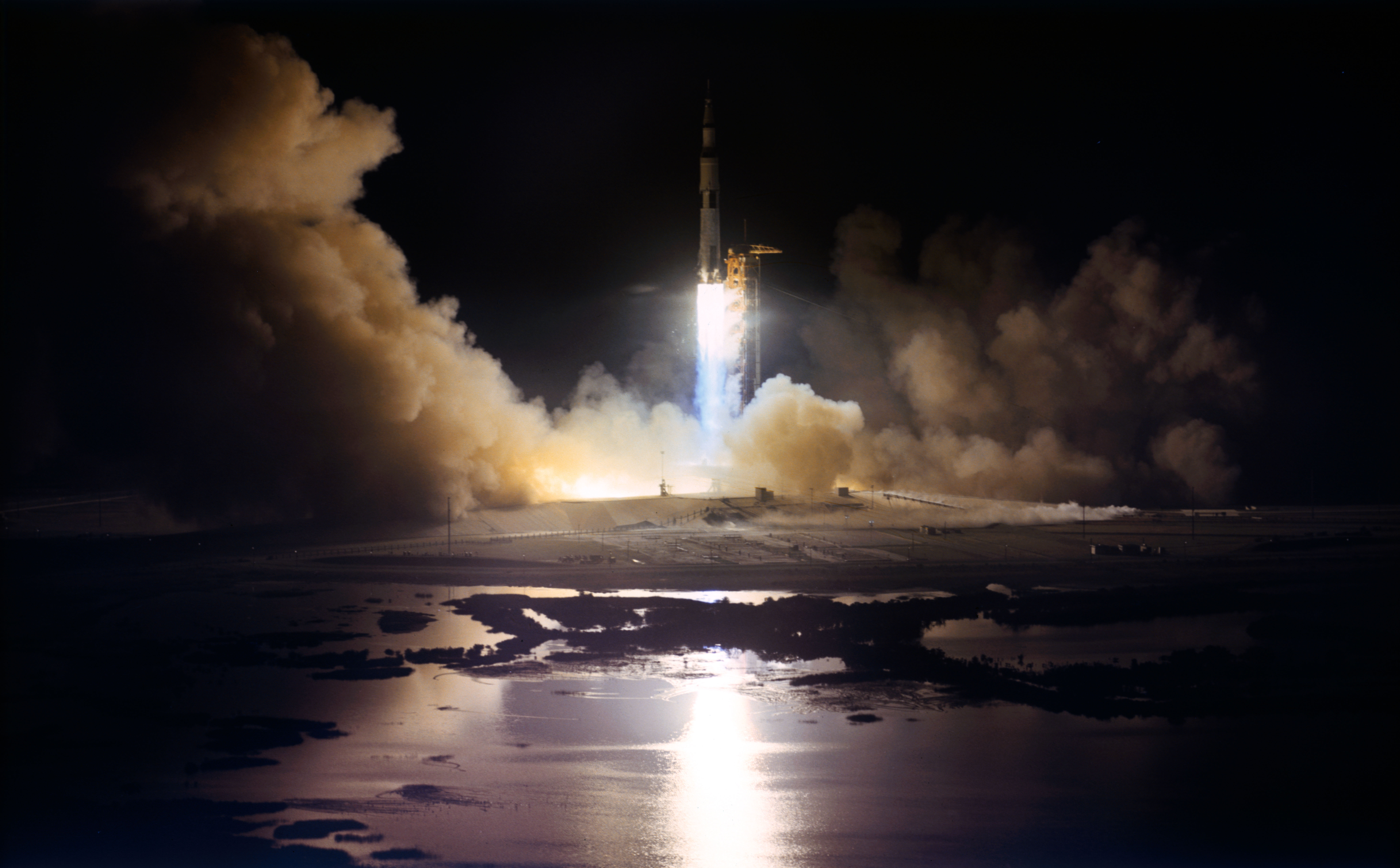
When did astronauts last walk on the moon?
Apollo 17, in December 1972. Eugene Cernan and Harrison Schmitt landed in the Taurus-Littrow valley on 11 December 1972, worked on the surface for three days… more…
- Image pending
Astronauts and life in space
How high do astronauts orbit the earth?
Crewed spaceflight today happens a few hundred kilometres up. The International Space Station orbits at about 400 km, lapping the planet roughly every 90… more…
