Did you know…
How does gravity exist in space?
Short answer
Gravity is a property of mass itself, so it exists everywhere there is matter, including the vacuum of space. Its pull weakens with the square of the distance but never reaches zero, which is why the Moon stays with Earth, Earth stays with the Sun and the ISS keeps falling around the planet.
Mass is what makes it
Gravity is not something space contains or lacks; it is a property of matter. Every mass attracts every other mass, with a force that grows with the masses involved and falls off as the square of the distance between them. In Einstein's description the mechanism is geometry: a mass distorts spacetime around it, and other objects follow the straightest available path through that distorted geometry. Either way the conclusion is the same. Wherever there is mass there is gravity, and the vacuum between bodies does nothing to block it, because gravity needs no medium to cross interplanetary distances. The force is feeble compared with electromagnetism, but it is always attractive and never cancels out, so at planetary scale it wins.
Weaker with distance, never zero
The inverse-square law means the pull fades quickly but never switches off. A few hundred kilometres up, where the International Space Station flies, Earth's gravity is only modestly weaker than at sea level, which is exactly what holds the station in orbit. The Sun's grip reaches far past Neptune and keeps comets bound to it thousands of times further out than Earth. Between galaxies, gravity is the only fundamental force that still matters at scale.
So why does everything float?
Because the crew and the station fall together. An orbiting vehicle is in continuous free fall; nothing presses the astronaut against a floor, so there is no sensation of weight, and a dropped pen falls alongside its owner rather than towards the deck. The proper term is microgravity, not zero gravity, and the distinction is not pedantry: the residual accelerations from atmospheric drag, tidal differences across the structure and the crew pushing off the walls are precisely what sensitive experiments have to be isolated from.
More questions
- Image pending
Astronauts and life in space
Why does astronauts float in space?
Because they are in free fall, not because gravity is absent. At the International Space Station's altitude of about 400 km, Earth still pulls almost as hard… more…
- Image pending
Astronauts and life in space
Why did yuri gagarin die?
Gagarin died in an aircraft crash, not in a spacecraft. On 27 March 1968 the MiG-15UTI trainer he was flying with instructor Vladimir Seryogin went down in… more…
- Image pending
Astronauts and life in space
How much an astronaut is paid?
NASA's civilian astronauts are ordinary federal employees, paid on the General Schedule grade-and-step scale with no bonus per flight, per spacewalk or per… more…
.png)
Astronauts and life in space
Why is blue origin so slow?
Blue Origin was built on deliberate, owner-funded incrementalism: its motto is Gradatim Ferociter, step by step, and it spent its first two decades on… more…
Astronauts and life in space
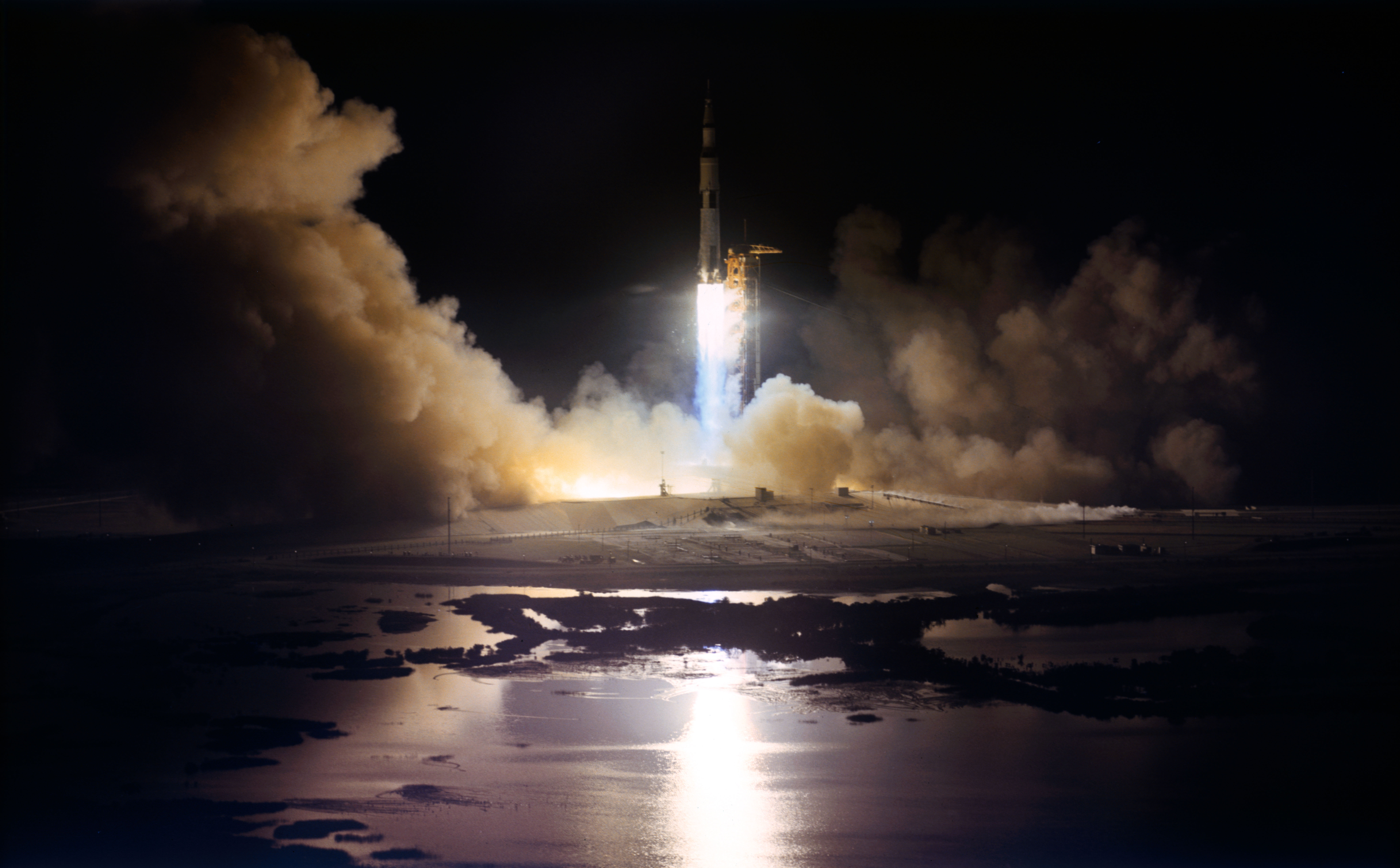
When did astronauts last walk on the moon?
Apollo 17, in December 1972. Eugene Cernan and Harrison Schmitt landed in the Taurus-Littrow valley on 11 December 1972, worked on the surface for three days… more…
- Image pending
Astronauts and life in space
How high do astronauts orbit the earth?
Crewed spaceflight today happens a few hundred kilometres up. The International Space Station orbits at about 400 km, lapping the planet roughly every 90… more…
