Did you know…
How does an astronaut poop in space?
Short answer
With suction instead of gravity. Space toilets use a fan-driven airflow to pull waste away from the body: solid waste goes into a bag inside a canister, urine into a funnel-and-hose system. On the International Space Station urine is recycled into drinking water, while solid waste is stored and burned up with a departing cargo vehicle.
Airflow replaces gravity
On Earth a toilet works because waste falls. In free fall nothing falls, so the plumbing has to create a directed flow of air. The seat opening on a spacecraft toilet is small — roughly the size of a dinner plate's centre — and beneath it a fan draws a continuous stream of air downwards, carrying solid waste into a bag lining a removable canister. The airflow is also what makes alignment critical; crews practise on a mock-up with a camera inside the bowl before flight, since there is no room for approximation.
Urine is handled separately, through a flexible hose ending in a funnel. Interchangeable funnels accommodate different anatomies, and the same suction principle applies. Foot restraints and thigh bars hold the user in place, because otherwise the act of sitting down would push them away.
What happens to it afterwards
The two streams diverge. Urine goes to the water recovery system, where a distillation assembly and filters turn it back into potable water; combined with condensate recovered from cabin humidity, the station recycles the large majority of the water it consumes, which is the only way to avoid launching every litre from the ground. The crews' standard line about drinking yesterday's coffee is accurate.
Solid waste is compacted, sealed and stored. It leaves the station inside a departing cargo vehicle that burns up on re-entry. Some samples, though, are kept and returned frozen for medical study of crew health and gut microbiology.
Design that keeps improving
The Universal Waste Management System, installed on the ISS in 2020 and adopted for Orion, is smaller and lighter than its predecessor, with a titanium structure, a redesigned seat and funnel, and better odour control. Spacewalks are a different problem entirely: there the answer is an absorbent garment worn inside the suit.
More questions
- Image pending
Astronauts and life in space
Why does astronauts float in space?
Because they are in free fall, not because gravity is absent. At the International Space Station's altitude of about 400 km, Earth still pulls almost as hard… more…
- Image pending
Astronauts and life in space
Why did yuri gagarin die?
Gagarin died in an aircraft crash, not in a spacecraft. On 27 March 1968 the MiG-15UTI trainer he was flying with instructor Vladimir Seryogin went down in… more…
- Image pending
Astronauts and life in space
How much an astronaut is paid?
NASA's civilian astronauts are ordinary federal employees, paid on the General Schedule grade-and-step scale with no bonus per flight, per spacewalk or per… more…
.png)
Astronauts and life in space
Why is blue origin so slow?
Blue Origin was built on deliberate, owner-funded incrementalism: its motto is Gradatim Ferociter, step by step, and it spent its first two decades on… more…
Astronauts and life in space
When did astronauts last walk on the moon?
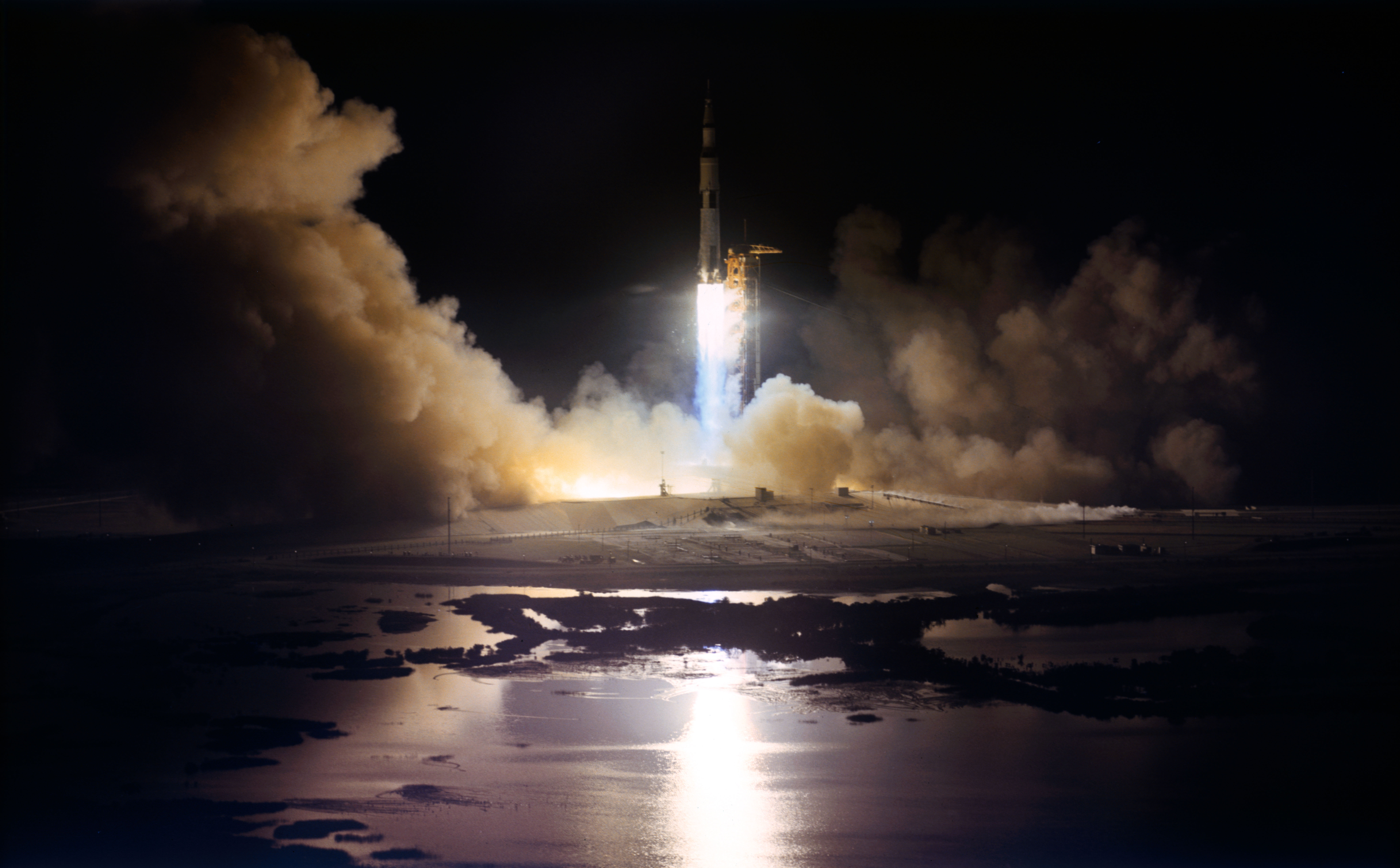
Apollo 17, in December 1972. Eugene Cernan and Harrison Schmitt landed in the Taurus-Littrow valley on 11 December 1972, worked on the surface for three days… more…
- Image pending
Astronauts and life in space
How high do astronauts orbit the earth?
Crewed spaceflight today happens a few hundred kilometres up. The International Space Station orbits at about 400 km, lapping the planet roughly every 90… more…
