Did you know…
How does an astronaut look like?
Short answer
There is no astronaut physique or face: crews are ordinary adults who pass a medical and a selection board. What is distinctive is the kit — white extravehicular suits with gold-tinted visors, polo shirts and socks indoors — and what weightlessness does: puffy faces, thinner legs and a slightly taller frame.
The suit is the costume
The image most people carry is of the white extravehicular suit: a rigid torso shell, fabric limbs, a backpack holding oxygen, water and batteries, and a helmet whose outer visor carries a microscopically thin gold coating that cuts glare and infrared. Russian Orlan suits are recognisable by their blue trim and rear-entry hatch. The pressure suits worn for launch and re-entry are different garments altogether, thinner and lighter, designed to inflate only if the cabin loses pressure.
Ordinary clothes inside
Most of an astronaut's working life is spent out of any suit. Aboard the station the uniform is a polo shirt and trousers with a great many pockets, plus socks; shoes are pointless where nobody walks, and the tops of the feet develop calluses from being hooked under handrails while the soles go soft. Hair drifts upwards, so long hair is tied back or left to form a halo, and the same clothes are worn for days because there is no laundry.
What weightlessness rewrites
The body itself changes shape within hours. With nothing pulling blood and lymph towards the legs, fluid collects in the chest and head: faces look rounder and flushed, neck veins stand out and the legs thin down, a combination crews describe as puffy face and bird legs. The spine decompresses, so astronauts are measurably taller in orbit than on the ground, and a permanent head-cold stuffiness blunts taste and smell. None of it is permanent; the look reverses within days of landing, although bone and muscle take far longer to recover.
More questions
- Image pending
Astronauts and life in space
Why does astronauts float in space?
Because they are in free fall, not because gravity is absent. At the International Space Station's altitude of about 400 km, Earth still pulls almost as hard… more…
- Image pending
Astronauts and life in space
Why did yuri gagarin die?
Gagarin died in an aircraft crash, not in a spacecraft. On 27 March 1968 the MiG-15UTI trainer he was flying with instructor Vladimir Seryogin went down in… more…
- Image pending
Astronauts and life in space
How much an astronaut is paid?
NASA's civilian astronauts are ordinary federal employees, paid on the General Schedule grade-and-step scale with no bonus per flight, per spacewalk or per… more…
.png)
Astronauts and life in space
Why is blue origin so slow?
Blue Origin was built on deliberate, owner-funded incrementalism: its motto is Gradatim Ferociter, step by step, and it spent its first two decades on… more…
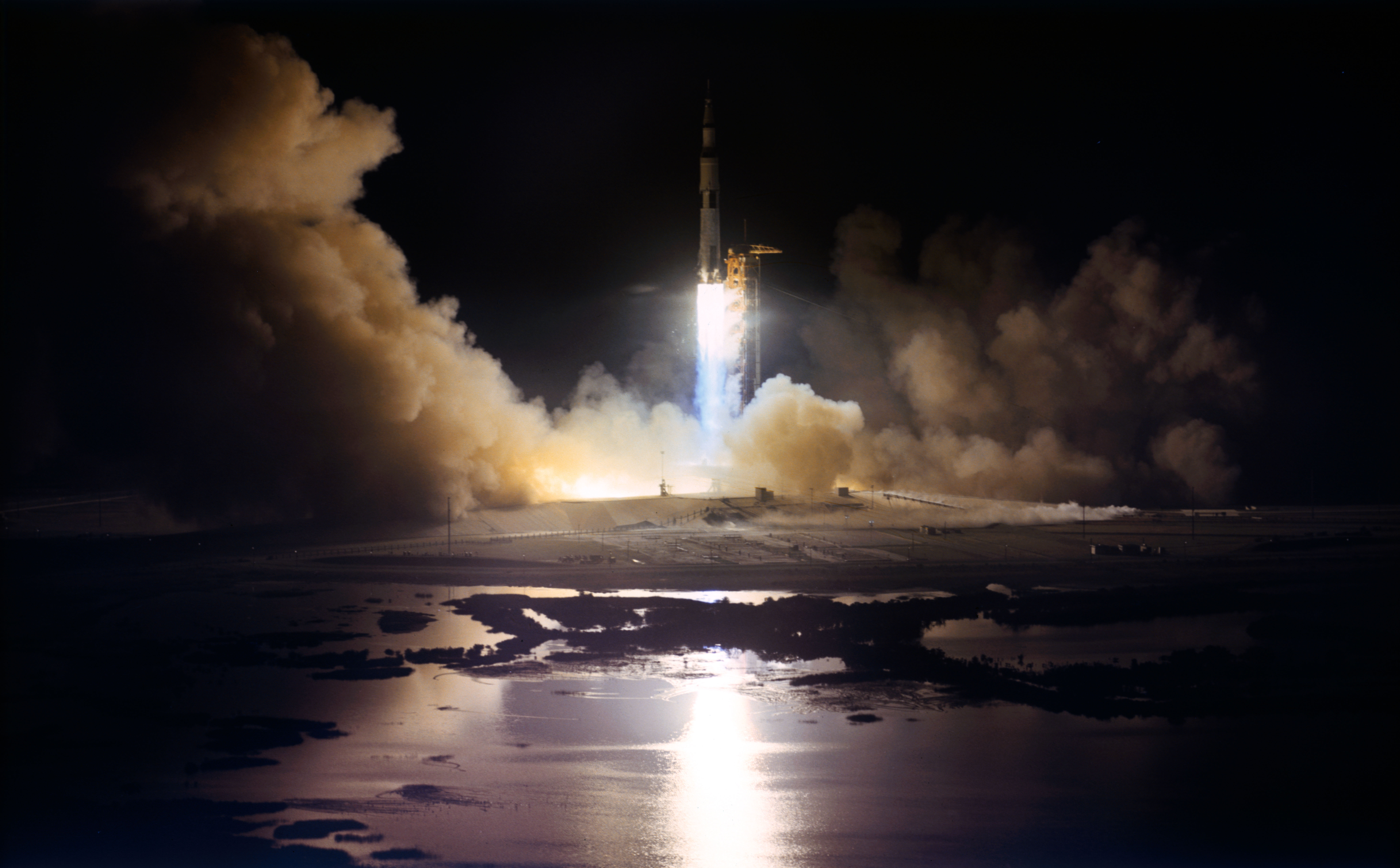
Astronauts and life in space
When did astronauts last walk on the moon?
Apollo 17, in December 1972. Eugene Cernan and Harrison Schmitt landed in the Taurus-Littrow valley on 11 December 1972, worked on the surface for three days… more…
- Image pending
Astronauts and life in space
How high do astronauts orbit the earth?
Crewed spaceflight today happens a few hundred kilometres up. The International Space Station orbits at about 400 km, lapping the planet roughly every 90… more…
