Did you know…
How does an astronaut get paid?
Short answer
Like any other government employee, in the case of NASA: civilian astronauts are federal civil servants paid on the General Schedule, with a regular salary, health insurance and a pension, no matter whether they are in orbit or in a classroom. Military astronauts stay on their service's pay scale while detailed to NASA.
A salary, not a fee per flight
The most common misconception is that astronauts are paid for flying, as if each mission carried a bonus. They are not. A NASA astronaut selected as a civilian becomes an employee of the agency and draws a fixed annual salary under the federal General Schedule, the same pay system that covers most professional civil servants in the United States. The money arrives every pay period whether the astronaut is training in a pool in Houston, supporting a mission from a console, speaking at a school or floating aboard the International Space Station.
That structure has a practical reason. Astronauts spend the overwhelming majority of their careers on the ground. Selection is followed by roughly two years of basic training, then years of technical assignments before a flight is even assigned, and many astronauts wait a long time between missions. A pay scheme tied to launches would leave most of them unpaid most of the time.
Military detailees and other agencies
A large share of the corps comes from the armed forces. Those astronauts remain on active duty and continue to be paid by their own service according to rank and years of service, with NASA reimbursing the detail rather than issuing a separate salary. Their promotions still run through the military chain.
Other agencies work the same way. European Space Agency astronauts are ESA staff on the organisation's own grade structure, and JAXA and Roscosmos crew members are employees of their respective agencies.
The commercial exception
Private spaceflight has introduced a different model. Companies such as SpaceX and Axiom Space employ their own flight crew, and on private missions the people flying may be paying customers, sponsored researchers or corporate employees. In those cases the commercial contract, not a public pay scale, decides who is paid and how much.
More questions
- Image pending
Astronauts and life in space
Why does astronauts float in space?
Because they are in free fall, not because gravity is absent. At the International Space Station's altitude of about 400 km, Earth still pulls almost as hard… more…
- Image pending
Astronauts and life in space
Why did yuri gagarin die?
Gagarin died in an aircraft crash, not in a spacecraft. On 27 March 1968 the MiG-15UTI trainer he was flying with instructor Vladimir Seryogin went down in… more…
- Image pending
Astronauts and life in space
How much an astronaut is paid?
NASA's civilian astronauts are ordinary federal employees, paid on the General Schedule grade-and-step scale with no bonus per flight, per spacewalk or per… more…
.png)
Astronauts and life in space
Why is blue origin so slow?
Blue Origin was built on deliberate, owner-funded incrementalism: its motto is Gradatim Ferociter, step by step, and it spent its first two decades on… more…
Astronauts and life in space
When did astronauts last walk on the moon?
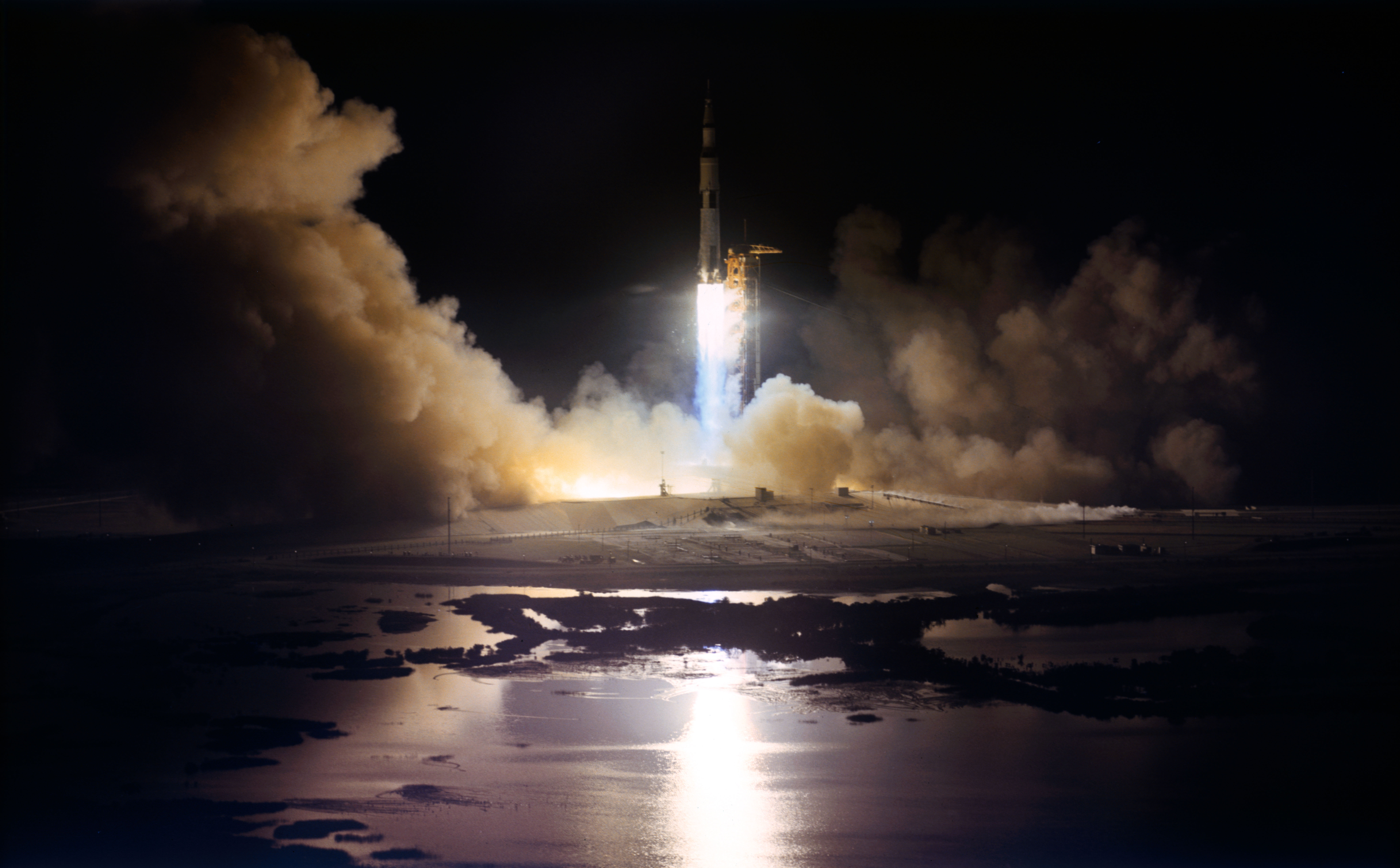
Apollo 17, in December 1972. Eugene Cernan and Harrison Schmitt landed in the Taurus-Littrow valley on 11 December 1972, worked on the surface for three days… more…
- Image pending
Astronauts and life in space
How high do astronauts orbit the earth?
Crewed spaceflight today happens a few hundred kilometres up. The International Space Station orbits at about 400 km, lapping the planet roughly every 90… more…
