Did you know…
Can Apollo 11 be seen from Earth?
Short answer
Not with a telescope: the descent stage left behind in the Sea of Tranquility is too small for any ground-based instrument and had to be photographed from lunar orbit by the LRO probe. What is used daily from Earth is the 100-prism laser reflector the crew left behind on July 21, 1969.

What remains in the Sea of Tranquility
At the landing site the Eagle's descent stage remains — the lower half of the lunar module that served as a launch platform for Armstrong and Aldrin. It's still there, intact, but no ground-based telescope can make it out: at that distance, an object a few meters across falls well below what any Earth-based instrument can resolve. Visual proof had to come from much closer.
NASA's Lunar Reconnaissance Orbiter (LRO) photographed the site decades after the landing. Its images show the descent stage, as well as the tracks left by the astronauts' boots on the regolith, visible because the disturbed dust reflects light differently than undisturbed ground.
The mirror that does answer
There is, however, a way to reach Apollo 11 from Earth: the laser reflector the crew deployed on July 21, 1969. It's a square panel, 46 by 46 centimeters, containing 100 corner-cube prisms, a design that sends light back exactly in the direction it came from. A telescope fires a laser pulse, the panel reflects it, and the round-trip time is measured.
More than fifty years later it still provides first-rate scientific data: the Earth-Moon distance with enormous precision, its slow and steady increase, our planet's orientation, and properties of the lunar interior. It's the Apollo program experiment that never switched off.
And what came back
The only piece of Apollo 11 that can be seen up close is on Earth: the Columbia command module, the part of the spacecraft that returned with the three crew members, is held in the collection of the Smithsonian's National Air and Space Museum.
More questions
Moon and Mars
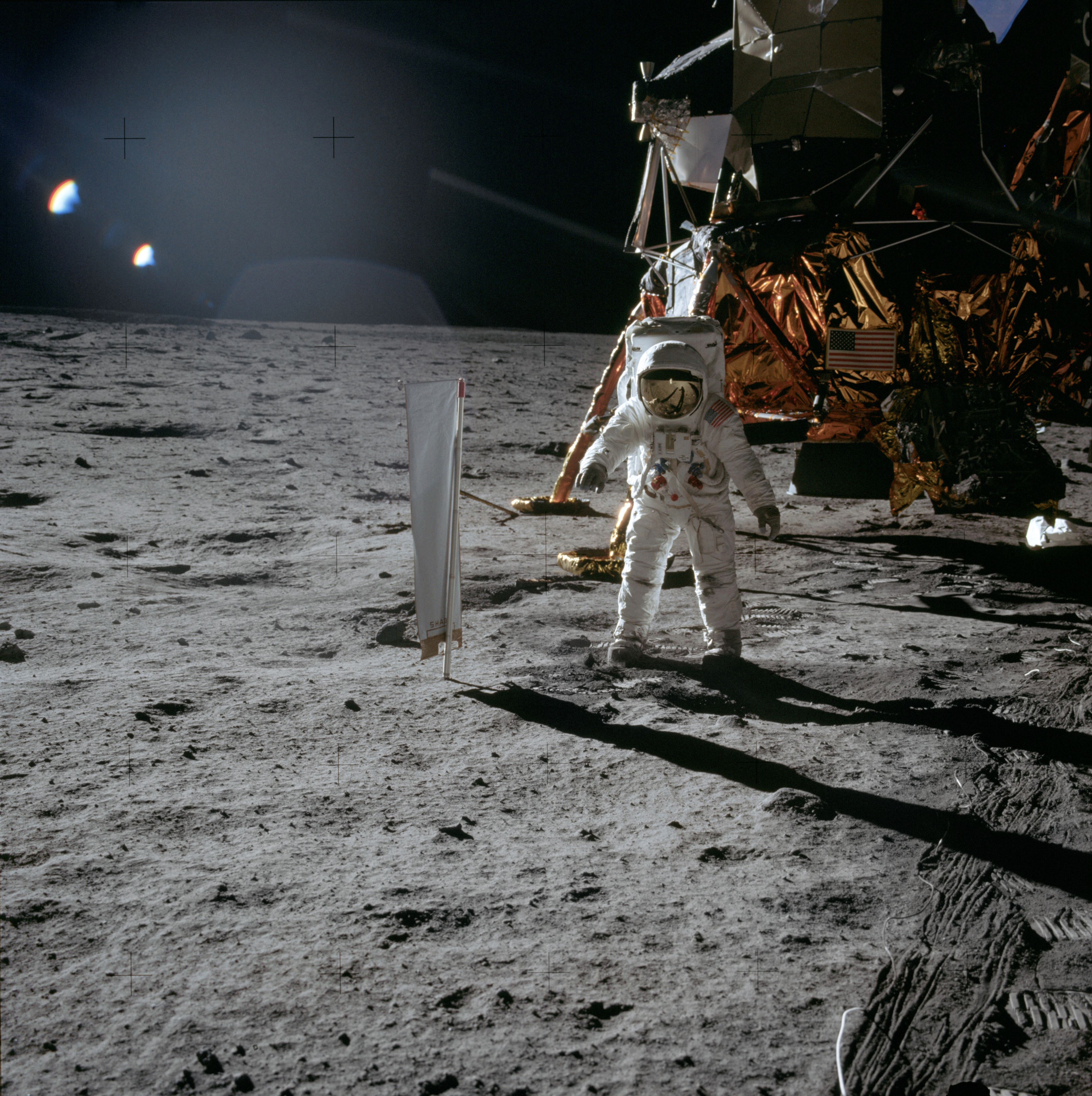
How does neil armstrong look like?
The face most people picture is not his: the gold-visored astronaut in the famous Apollo 11 photograph is Buzz Aldrin, shot by Armstrong. Armstrong himself is… more…

Richard Dorrell (CC BY SA), vía commons Moon and Mars
How does the moon affect the tides?
By pulling unevenly on it. Tidal forces vary inversely as the cube of the distance, so the near side of the Earth is tugged harder than the far side: one… more…
Moon and Mars
Why does neil armstrong have a hollywood star?
Strictly he does not have a star. Armstrong, Aldrin and Collins share four circular monuments resembling the Moon, one at each corner of Hollywood and Vine… more…
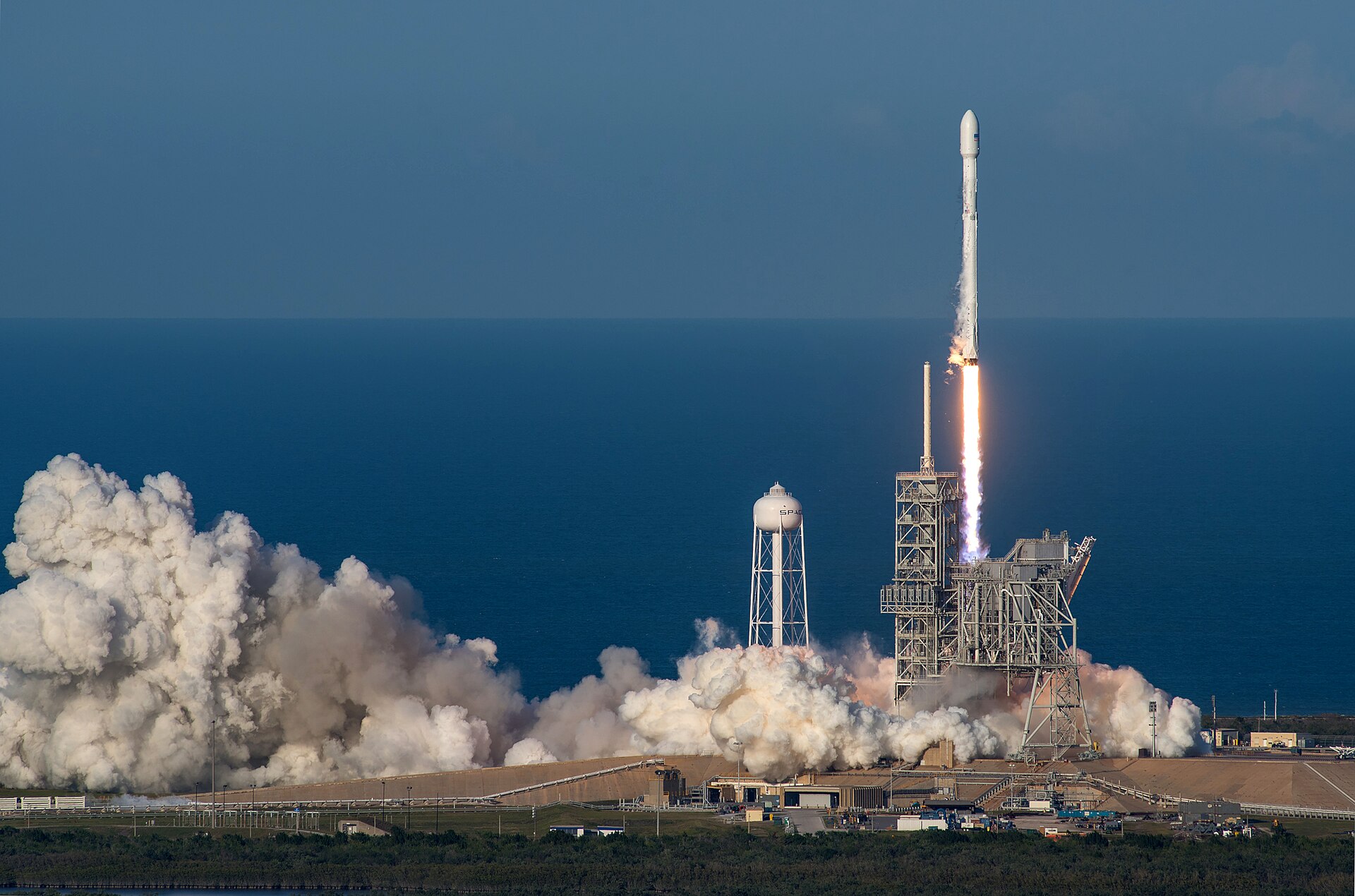
Foto: SpaceX (CC0) Moon and Mars
Why did falcon 9 hit the moon?
Because a spent upper stage on a lunar trajectory has no mission and no way to steer. A Falcon 9 upper stage from the January 2025 Firefly Blue Ghost 1 launch… more…
Moon and Mars
How much apollo 11 cost?
NASA never published a price for Apollo 11 on its own; what is documented is the program. The United States spent $25.8 billion on Project Apollo between 1960… more…
Moon and Mars
How much time neil armstrong spent on moon?
Armstrong and Aldrin spent 21 hours, 36 minutes on the Moon's surface, almost all of it inside the lunar module Eagle. Armstrong stepped onto the surface… more…
