Did you know…
How high does Blue Origin reach?
Short answer
Blue Origin's New Shepard climbs to about 105-107 km, just above the Kármán line (100 km), on a roughly ten-minute suborbital flight. New Glenn, its orbital rocket, isn't measured by altitude: on its maiden flight, in January 2025, it placed its second stage in an orbit of about 2,400 × 19,300 km.
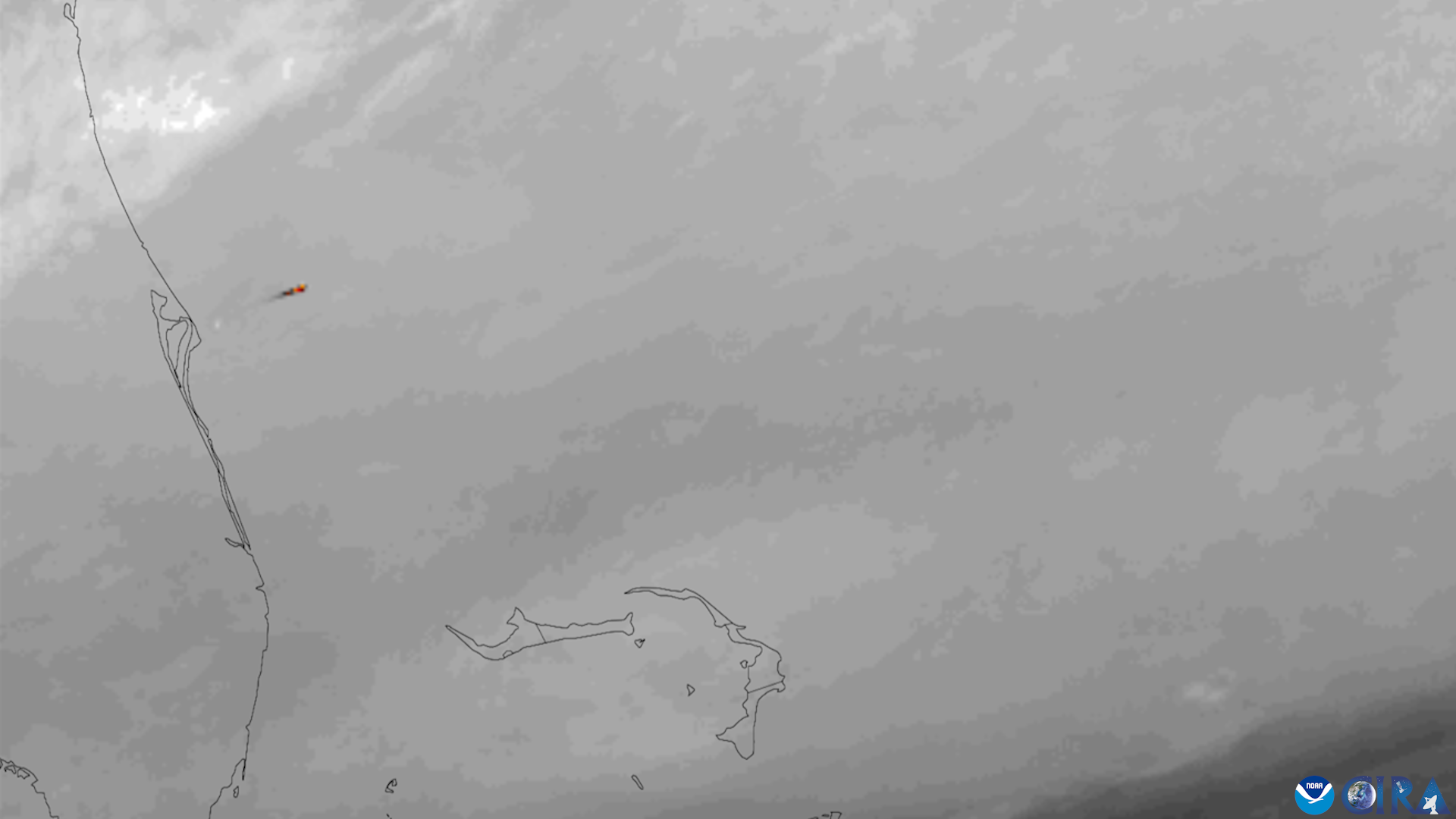
New Shepard: a leap past 100 km
Blue Origin's suborbital vehicle launches vertically from West Texas and shuts down its BE-3 engine at about two and a half minutes into flight, at over 3,500 km/h. The capsule separates and keeps climbing on momentum to an apogee that, on crewed missions, has ranged between 105 and 107 km. That margin above the Kármán line, set by the International Aeronautical Federation at 100 km, is what lets the company present its passengers as astronauts. Up there they enjoy three to four minutes of weightlessness before the capsule reenters and deploys three parachutes; the booster, meanwhile, reignites its engine and lands vertically a few kilometers from the pad.
New Glenn: altitude stops mattering
With the 98 m New Glenn, Blue Origin entered the orbital business. Here the question changes: a launcher doesn't climb to a height and stop, it accelerates its payload to about 7.8 km/s or more so it stays in orbit. On its maiden flight, on January 16, 2025, the second stage reached an orbit of about 2,400 × 19,300 km with the Blue Ring test payload, although the first-stage booster failed to land on the barge. It is expected to carry satellites to low Earth orbit, geostationary orbit, and even toward the Moon with the Blue Moon lander.
Why the two numbers don't compare
An altitude of 107 km looks modest next to the International Space Station's 400 km, but the real difference isn't distance, it's energy. New Shepard reaches about 3,600 km/h at its fastest point; a ship in low Earth orbit needs about 28,000 km/h. Sustaining that speed, and especially braking it on reentry, requires very different heat shields and structures, which explains why the leap from one program to the other took the company more than a decade.
More questions
Foto: SpaceX (CC0) Rockets and launches
How many horsepower does the Falcon 9 have?
Rockets aren't measured in horsepower, but in thrust: the Falcon 9's first stage's nine Merlin engines deliver 7,686 kN (1,710,000 lbf) combined at sea level… more…
Foto: SpaceX (CC0) Rockets and launches
How much a rocket weight?
Rockets range from about 13 t for Rocket Lab's Electron to roughly 549 t for Falcon 9, 2,800 t for Saturn V and close to 5,000 t for Starship with its Super… more…

Rockets and launches
What does the saturn v look like?
Saturn V looked like a white needle 110.6 m (363 ft) tall and 10.1 m wide at the base, painted with black roll-pattern stripes, the words UNITED STATES and… more…
Foto: SpaceX (CC0) Rockets and launches
Why do rockets launch from florida?
Rockets launch from Florida because the Cape sits at 28.5 degrees north, low enough to gain about 410 m/s from the Earth's rotation on an eastward launch, and… more…
Foto: SpaceX (CC0) Rockets and launches
How much falcon 9 launch cost?
SpaceX lists a standard Falcon 9 mission at 69.75 million dollars, with the booster recovered (data as of January 2025). Small satellites can share a ride… more…
Rockets and launches
How does the saturn v work?
Saturn V worked by staging: a kerosene first stage with five F-1 engines (about 34,000 kN) lifted the 2,800 t rocket for two and a half minutes, a… more…

