FREEDOM FIGHTER: The Original Northrop F-5 Was A US Fighter Build Like A Soviet One
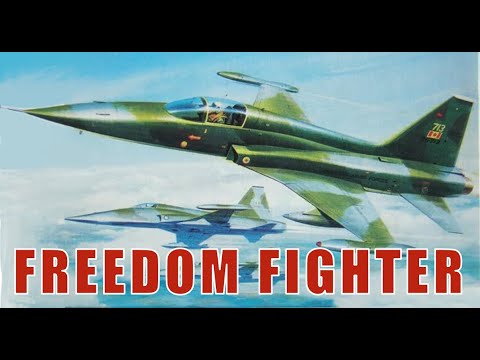
Video from the channel Not A Pound For Air To Ground about Northrop F-5, linked on its Above Ten Thousand entry. Duration: 43:28. Language: English. Video type: Documentary.
What it's about
Analytical documentary on the first generation of the Northrop F-5, the Freedom Fighter, predecessor of the F-5E Tiger II. It covers its genesis from Northrop's light-fighter studies, its adoption through the US Military Assistance Program, its deployment in Vietnam as part of the Skoshi Tiger evaluation, and an assessment of how it would have performed as an air-superiority fighter against the MiG-21 and the MiG-17.
Historical context
After the Korean War, the success of the MiG-15 sparked Western interest in small, rugged and simple fighters. Northrop pursued the idea following NATO's 1954 competition: the N-102 Fang study never left the drawing board, while the N-156, built around two small General Electric J85 engines originally created for the Quail decoy, led first to the T-38 trainer and then to the single-seat N-156F, whose first prototype flew in July 1959. With no orders and Army interest blocked by the Air Force, the program was saved when the FX project was revived and Northrop was declared the winner on 25 April 1962; the aircraft was renamed F-5. In 1965 the Air Force sent a squadron of F-5Cs, a version with in-flight refueling, armor and other improvements, to South Vietnam for close air support missions.
Key facts
The design prioritized low operating cost and ease of maintenance: a quarter of the airframe consisted of removable doors or panels, and a good crew could swap both engines in about two hours. By 1964 an F-5 cost about $750,000, against $1.9 million for an F-4C, and its maintenance cost per flight hour was $187, against $395 for the Starfighter. In Skoshi Tiger almost 10,000 sorties were flown, with availability rates around 95% and nine aircraft lost. The Have Doughnut tests with a MiG-21F-13 indicated that the F-5 could compete below 15,000 feet, though the author concludes that its lack of radar, range and electronic warfare equipment kept it from being a real alternative to the Phantom.