Lockheed Martin F-35 Lightning II variant
Lockheed Martin F-35 Lightning II F-35C Lightning II
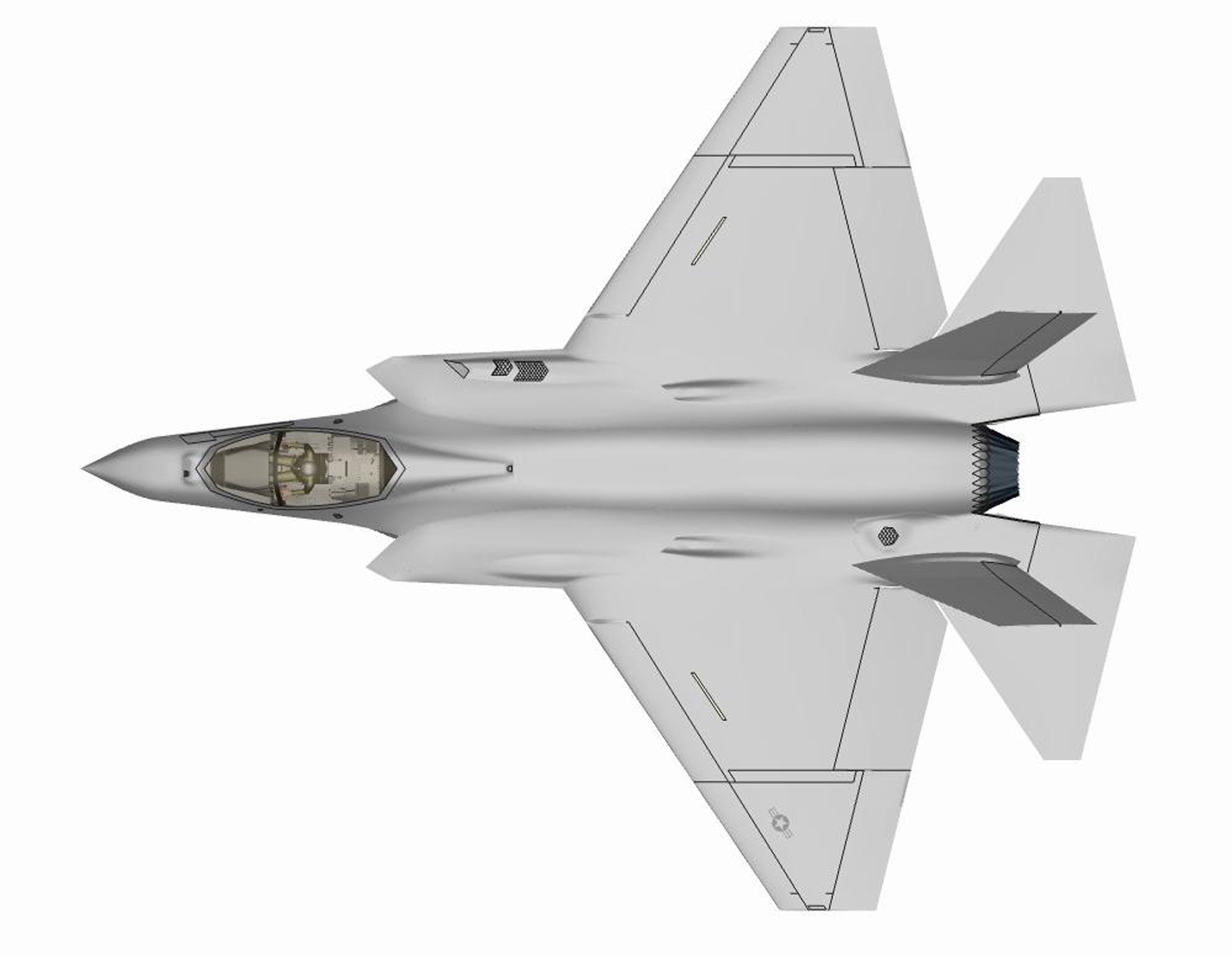
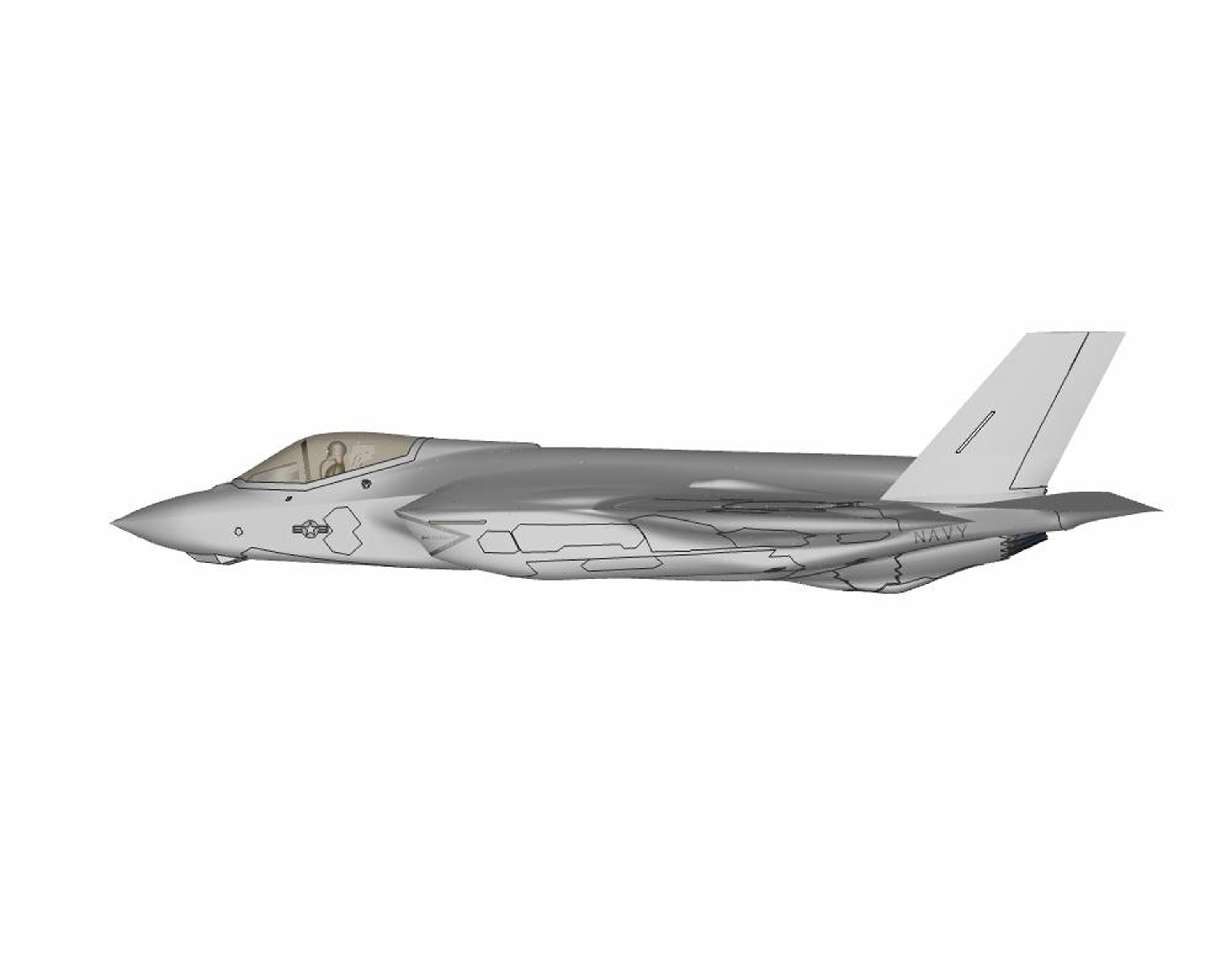
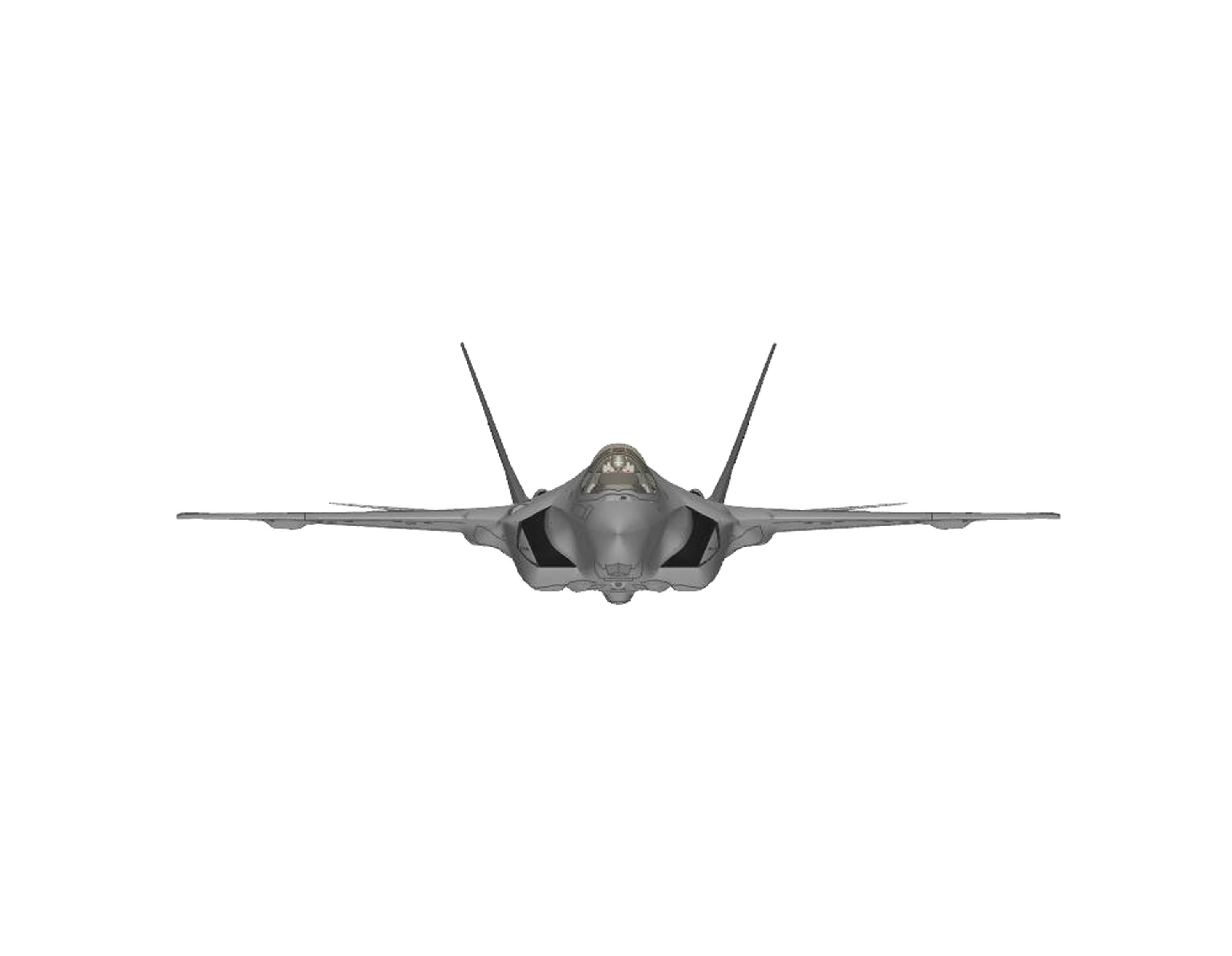
The F-35C is the carrier-based version of the Lightning II, designed for catapult launch and arrested recovery. It is distinguished by a much larger wing with folding tips, enlarged control surfaces, reinforced landing gear with a twin-wheel nose unit and a robust arresting hook built for repeated use. That wing gives it the longest range and the greatest payload in the family in exchange for the poorest thrust-to-weight ratio. It flew on 6 June 2010, made its first arrested landing on 3 November 2014 and the United States Navy declared initial operational capability on 28 February 2019.
Lockheed Martin F-35 Lightning II sheet
-1600.webp)
- June 6, 2010
- First flight
- 2,222 km
- Range
History
The F-35C was created to give the United States Navy a stealthy carrier fighter after the cancellation of the A-12 Avenger II, and to complement rather than replace the F/A-18E/F Super Hornet. Its requirements are the most demanding in the family in everything surrounding the arrested landing: low approach speed, structure able to absorb tens of thousands of cable recoveries, and the ability to fold for decks and hangars.
Hence its most visible feature: a wing far larger than those of the other two variants, with folding tips, and enlarged control surfaces that improve handling at low speed. The big wing brings an unexpected benefit for a carrier aircraft: it is the longest-ranged and highest-payload variant, and the one that performs best at medium and low altitude.
First flight came on 6 June 2010, but the programme soon ran into trouble with the arresting hook, mounted too close to the main landing gear to give the cable time to rise off the deck. Ground trials failed systematically and the assembly had to be redesigned outright. The aircraft did not achieve its first real arrested landing until 3 November 2014, aboard USS Nimitz.
The Navy, more demanding than the other two services about software maturity and the recovery system, waited until 28 February 2019 to declare initial operational capability, with squadron VFA-147. In January 2022 an F-35C crashed while landing on USS Carl Vinson in the South China Sea, and the wreck had to be recovered from the seabed.
Like the F-35B, the F-35C has no internal gun and carries one in an optional stealthy ventral pod. Its intended role goes beyond striking: with its sensors and data links it acts as a network node for the carrier air wing, designating targets that other aircraft or ships engage. The United States Navy plans a large fleet, and the Marine Corps also operates the variant in squadrons integrated into the carrier air wings.
Three-view drawing
Multimedia


