Lockheed Martin F-35 Lightning II variant
Lockheed Martin F-35 Lightning II F-35B Lightning II
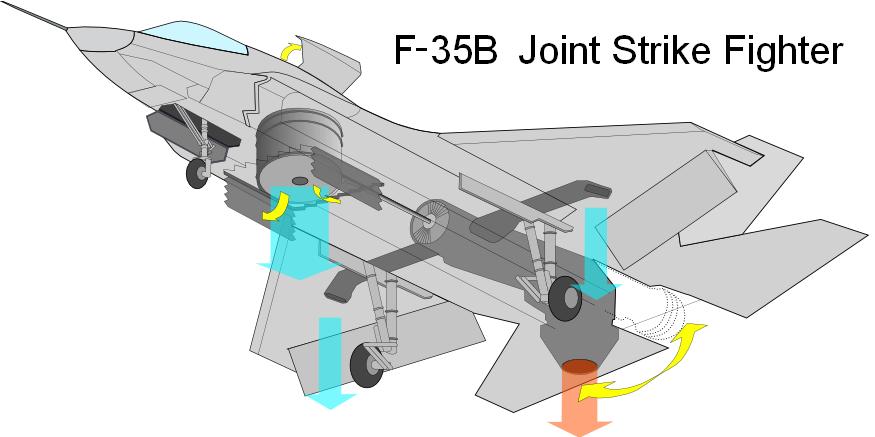
The F-35B is the short take-off and vertical landing version, conceived for the United States Marine Corps and for operations from amphibious assault ships, light carriers and improvised surfaces. Its shaft-driven lift fan behind the cockpit and its three-bearing swivel nozzle made it the first stealthy supersonic aircraft able to land vertically. In exchange it gives up a third of its internal fuel and its structural limit drops to +7 g. It flew on 11 June 2008 and was the first variant to reach initial operational capability, on 31 July 2015.
Lockheed Martin F-35 Lightning II sheet

- June 11, 2008
- First flight
- 1,667 km
- Range
History
The F-35B is both the reason the programme exists and its greatest technical risk: without the short take-off and vertical landing requirement there would have been no need for a design common to three services, and without that requirement the F-35 would not have suffered the weight crisis that reshaped its schedule.
Its lift solution comes straight from the X-35B demonstrator, which on 20 July 2001 strung together a short take-off, a supersonic acceleration in level flight and a vertical landing in a single sortie. The assembly — the Rolls-Royce LiftSystem — combines a two-stage counter-rotating fan driven by a shaft taken off the engine through a clutch, an exhaust nozzle that rotates on three bearings until it points at the ground, and two ducts carrying compressor air to roll posts in the wings for lateral control.
In 2004 detailed calculations showed the variant was more than a tonne over the weight admissible for vertical landing. The STOVL Weight Attack Team redesigned the centre structure, replaced metal with composites, shortened the weapons bays, reduced the vertical tails and cut internal fuel; the result was applied to the other two variants as well and cost the programme nearly two years.
First flight came on 11 June 2008 and the first vertical landing in March 2010. Testing exposed problems with the lift-fan doors and with the temperatures the vertical jet imposes on ship decks. In January 2011 Defense Secretary Robert Gates placed the variant on a two-year probation with an explicit threat of cancellation; good test results lifted the condition in January 2012.
The Marine Corps declared initial operational capability on 31 July 2015 with squadron VMFA-121, ahead of both the Air Force and the Navy, and deployed its aircraft to Japan in 2017. The United States first used the variant in combat in 2018. The United Kingdom also chose the F-35B — the only option for its Queen Elizabeth class carriers, which have no catapults — and Italy bought it for both its navy and its air force.
Its least obvious peculiarity concerns weapons: having no internal gun, the F-35B carries one in a stealthy ventral pod that can be fitted or left off depending on the mission, and its bays, shorter than those of the other two variants, limit the size of the stores it can carry in stealth configuration.
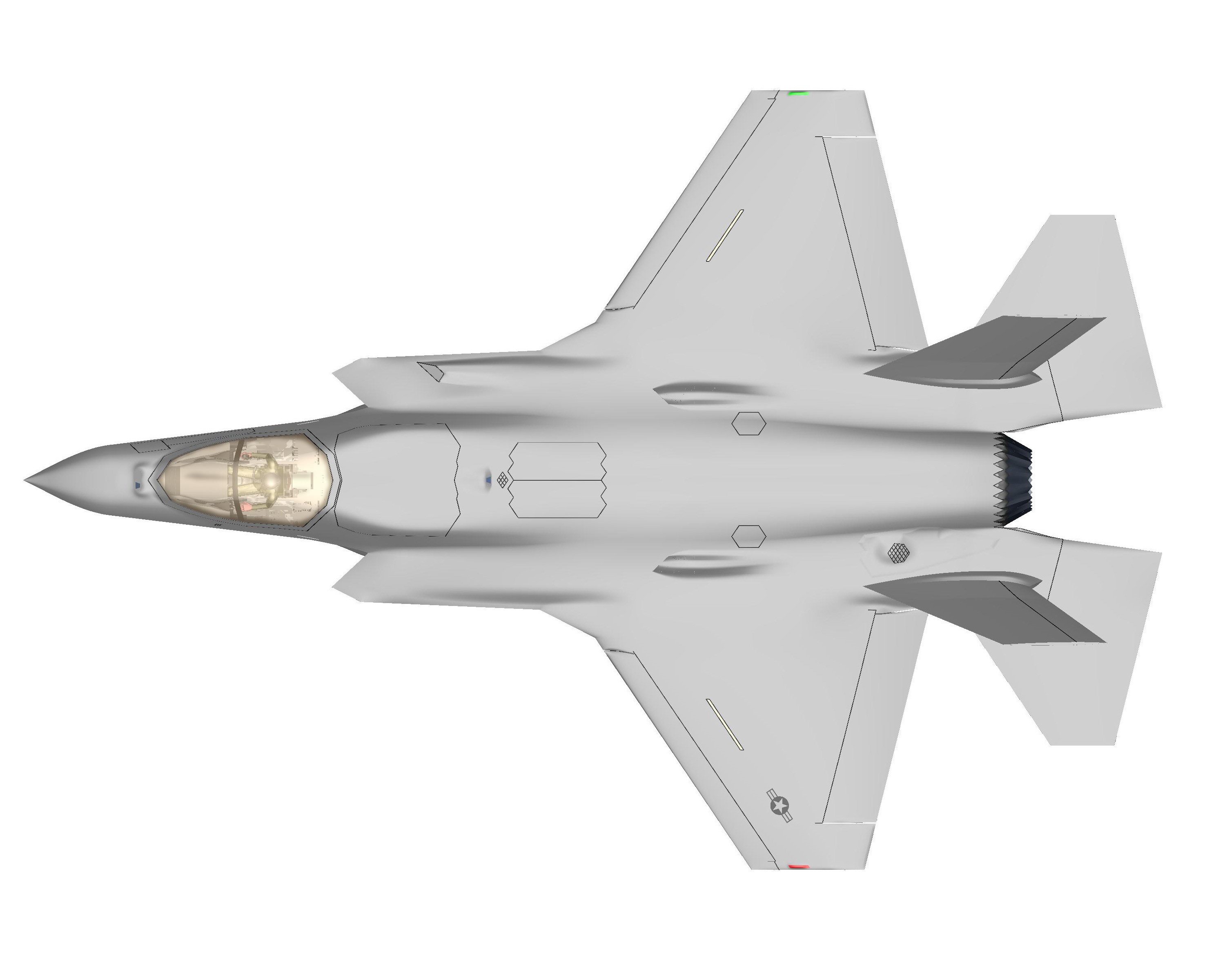
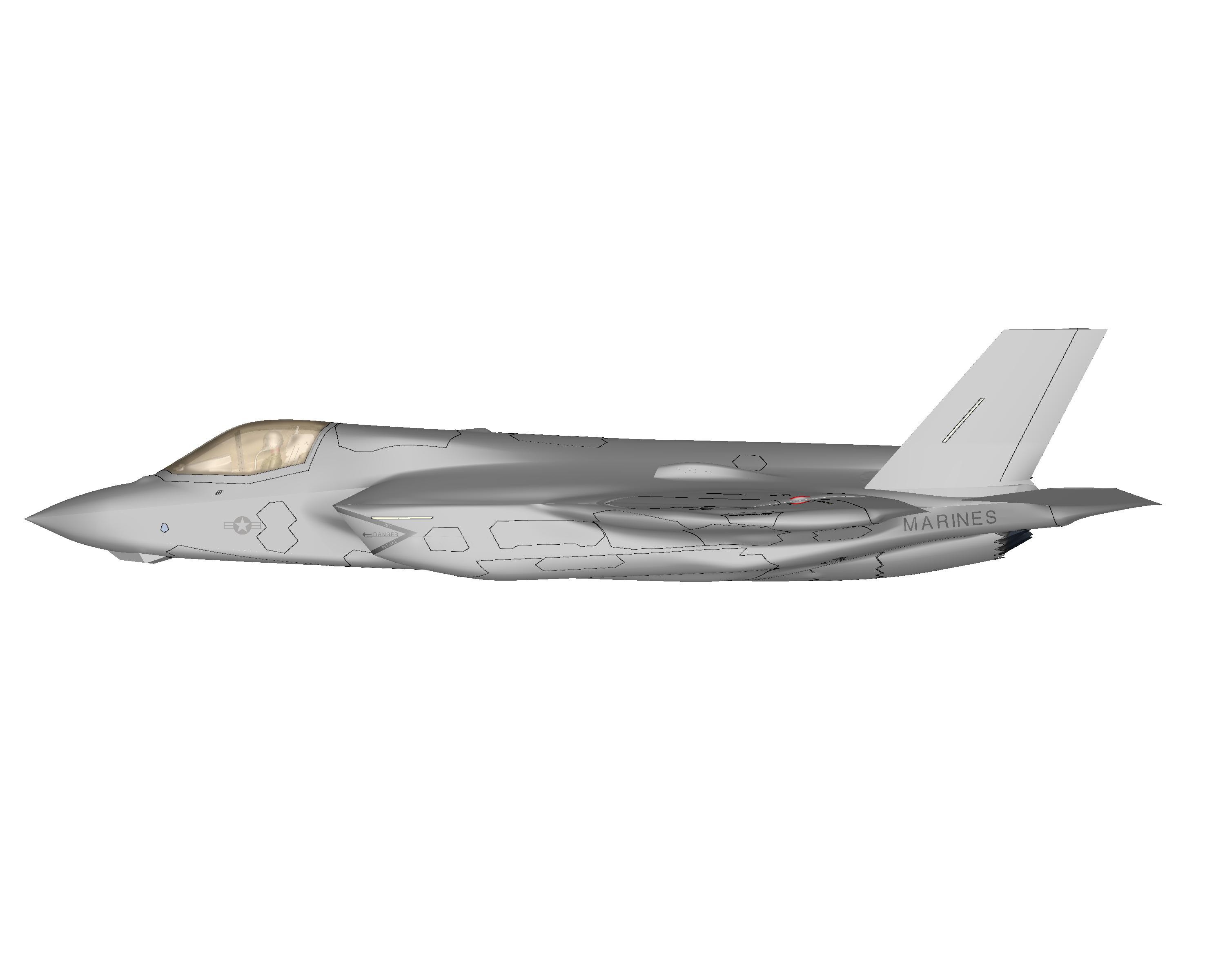
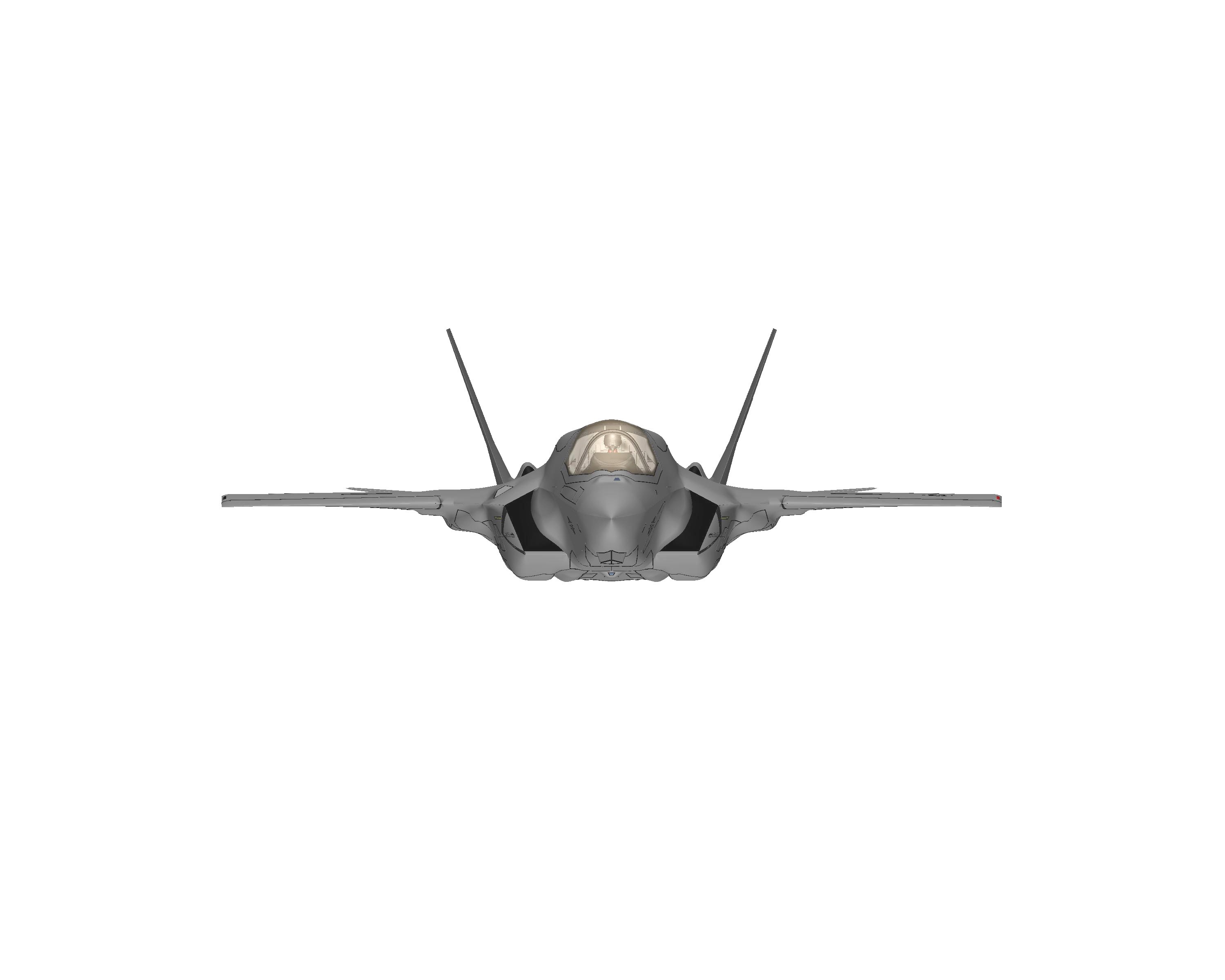
Three-view drawing
Multimedia


Elsewhere
Videos
Photos
- Flickr — Lockheed MartinDisparo real de un misil ASRAAM desde el F-35B ↗
- Flickr — Lockheed MartinFuego real del cañón de 25 mm en cápsula del F-35B ↗
- Rolls-RoyceEl LiftSystem de Rolls-Royce que hace posible el F-35B ↗
- Flickr — Marina MilitareArchivo fotográfico oficial de la Marina Militare, operadora del F-35B ↗