Lockheed Martin F-35 Lightning II variant
Lockheed Martin F-35 Lightning II F-35A Lightning II
The F-35A is the conventional take-off and landing version of the Lightning II, intended for the United States Air Force and for most export customers. It is the smallest and lightest of the three, the only one with an internally mounted gun, and the one cleared to the highest load factor, +9 g. It first flew on 15 December 2006 as the AA-1 prototype and reached initial operational capability with the USAF on 2 August 2016. It is also the most numerous variant and the basis for Israel’s F-35I and for the European and Asian orders.
Lockheed Martin F-35 Lightning II sheet

- December 15, 2006
- First flight
- 2,800 km
- Range
History
The F-35A was the programme’s baseline variant: the one that set the airframe’s basic dimensions and the unit cost target that justified the whole Joint Strike Fighter, because replacing the large F-16 and A-10 fleets of the United States Air Force and its allies depended on it.
The first aircraft, serial AA-1, flew on 15 December 2006 from Fort Worth with Jon Beesley at the controls, before the weight redesign driven by the STOVL version reached the production line; AA-1 was therefore never representative of the production standard and was used for structural and basic envelope testing. Later aircraft incorporated the lightened structure.
Crew training began at Eglin Air Force Base in Florida and at Luke in Arizona, where partner-nation pilots were also trained. The Air Force declared initial operational capability on 2 August 2016 with the 34th Fighter Squadron at Hill Air Force Base, Utah, using Block 3i software; the Block 3F standard, which completed the envelope and the weapons set, followed later.
Its GAU-22/A cannon is mounted internally in the left wing root with a modest 180-round load, a choice the other two variants do not share since both carry it in a ventral pod. The F-35A can also take a drag chute pod — the Royal Norwegian Air Force was the first to adopt it, with short and icy runways in mind — and a single-use emergency tailhook that has nothing to do with the reusable hook of the carrier version.
It is the only variant certified for NATO’s nuclear mission with the B61-12 bomb, which made it the inevitable choice for European countries taking part in the Alliance’s nuclear sharing. Germany ordered its fleet specifically for that role, and the Netherlands assigned the mission to the aircraft based at Volkel.
The upgrades under way — Technology Refresh 3 avionics and the Block 4 capability package — affect the F-35A as they do the rest of the family. Canadian aircraft will additionally receive the "Sidekick" system, which raises the number of AIM-120D missiles carried internally from four to six.
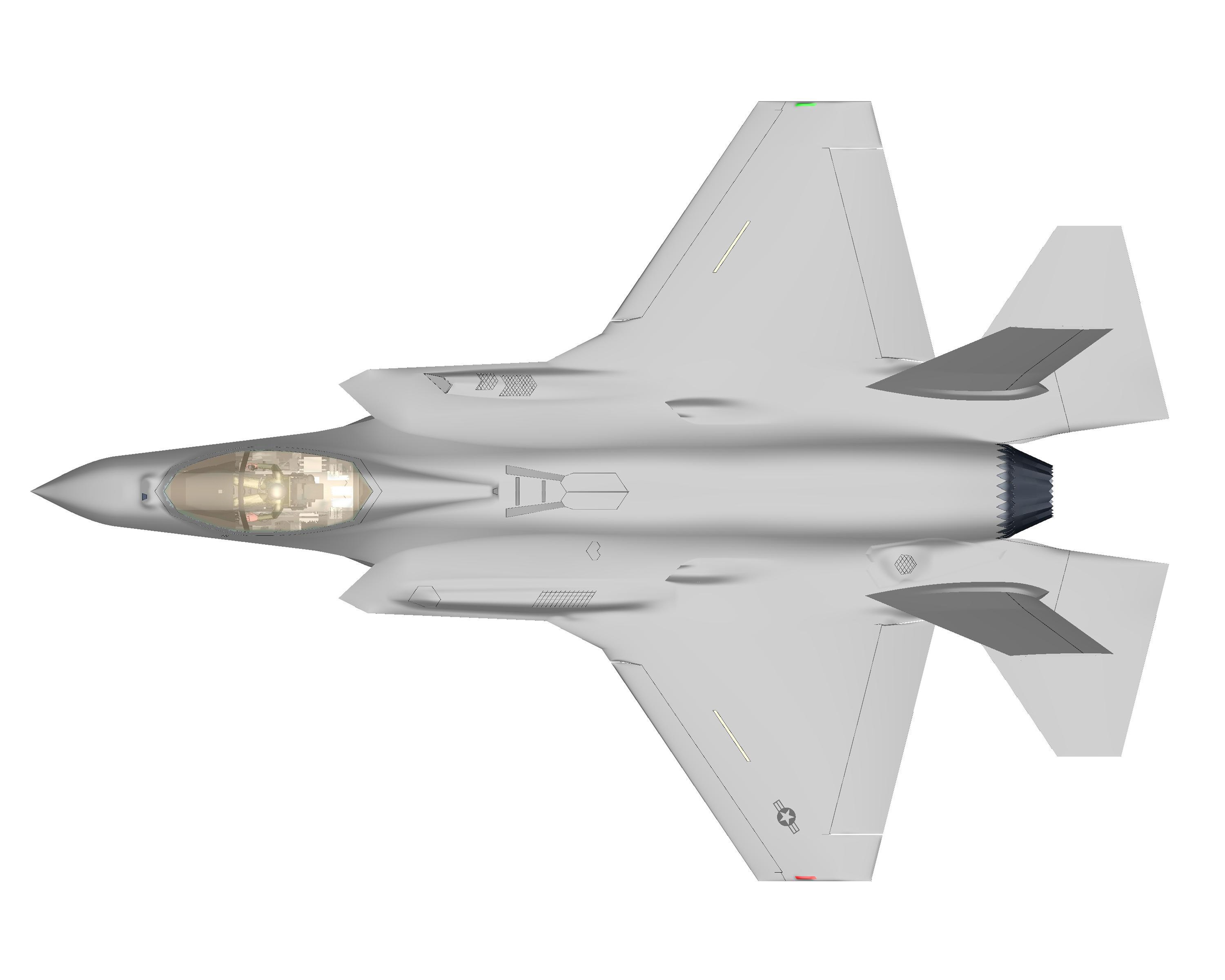
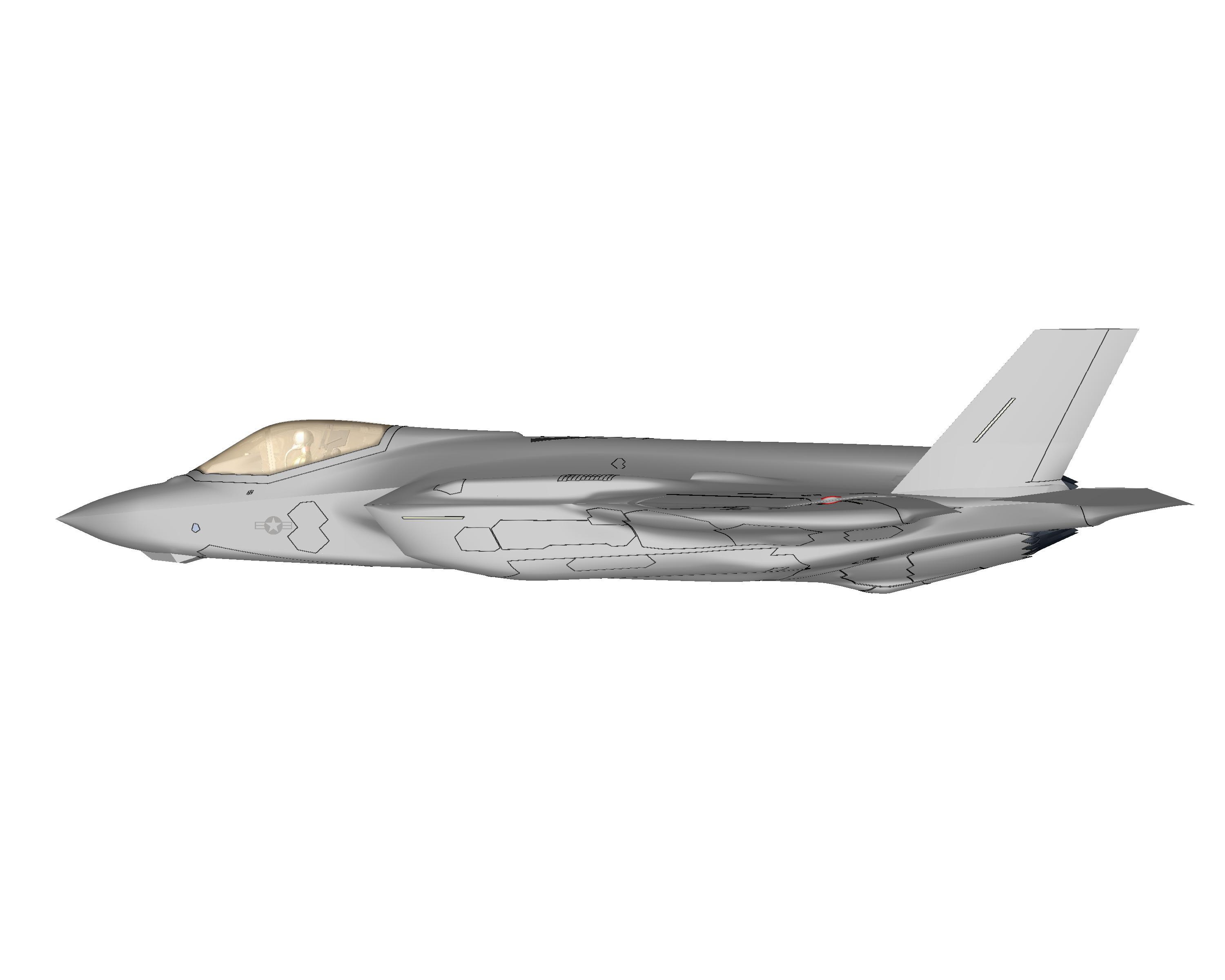
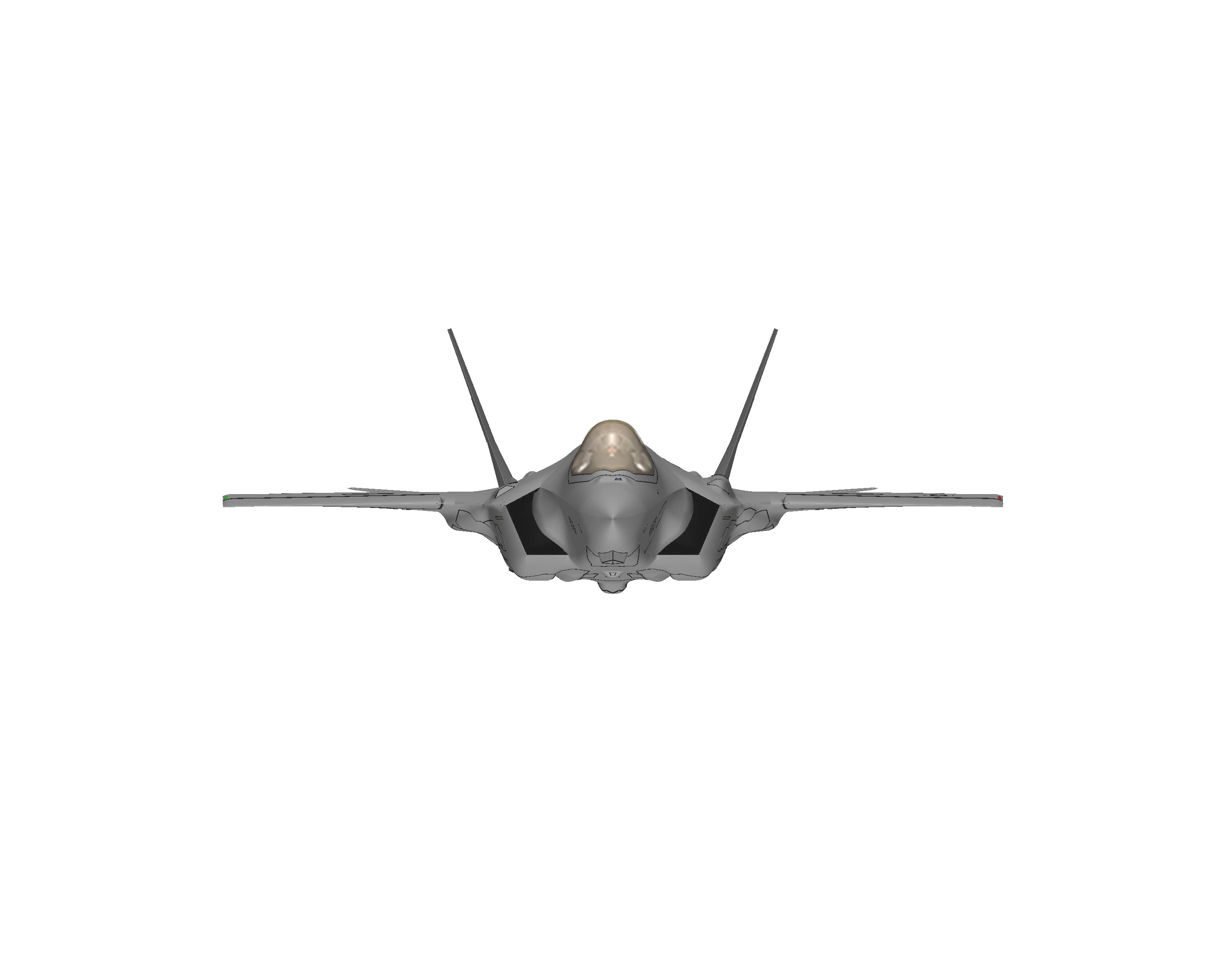
Three-view drawing
Multimedia


Elsewhere
Videos
Photos
- Flickr — Lockheed MartinF-35A Lightning II en vuelo (Lockheed Martin, I) ↗
- Flickr — Lockheed MartinF-35A Lightning II en vuelo (Lockheed Martin, II) ↗
- Flickr — Lockheed MartinF-35A Lightning II en vuelo (Lockheed Martin, III) ↗
- Flickr — Lockheed MartinF-35A Lightning II en vuelo (Lockheed Martin, IV) ↗
- Flickr — Lockheed MartinF-35A Lightning II en vuelo (Lockheed Martin, V) ↗
- Flickr — Lockheed MartinF-35A Lightning II en vuelo (Lockheed Martin, VI) ↗
- Flickr — Lockheed MartinF-35A Lightning II en vuelo (Lockheed Martin, VII) ↗
- Flickr — Lockheed MartinEnsayo del paracaídas de frenado del F-35A noruego ↗
- Flickr — Lockheed MartinAF-1: primer lanzamiento de una GBU-31 en carga externa ↗