Lockheed C-130 'Hercules' | TURBOPROP LEGEND AIRCRAFT
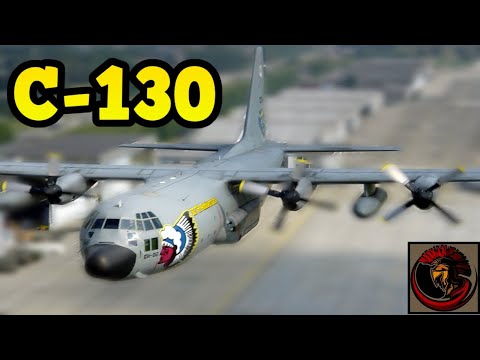
Video from the channel Matsimus about Lockheed C-130 Hercules, linked on its Above Ten Thousand entry. Duration: 16:37. Language: English. Video type: Documentary.
What it's about
An explainer from the Matsimus channel about the Lockheed C-130 Hercules, a medium-sized tactical transport with four turboprops. It covers its missions: airlift and cargo drops, in-flight refueling, special operations, medical evacuation, firefighting and humanitarian aid. It also traces its evolution to the C-130J Super Hercules and its main operational episodes. The narrator closes with his own experience as a passenger on deployments to Afghanistan.
Historical context
In the Korean War, World War II-era piston transports fell short. In 1951 the US Air Force requested an aircraft able to carry 92 passengers, 72 soldiers or 64 paratroopers, operate from short, unprepared airstrips and fly on a single engine if needed. The YC-130 prototype flew on August 23, 1954, with a rear cargo ramp and Allison T56-A-9 engines designed for it. The Air Force received the aircraft in December 1956, the same year as its first deployment to Europe. In 1958 a C-130A-II was shot down over Armenia on a reconnaissance mission, and in October 1963 a Hercules landed on and took off from an aircraft carrier. It later served in Vietnam and with the CIA, which in 1969 dropped sensors near Lop Nur. It also took part in the Israeli raid on Entebbe in 1976 and, as an AC-130 gunship, in the Battle of Khafji in 1991.
Highlights
About 2,500 units have been built across some 40 versions, and the C-130J is the only model still in production. It carries Rolls-Royce AE 2100D3 engines with composite propellers, head-up displays for both pilots and APN-241 radar, and reduces the minimum crew from five people to two pilots and a loadmaster. The stretched C-130J-30 version adds 4.6 meters of fuselage. The video gives a top speed of about 366 mph, a ceiling of 33,000 feet unloaded and a range of 2,360 nautical miles.