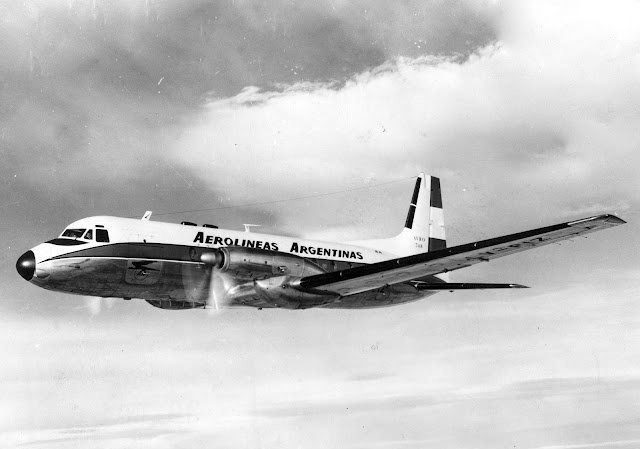
Hawker Siddeley HS 748 variant
Hawker Siddeley HS 748 Avro 748 Series 1
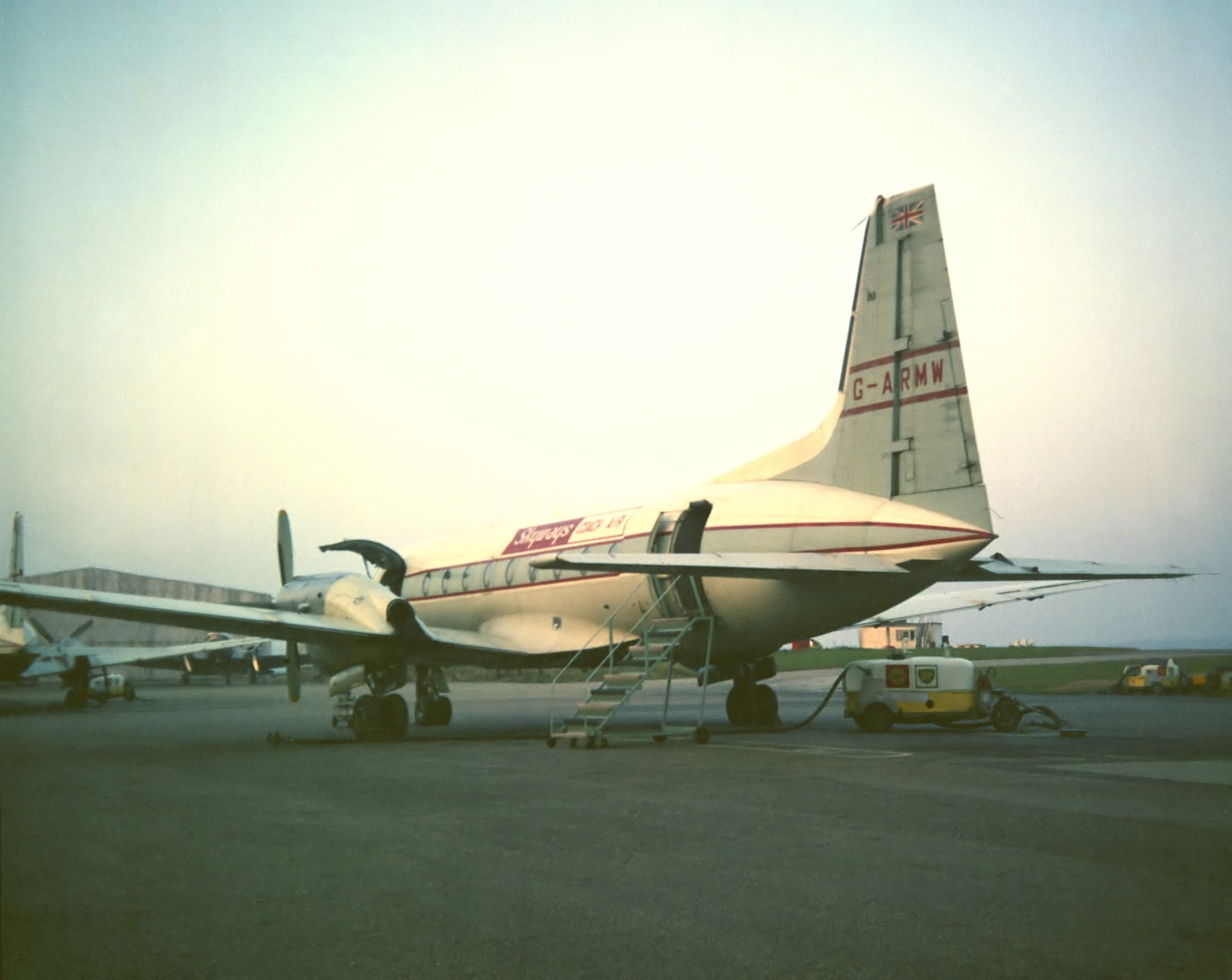
The first production series of the Avro 748, built at Woodford with two Rolls-Royce Dart Mk 514 turboprops and up to 48 passengers; certificated in January 1962, it served mainly with Aerolíneas Argentinas and Skyways Coach-Air.

- August 31, 1961
- First flight
- 24
- Units built
- 48
- Passengers
History
The Avro 748 Series 1 was the first production series of the twin-engined regional airliner that Avro conceived as a modern replacement for the Douglas DC-3. Ten years earlier the company had launched the Tudor with little commercial success, and during 1958 it decided to begin a clean-sheet design. With the four-engined Vickers Viscount already holding the larger end of the short-haul market, Avro chose a smaller regional airliner powered by two Rolls-Royce Dart turboprops. The project began as a 20–30 seat aircraft, but after discussions with potential customers it moved to a low-wing, 40-seat configuration; its direct competitor would be the Fokker F27 Friendship, then well advanced in the Netherlands. The Avro 748 was publicly announced on 9 January 1959, and the application for certification to the UK Air Registration Board was made on 16 March 1959.
The first prototype (construction number 1534, G-APZV) flew on 24 June 1960 from Avro's Woodford, Cheshire, factory, flown by chief test pilot Jimmy Harrison. The second prototype (c/n 1535, G-ARAY) flew on 10 April 1961 and later became the first Series 2. The first production Series 1 flew at the end of August 1961: Spanish Wikipedia gives 30 August and all-aero 31 August. The third Series 1 built (c/n 1536) was shown at Farnborough on 9 September 1961, before the type was fully certificated. British certification followed on 9 January 1962. According to Flight International, in 1960 the basic price of a new Avro 748 Series 1 was £176,000, against £196,000 for the Series 2.
The Series 1 was defined by its Rolls-Royce Dart 6 Mk 514 engines (the RDa.6 series, the Dart version that raised power to 1,600 shp). EASA type certificate A.397 rates them at 1,740 ESHP at 14,500 rpm, and all-aero gives 1298 kW each. They drove four-bladed Dowty Rotol constant-speed propellers, and the same certificate also approves the 2,105 ESHP Dart 7 Mk 533-2. The aircraft seated up to 48 passengers; maximum certificated seating is 57 including crew, with a minimum crew of two (pilot and co-pilot). The type certificate gives these figures for the series: length 20.42 m, wingspan 30.02 m, height 7.57 m, wing area 75.35 m², maximum take-off weight 16,690 kg, maximum landing weight 16,456 kg, maximum zero-fuel weight 15,060 kg and maximum operating altitude 25,000 ft (7,620 m). A Rover 25/150A auxiliary power unit was optional. The Series 2, which followed almost at once, kept the design but adopted more powerful Dart RDa.7 Mk 531 engines and a higher gross weight.
Production was short, and the sources disagree on the total. The EASA certificate assigns construction numbers 1534 to 1547, 1549 and 1556 to 1560, prototypes included, to the Series 1. English Wikipedia and aeropedia give eighteen production aircraft. Spanish Wikipedia gives seventeen UK-built aircraft (twelve for Aerolíneas Argentinas, three for Skyways Coach-Air, one for BKS and one for Smiths Aviation Industries) plus four assembled in India for the Indian Air Force; aircraft-survivors gives 24 in all, four of them in India. Those Indian aircraft were the start of licence production by Hindustan Aeronautics: the first Indian-assembled HAL-748 flew on 1 November 1961.
Most Series 1 aircraft were exported to Aerolíneas Argentinas. According to aircraft-survivors, the first delivery went to that airline (c/n 1539) on 18 January 1962. English Wikipedia places the first deliveries to launch customer Skyways Coach-Air in April 1962. Skyways used the type on its coach-air service between Paris and London, whose air leg ran from Beauvais to Lympne.
Two Series 1 aircraft were lost in accidents. On 11 July 1965, Skyways Coach-Air's 748-101 G-ARMV (c/n 1536) was arriving from Beauvais with 4 crew and 48 passengers. It had been built in 1961 and had flown 3,432 hours. It landed heavily on Lympne's grass runway, the nose wheel dug in, and the aircraft overturned and slid inverted for about 370 m, losing both wings and the starboard tailplane. All 52 people on board survived. It was the first write-off of a 748. The aircraft, with a replacement cost of £250,000, was not repaired, and a concrete runway came into use at Lympne in 1968. On 4 February 1970, Aerolíneas Argentinas Flight 707, flown by 748-105 Srs. 1 c/n 1539, crashed near Loma Alta, Chaco, between Corrientes and Rosario. Built in 1961, the aircraft had logged 19049 hours and 15739 flights. The crew lost control in severe turbulence inside a cumulonimbus, and all 37 occupants were killed.
Multimedia