Attack · Military · United States
Douglas A-1 Skyraider
- March 18, 1945
- First flight
- In service
- Status


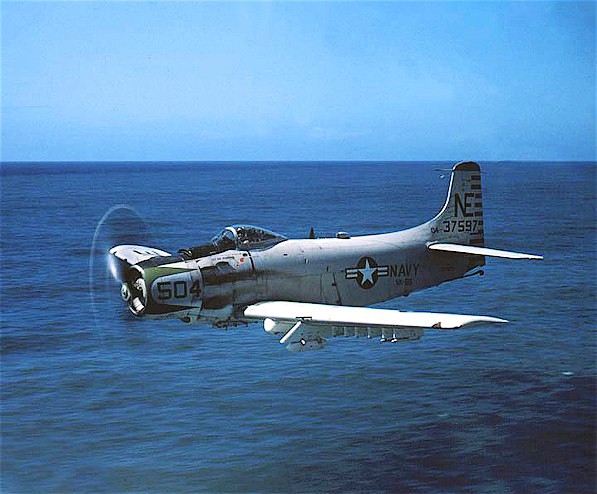


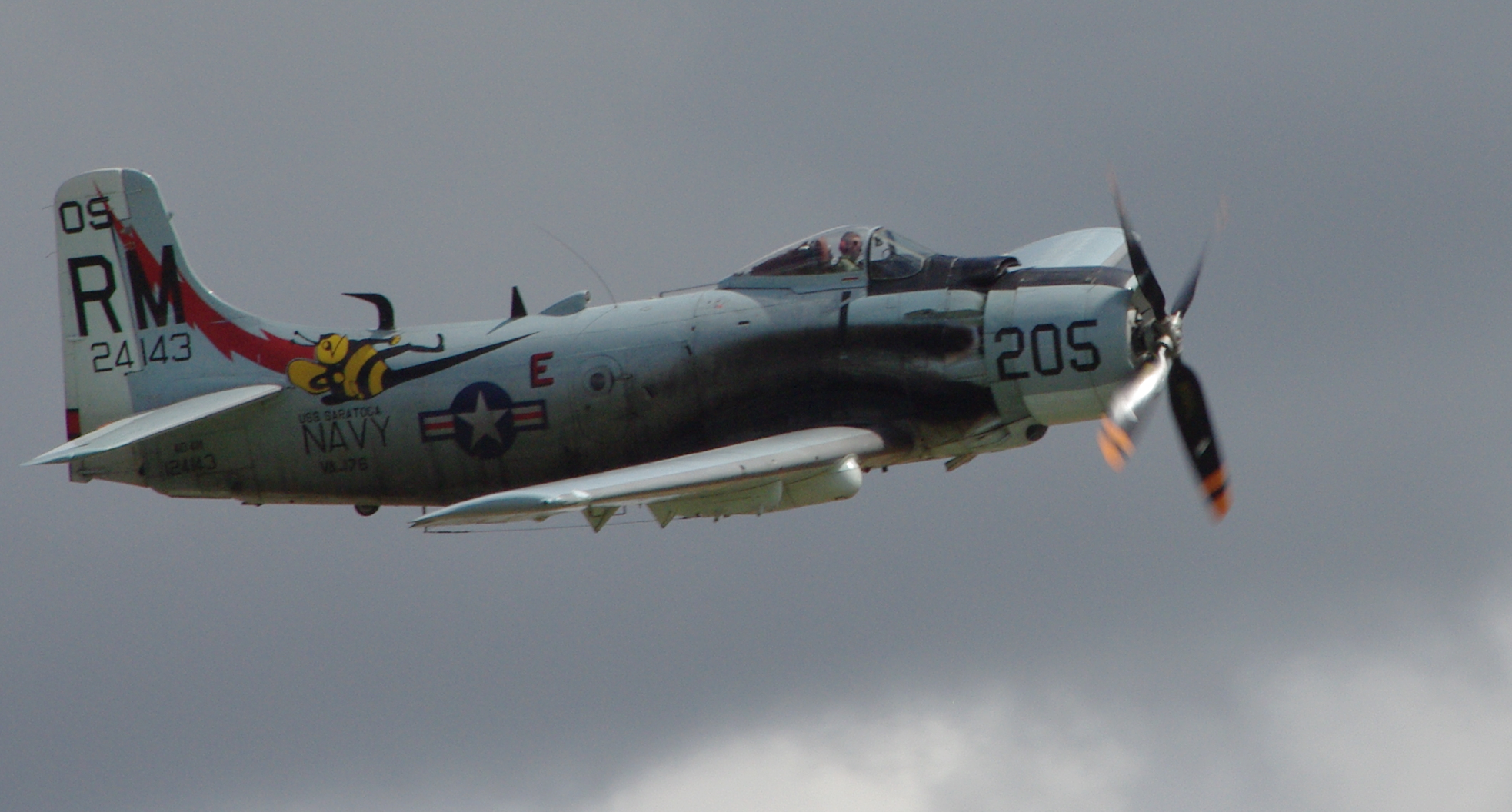


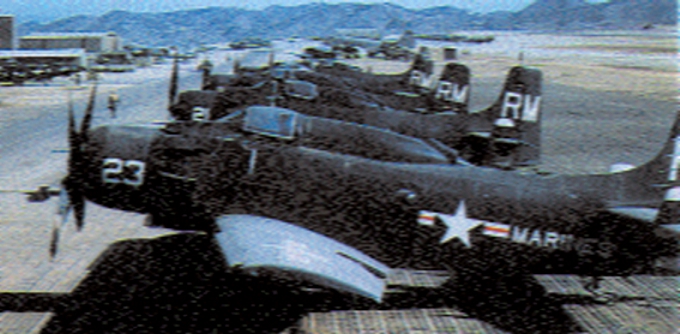

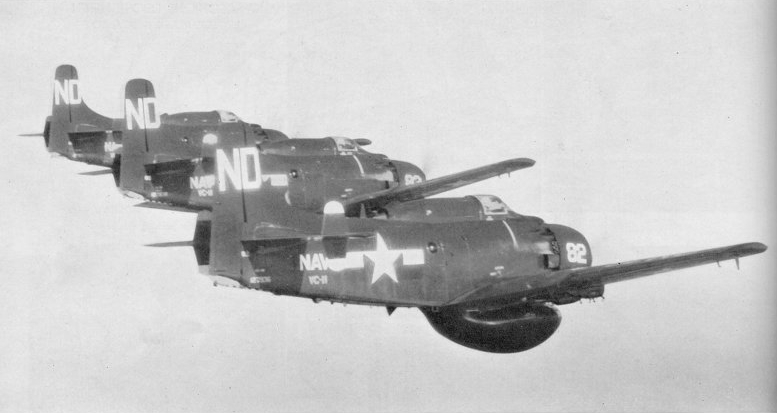


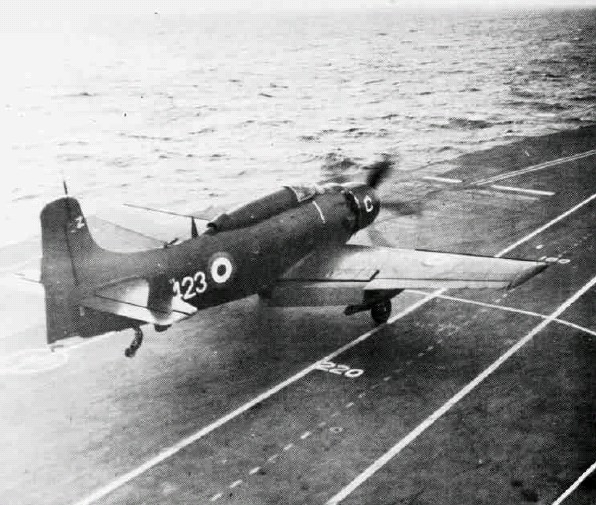


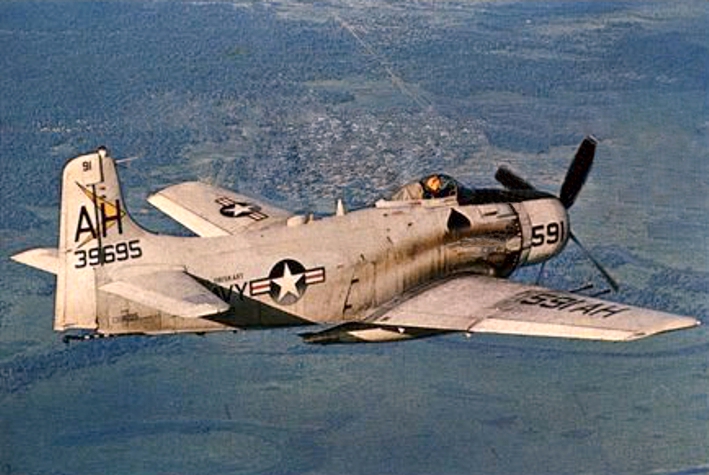


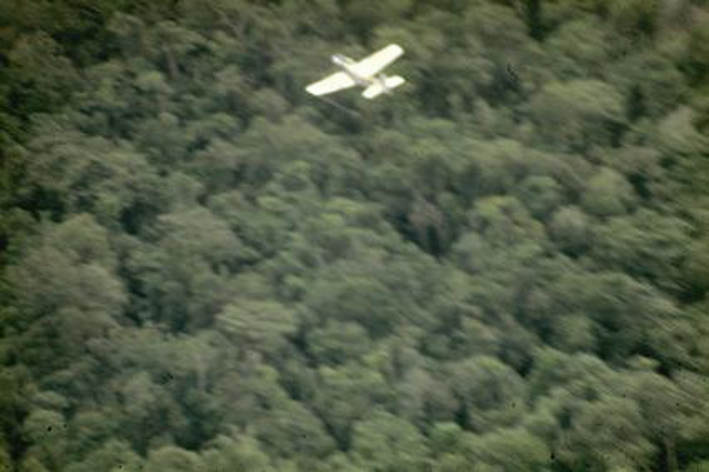


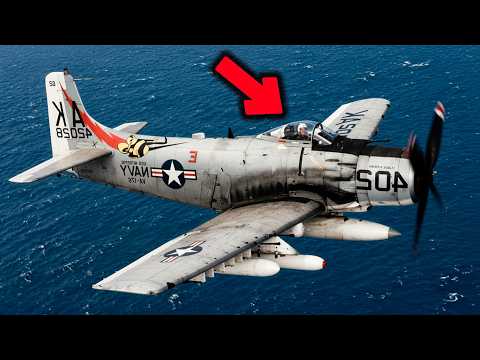
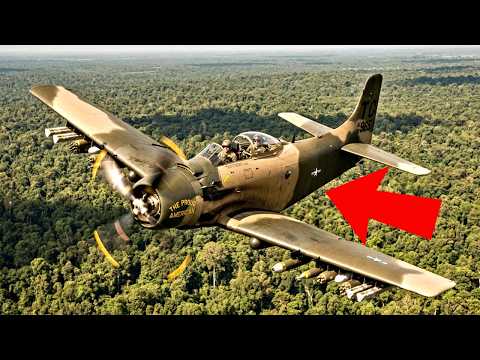
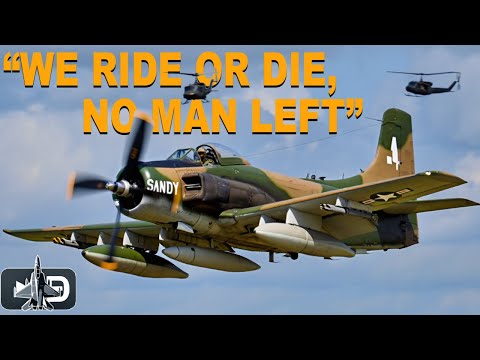
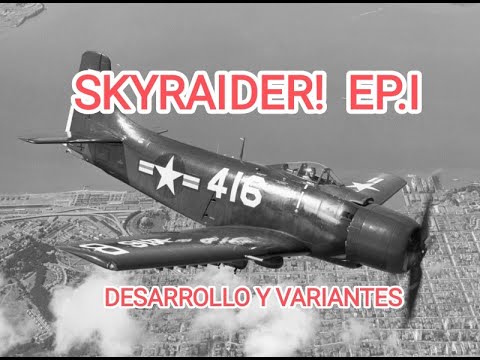
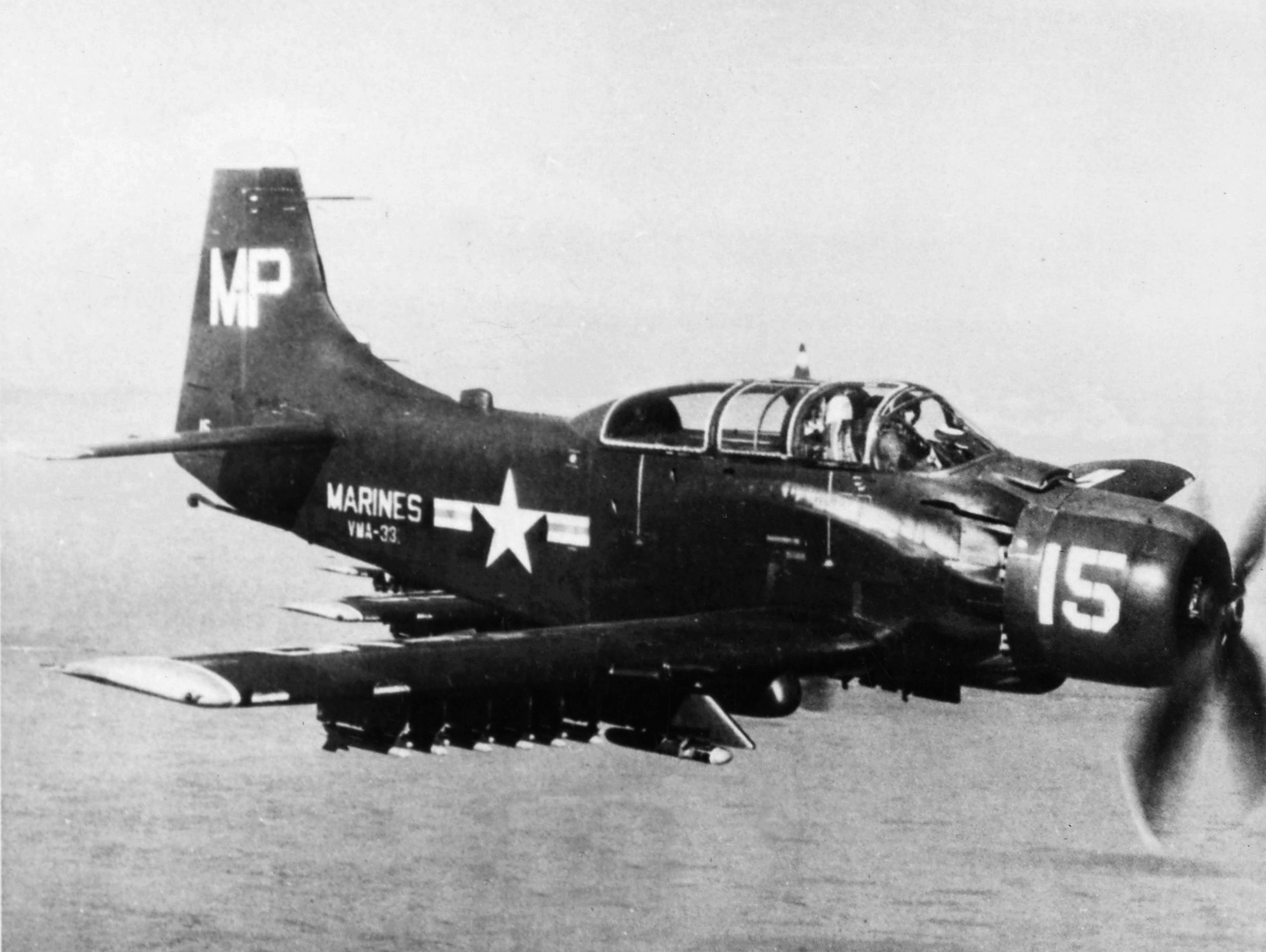
The Douglas A-1 Skyraider — designated AD until the 1962 unification of US designations — is a single-engine, single-seat attack aircraft conceived during the Second World War as a carrier-based dive and torpedo bomber for the United States Navy. Designed by Ed Heinemann's team at Douglas, it first flew on 18 March 1945 and arrived too late for that war, but found its calling afterwards: rugged, armoured where it mattered, able to haul a huge weight of ordnance under its broad straight wings and to loiter for hours over a target, it became the great close air support aircraft of Korea and Vietnam. Long after combat aviation had gone over to jets, this propeller-driven aircraft, powered by an 18-cylinder Wright R-3350 radial, stayed in the front line, earning a reputation as an “anachronism” and nicknames such as “Spad”. Douglas built 3,180 of them up to 1957 in attack, night-attack, airborne early warning and electronic warfare versions. Besides the Navy and the Marines, it served with the US Air Force — famous as the “Sandy” escort for rescue helicopters — the South Vietnamese air force, the Royal Navy, France and several African countries. Examples survive in museums today and a handful still fly at air shows.
Related events
- First flight of the Douglas A-1 Skyraider
- The Skyraider enters service with squadron VA-19A
- The Skyraider joins the Royal Navy as an early-warning aircraft
- Bernard Fisher earns the Medal of Honor with a rescue at A Shau
- Second MiG-17 shot down by a Navy Skyraider
- Two Chinese MiG-17s shoot down a Skyraider near Hainan
- William Jones earns the Medal of Honor near Đồng Hới
- The last US A-1s in Southeast Asia go to South Vietnam
Related sheets
Category
Douglas A-1 Skyraider in the news
The German company has developed an AI-based air defence architecture that integrates sensors, command and control, and two new interceptors: AD-1 Inferno and AD-2 Ambush.
The German company developed an AI-based air defence architecture that integrates sensors, command and control, and two new interceptors: AD-1 Inferno and AD-2 Ambush.
When we ran Sparky Barnes' photo as Picture of the Day on Sept. 29 of Wisconsin’s Largest Weathervane, that prompted ready Sandy Munns to share his recollection of the world's largest…
The airstrip in Balgo, located at the edge of the Great Sandy and Tanami Deserts in the Kimberley region, received $3 million from the Federal Government and more than $3.65 million from the WA…

This report was originally published on IDRW.org. Following Operation Sindoor, India has significantly intensified the testing of its next-generation missile defence capabilities, with three... The…
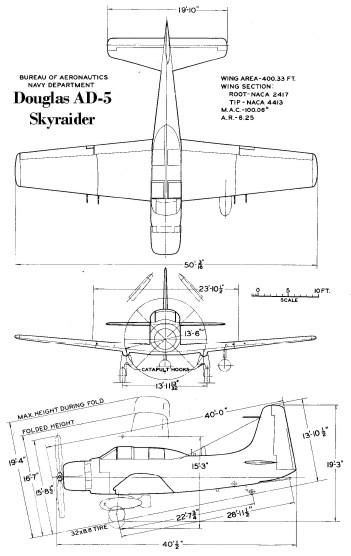
Three-view drawing
History
One aircraft for two missions
In 1943 the US Navy's Bureau of Aeronautics broke with a long-standing habit: until then carrier dive bombers and torpedo bombers had carried several crew, and each mission had its own aircraft. The new idea was to fold both tasks into a single long-range, high-performance single-seater that would succeed the Douglas SBD Dauntless, the Curtiss SB2C Helldiver and the Grumman TBF Avenger at once. Douglas chose to offer an entirely new design, led by Ed Heinemann. The Navy liked what it saw and on 6 July 1944 ordered prototypes under the designation XBT2D-1.
The first XBT2D-1 took off on 18 March 1945, almost four months ahead of schedule. On 7 April it went to the Naval Air Test Center, whose pilots rated it above any dive bomber they had tried, and on 5 May the Navy ordered it into production as the AD-1, by then named Skyraider. The surrender of Japan cut the order back without cancelling it, and in December 1946 the first production aircraft reached a fleet squadron, VA-19A.
An obsession with weight
Early in the project a study put numbers on what the aircraft gained for every pound it shed: a shorter take-off run, a larger combat radius and a better climb. Heinemann set his engineers hunting for savings, however small. They simplified the fuel system, gave up the internal bomb bay so that the whole load hung under the wings and fuselage, moved the dive brakes onto the fuselage and reused an older tailwheel design. In the end the XBT2D-1 lost more than 1,800 lb against the original design. The result was a low-wing monoplane with big straight wings studded with pylons, driven by an 18-cylinder Wright R-3350 Duplex-Cyclone radial that started at over 2,000 hp and, upgrade after upgrade, reached 2,800 hp. It was built at the Douglas plant in El Segundo, Southern California.

That heavy, somewhat blunt aircraft had qualities no contemporary jet could match: it handled well at low speed, carried a very large load a long way and could stay over the battlefield for a long time. Unlike fighters adapted to drop bombs, it was designed from the outset for ground attack and protected its vital areas with armour, above all around the cockpit. The AD-6/A-1H reached about 322 mph, had a range of about 1,316 mi and a ceiling of about 28,500 ft, and carried four 20 mm cannon and fifteen hardpoints for bombs, torpedoes, rockets, mine dispensers or gun pods.
Seven versions and many trades
The Skyraider evolved through seven main versions. The AD-1 was followed by the AD-2 and AD-3, with minor improvements, and then the AD-4 with a more powerful R-3350. The AD-5 widened the fuselage to seat two crew side by side — hence the nickname “Fat Face” — and had a four-seat night version; the AD-6 was an AD-4B improved for low-level bombing, and the last production model, the AD-7, received a further development of the engine. Multi-crew versions had existed earlier, such as the two-seat AD-1Q and the three-seat AD-3N. Fitted with a large radar under the fuselage, the Skyraider also became a carrier airborne early warning aircraft, replacing the Grumman TBM-3W Avenger, and there were electronic warfare versions. Production ended in 1957 after 3,180 aircraft. In 1962 the designation reform turned the surviving ADs into A-1Ds to A-1Js.
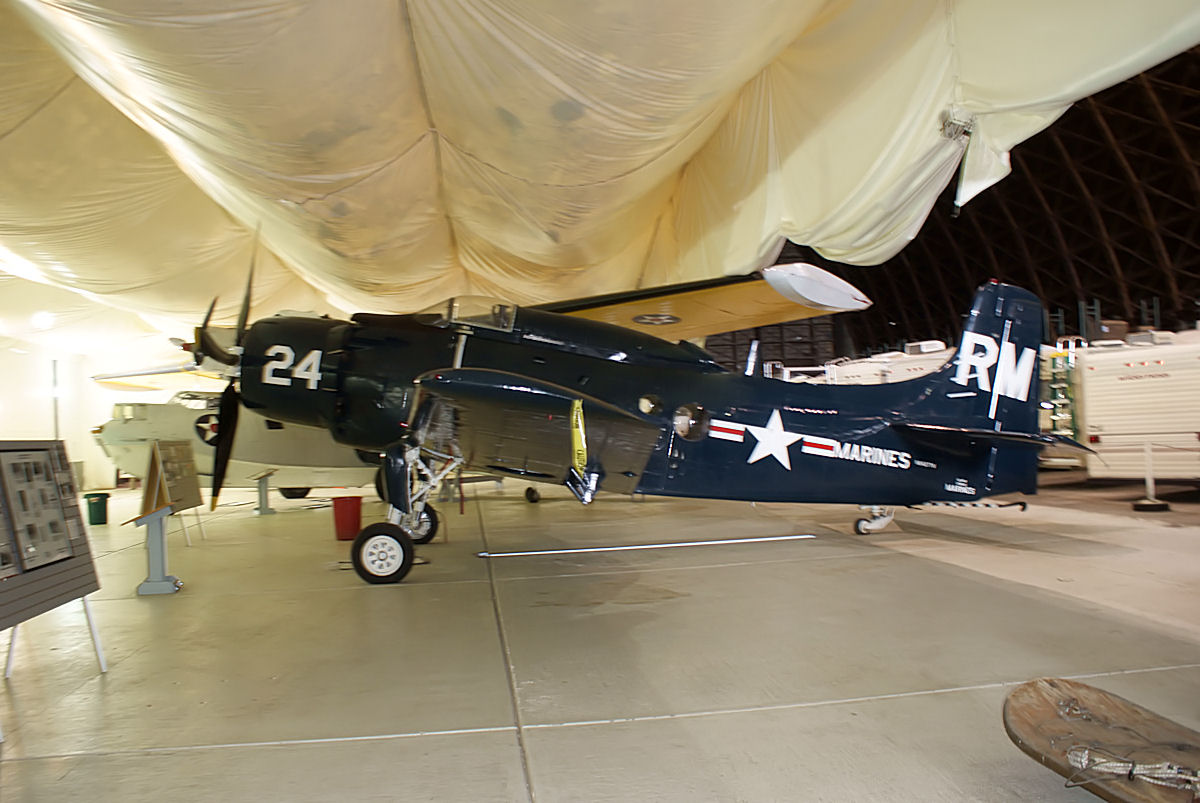
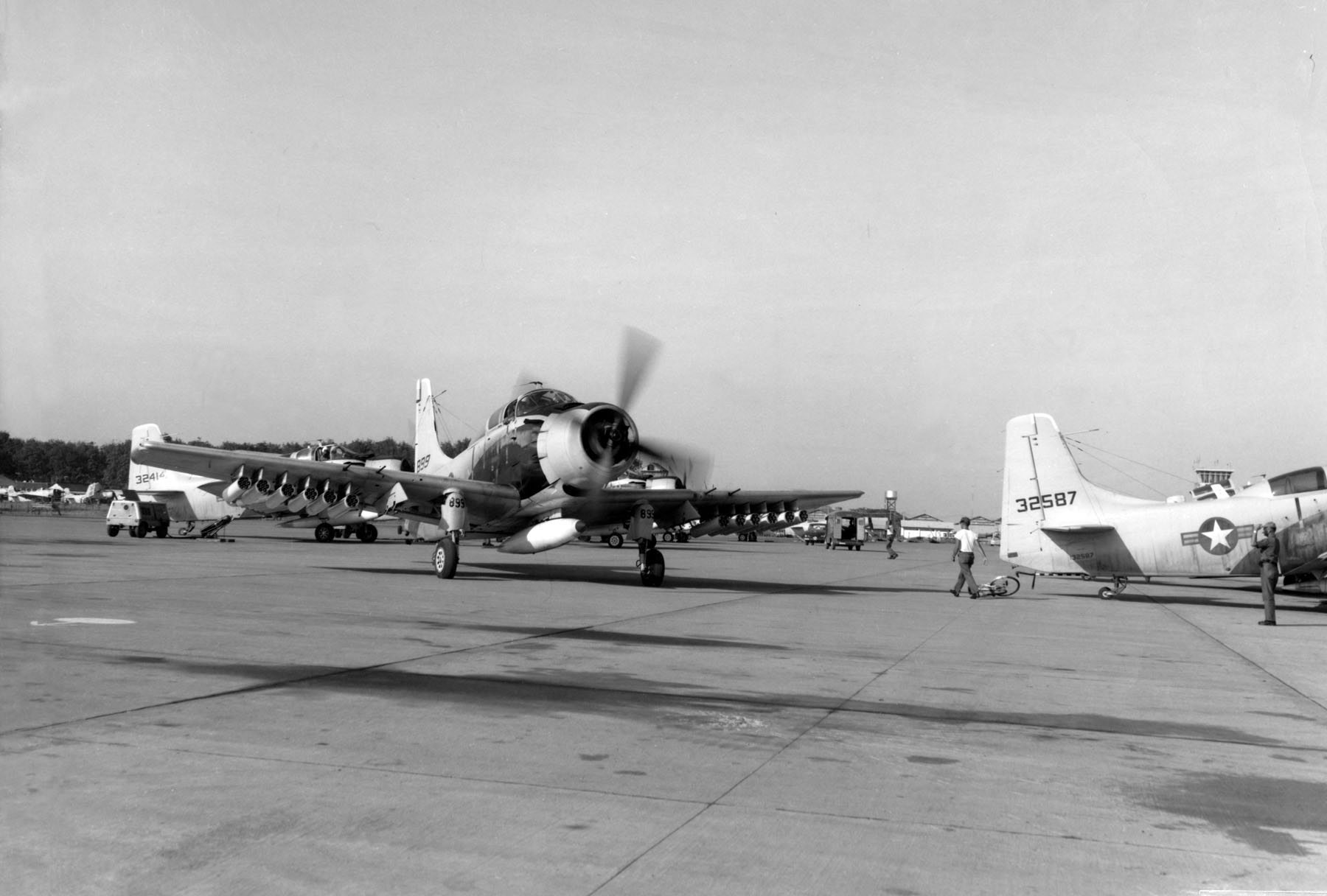
The Navy first painted its ADs glossy sea blue and, after Korea, light gull grey and white. The Air Force received them in those colours but from 1967 camouflaged them in two greens and a tan.
Korea: the “Blue Plane”
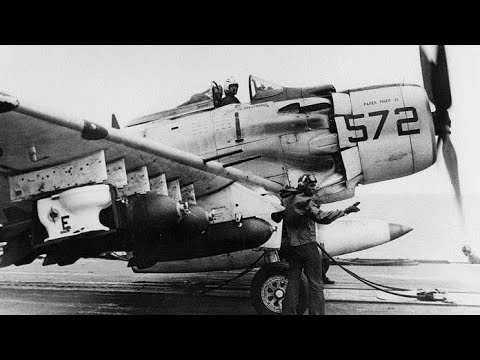
Too late for the Second World War, the Skyraider became the backbone of Navy and Marine Corps strike operations in the Korean War. The first ADs went into action on 3 July 1950 from the carrier USS Valley Forge with squadron VA-55. Their load and ten hours of endurance far outclassed the jets then available, and they flew close support and interdiction against North Korean supply lines. On 2 May 1951 Skyraiders carried out the only aerial torpedo attack of the war, against the Hwacheon Dam. On 16 June 1953 a Marine AD-4 shot down a Polikarpov Po-2 biplane, its only documented air victory of the conflict. Because of its dark paint, enemy troops called it the “Blue Plane”. Losses on low-level passes led to bolt-on aluminium armour plates under and along the fuselage, which barely affected performance. The Navy and Marines lost 128 Skyraiders in Korea, 101 in combat; many operational losses came from the engine's sheer power, which could torque-roll the aircraft if the pilot applied too much throttle on a wave-off. In July 1954, while searching for survivors of a Cathay Pacific DC-4 shot down near Hainan, two carrier Skyraiders downed two Chinese fighters.
Vietnam: Sandy, Hobo and the Medal of Honor
When American involvement in Vietnam began, the Skyraider was still the medium attack aircraft of many carrier air wings. On 5 August 1964, in Operation Pierce Arrow after the Gulf of Tonkin incident, Skyraiders from Constellation and Ticonderoga took part in the first Navy strikes on North Vietnam; one was shot down and its pilot, Lieutenant Richard Sather, was killed. With their cannon, Navy Skyraiders shot down two MiG-17 jet fighters: on 20 June 1965, the first gun kill of the war, and on 9 October 1966. In October 1965, to mark a round tonnage of ordnance dropped, a VA-25 pilot released a toilet along with his bombs. On 14 February 1968 the last Navy A-1 lost in the conflict went down, intercepted by Chinese MiG-17s near Hainan on a ferry flight. The Navy lost 65 Skyraiders in all, 48 in combat, and from the mid-1960s replaced it with the Grumman A-6 Intruder jet, although it kept flying from the smaller Essex-class carriers.
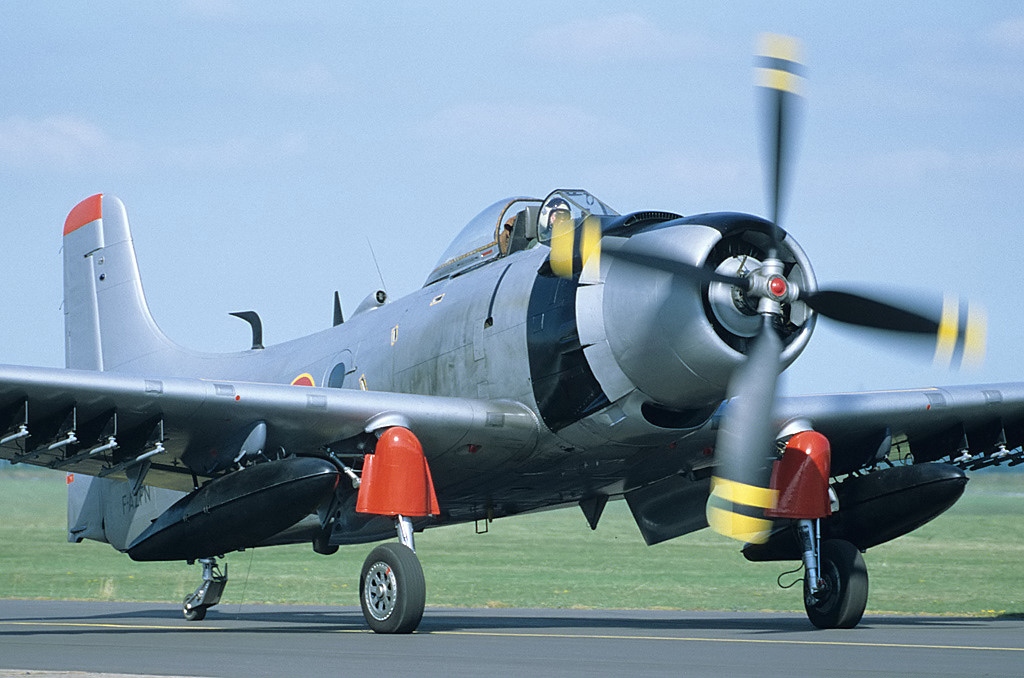
The Air Force, which had never ordered it, adopted it for its special operations units and made it famous in a new role: escorting combat rescue helicopters under the call sign “Sandy”, guarding downed airmen for hours. Other call signs, such as “Hobo”, “Firefly” and “Zorro”, became nicknames for the aircraft. For Vietnam its A-1s received the Yankee extraction system, in which two rockets pulled the pilot out of the cockpit in the manner of an ejection seat. On 10 March 1966 Major Bernard F. Fisher landed his A-1E on the wrecked airstrip of the A Shau camp, under enemy fire, to pick up a downed colleague, Major “Jump” Myers; he became the first Air Force member to receive the Medal of Honor in Vietnam. Colonel William A. Jones III also received it for a mission on 1 September 1968 in which, wounded and with his aircraft damaged, he flew back to base to report the position of a downed airman. The Air Force lost 191 Skyraiders in Southeast Asia, 150 in combat; of the 256 combined losses, the vast majority fell to anti-aircraft artillery.
Workhorse of South Vietnam
From September 1960 the Navy began handing Skyraiders to the South Vietnamese air force to replace its F8F Bearcats. Its first pilots trained in Texas and California, and by the end of 1965 it operated six A-1 squadrons. Over the war it received more than 350 aircraft, and by 1973 every Skyraider left in American hands had passed to it. Free of the twelve-month limit of American tours, some South Vietnamese pilots logged thousands of combat hours in the type, which they called the “Crazy Water Buffalo”. In 1975 eleven escaped to Thailand and more than forty fell into North Vietnamese hands.
Under other flags
The Royal Navy received fifty AD-4W early warning aircraft in 1951, flown as Skyraider AEW.1s by 849 Naval Air Squadron in four-aircraft detachments; those from the carriers Eagle and Albion took part in the Suez Crisis of 1956. The Fairey Gannet replaced them from 1960 and the last were retired in 1962, although their AN/APS-20 radars went on to RAF Avro Shackletons that used them until 1991. Fourteen of those British aircraft ended up in Sweden, where a civilian company flew them as target tugs between 1962 and 1976.
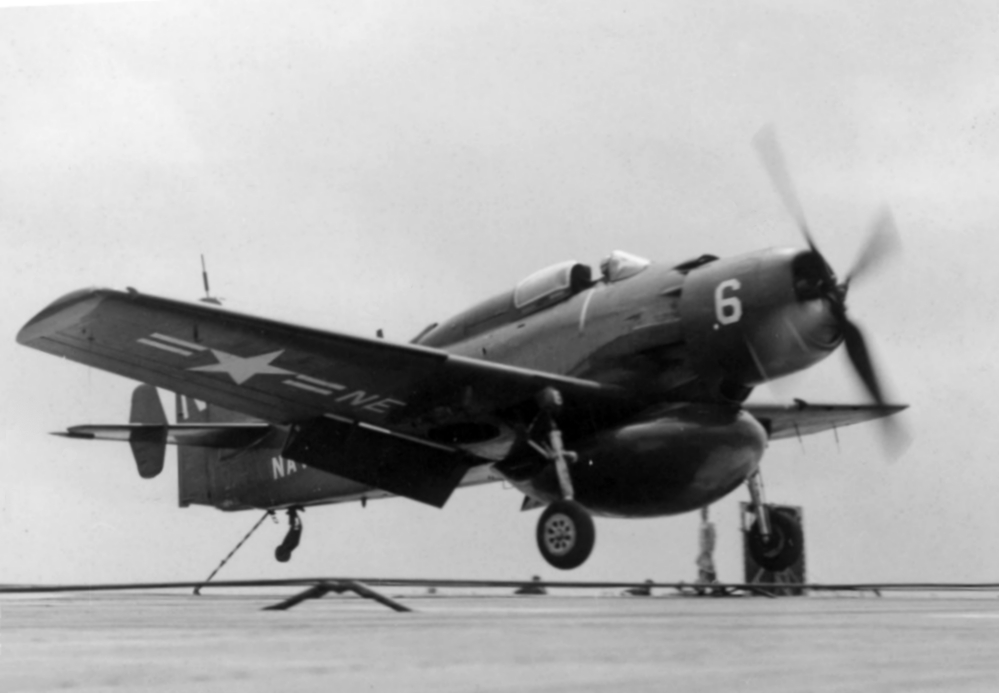
France bought more than a hundred second-hand AD-4s, AD-4Ns and AD-4NAs to replace its P-47 Thunderbolts in Algeria; Sud Aviation overhauled them and the first was handed over on 6 February 1958. They proved the most effective of the improvised French counter-insurgency aircraft, later served in Chad, Djibouti and Madagascar, and the survivors passed to Gabon, Chad and Cambodia.
Legacy
In Vietnam the Skyraider proved the worth of a tough attack aircraft with long endurance and a heavy load, a lesson later close support designs would inherit. Many examples survive today: A-1H 134600, which flew with the South Vietnamese air force from 1965 to 1975, has been on display restored at the National Museum of the US Air Force since 2022, and several aircraft recovered from Gabon and Chad by French enthusiasts, along with others in the United States, still fly at air shows, where the roar of their big radial remains unmistakable.
Variants
| XBT2D-1 | A-1E | AD-1 | AD-1Q | AD-1U | AD-2 | AD-2D | AD-2Q | AD-2QU | AD-2W | AD-3 | AD-3N | AD-3Q | AD-3QU | AD-3S | AD-3W | AD-4 | AD-4B | AD-4L | AD-4NA | AD-4N (A-1D) | AD-4NL | AD-4Q | AD-4W | AD-5 (A-1E) | AD-5N (A-1G) | AD-5Q (EA-1F) | AD-5S | AD-5U | AD-5W (EA-1E) | AD-6 (A-1H) | AD-7 (A-1J) | UA-1E | XAD-1W | XAD-2 | XAD-3E | XBT2D-1N | XBT2D-1P | XBT2D-1Q | |
|---|---|---|---|---|---|---|---|---|---|---|---|---|---|---|---|---|---|---|---|---|---|---|---|---|---|---|---|---|---|---|---|---|---|---|---|---|---|---|---|
| First flight | March 18, 1945 | — | — | — | — | — | — | — | — | — | — | — | — | — | — | — | — | — | — | — | — | — | — | — | — | — | — | — | — | — | — | — | — | — | — | — | — | — | — |
| Aircraft type | — | — | — | — | — | — | — | — | — | — | — | — | — | — | — | — | — | — | — | — | — | — | — | — | — | — | — | — | — | — | Single-seat piston-engined carrier-based attack aircraft | — | — | — | — | — | — | — | — |
| Powerplant | — | — | — | — | — | — | — | — | — | — | — | — | — | — | — | — | — | — | — | — | — | — | — | — | — | — | — | — | — | — | One Wright R-3350-26WA Duplex-Cyclone 18-cylinder, two-row, air-cooled radial engine rated at 2,700 hp (2,000 kW), driving a four-bladed Aeroproducts constant-speed propeller. | — | — | — | — | — | — | — | — |
| Powerplant | 1 × piston | — | 1 × piston | 1 × piston | 1 × piston | 1 × Wright R-3350-26W | 1 × piston | 1 × piston | 1 × piston | 1 × piston | 1 × piston | 1 × piston | 1 × piston | 1 × piston | 1 × piston | 1 × piston | 1 × Wright R-3350-26WA | 1 × piston | 1 × piston | 1 × piston | 1 × piston | 1 × piston | 1 × piston | 1 × piston | 1 × piston | 1 × piston | 1 × piston | 1 × piston | 1 × piston | 1 × piston | 1 × Wright R-3350-26WA Duplex-Cyclone | 1 × Wright R-3350-26WB | 1 × piston | 1 × piston | 1 × piston | 1 × piston | 1 × piston | 1 × piston | 1 × piston |
| Power per engine | — | — | — | — | — | 2,682 hp Best value in this row | — | — | — | — | — | — | — | — | — | — | — | — | — | — | — | — | — | — | — | — | — | — | — | — | 2,682 hp Best value in this row | — | — | — | — | — | — | — | — |
| Length | — | — | — | — | — | — | — | — | — | — | — | — | — | — | — | — | — | — | — | — | — | — | — | — | — | — | — | — | — | — | 11.8 m | — | — | — | — | — | — | — | — |
| Wingspan | — | — | — | — | — | — | — | — | — | — | — | — | — | — | — | — | — | — | — | — | — | — | — | — | — | — | — | — | — | — | 15.3 m | — | — | — | — | — | — | — | — |
| Height | — | — | — | — | — | — | — | — | — | — | — | — | — | — | — | — | — | — | — | — | — | — | — | — | — | — | — | — | — | — | 4.8 m | — | — | — | — | — | — | — | — |
| Wing area | — | — | — | — | — | — | — | — | — | — | — | — | — | — | — | — | — | — | — | — | — | — | — | — | — | — | — | — | — | — | 37.2 m² | — | — | — | — | — | — | — | — |
| Empty weight | — | — | — | — | — | — | — | — | — | — | — | — | — | — | — | — | — | — | — | — | — | — | — | — | — | — | — | — | — | — | 5,429 kg | — | — | — | — | — | — | — | — |
| MTOW | — | — | — | — | — | — | — | — | — | — | — | — | — | — | — | — | — | — | — | — | — | — | — | — | — | — | — | — | — | — | 11,340 kg | — | — | — | — | — | — | — | — |
| Top speed | — | — | — | — | — | — | — | — | — | — | — | — | — | — | — | — | — | — | — | — | — | — | — | — | — | — | — | — | — | — | 518 km/h | — | — | — | — | — | — | — | — |
| Max speed altitude | — | — | — | — | — | — | — | — | — | — | — | — | — | — | — | — | — | — | — | — | — | — | — | — | — | — | — | — | — | — | 5,500 m | — | — | — | — | — | — | — | — |
| Cruise speed | — | — | — | — | — | — | — | — | — | — | — | — | — | — | — | — | — | — | — | — | — | — | — | — | — | — | — | — | — | — | 319 km/h | — | — | — | — | — | — | — | — |
| Service ceiling | — | — | — | — | — | — | — | — | — | — | — | — | — | — | — | — | — | — | — | — | — | — | — | — | — | — | — | — | — | — | 8,700 m | — | — | — | — | — | — | — | — |
| Initial climb rate | — | — | — | — | — | — | — | — | — | — | — | — | — | — | — | — | — | — | — | — | — | — | — | — | — | — | — | — | — | — | 14.5 m/s | — | — | — | — | — | — | — | — |
| Range | — | — | — | — | — | — | — | — | — | — | — | — | — | — | — | — | — | — | — | — | — | — | — | — | — | — | — | — | — | — | 2,115 km | — | — | — | — | — | — | — | — |
| Range conditions | — | — | — | — | — | — | — | — | — | — | — | — | — | — | — | — | — | — | — | — | — | — | — | — | — | — | — | — | — | — | Range of 2,115 km (1,315 mi) on the 1,400 L (380 US gal) of internal fuel, per Warbirds Resource Group and Spanish Wikipedia; English Wikipedia gives 2,118 km. Neither combat radius nor ferry range was found in a reliable source. | — | — | — | — | — | — | — | — |
| Armament | — | — | — | — | — | — | — | — | — | — | — | — | — | — | — | — | — | — | — | — | — | — | — | — | — | — | — | — | — | — | Four 20 mm AN/M3 cannon with 200 rounds per gun. Fifteen external hardpoints carrying up to 3,600 kg (8,000 lb) of bombs, torpedoes, mine dispensers, unguided rockets or gun pods. English Wikipedia, citing NAVWEPS manual 01-40-ALF-1, gives 4,800 kg (10,500 lb) for those hardpoints; the 3,600 kg figure, on which Spanish Wikipedia and Warbirds Resource Group agree, is used here. | — | — | — | — | — | — | — | — |
| Max weapons load | — | — | — | — | — | — | — | — | — | — | — | — | — | — | — | — | — | — | — | — | — | — | — | — | — | — | — | — | — | — | 3,600 kg | — | — | — | — | — | — | — | — |
| Payload | — | — | — | — | — | — | — | — | — | — | — | — | — | — | — | — | — | — | — | — | — | — | — | — | — | — | — | — | — | — | 0 kg | — | — | — | — | — | — | — | — |
| Cargo capacity | — | — | — | — | — | — | — | — | — | — | — | — | — | — | — | — | — | — | — | — | — | — | — | — | — | — | — | — | — | — | Single-seat attack aircraft: it carries no passengers and no internal cargo; all ordnance is carried on the fifteen external hardpoints. | — | — | — | — | — | — | — | — |
| Crew | 1 Best value in this row | — | 1 Best value in this row | 2 | — | 1 Best value in this row | — | 2 | — | — | 1 Best value in this row | 3 | — | — | — | — | 1 Best value in this row | — | — | — | 3 | — | 2 | 3 | 2 | 4 | 4 | — | — | 3 | 1 Best value in this row | 1 Best value in this row | — | 3 | — | — | 3 | — | 2 |
| Passengers | — | — | — | — | — | — | — | — | — | — | — | — | — | — | — | — | — | — | — | — | — | — | — | — | — | — | — | — | — | — | 0 | — | — | — | — | — | — | — | — |
| Units built | — | — | 242 | 35 | — | 156 | — | 21 | 1 | — | 125 | 15 | 23 | — | 2 | 31 | 372 | 165 | — | — | 307 | — | 39 | 168 | 212 | 239 | — | — | — | 218 | 713 Best value in this row | 72 | — | 1 | 1 | — | 3 | 1 | 1 |
Where to see it today
| Serial | Variant | Place | City | Country | Status |
|---|---|---|---|---|---|
| 127947 | AD-4W | Arlandasamlingarna | — | Sweden | On display |
| 127945 | AD-4W | Skyraider AB | Karlskoga | Sweden | Under restoration |
| 127960 | AD-4W | Svedinos Bil- och Flygmuseum | Ugglarp | Sweden | Under restoration |
| 124121 | — | Fleet Air Arm Museum | Yeovilton | United Kingdom | Stored |
| 124156 | AD-4N (A-1D) | — | Troy | United States | Airworthy |
| 126959 | AD-4N (A-1D) | — | Bennett | United States | Airworthy |
| 132463 | AD-5 (A-1E) | Aerospace Museum of California | North Highlands | United States | On display |
| 127888 | AD-4NA | Air Zoo | Kalamazoo | United States | On display |
| 135188 | AD-5W (EA-1E) | Collings Foundation | Stow | United States | Airworthy |
| 132534 | AD-5N (A-1G) | Evergreen Aviation & Space Museum | McMinnville | United States | On display |
| 126965 | AD-4NA | Heritage Flight Museum | Burlington | United States | Airworthy |
| 132443 | AD-5W (EA-1E) | Historic Aviation Memorial Museum | Tyler | United States | On display |
| 52-598 | AD-5N (A-1G) | Hurlburt Field Memorial Air Park | Mary Esther | United States | On display |
| 09102 | XBT2D-1 | Intrepid Sea, Air & Space Museum | New York City | United States | On display |
| 126882 | AD-4NA | Lone Star Flight Museum | Houston | United States | Airworthy |
| 132789 | AD-5W (EA-1E) | March Field Air Museum | Riverside | United States | On display |
| 123827 | AD-4 | Military Aviation Museum | Virginia Beach | United States | Airworthy |
| 52-132649 | AD-5 (A-1E) | National Museum of the United States Air Force | Dayton | United States | On display |
| 134600 «The Proud American» | AD-6 (A-1H) | National Museum of the United States Air Force | Dayton | United States | On display |
| 132532 | AD-5Q (EA-1F) | National Naval Aviation Museum | Pensacola | United States | On display |
| 135300 | AD-6 (A-1H) | National Naval Aviation Museum | Pensacola | United States | On display |
| 132261 | AD-4B | Naval Air Station Fallon | Fallon | United States | On display |
| 137602 | AD-6 (A-1H) | Naval Air Station Lemoore | Lemoore | United States | On display |
| 122811 | AD-3 | Naval Inventory Control Point | Philadelphia | United States | On display |
| 127007 | AD-4N (A-1D) | Patriots Point Naval & Maritime Museum | Mount Pleasant | United States | On display |
| 135018 | AD-5Q (EA-1F) | Pima Air & Space Museum | Tucson | United States | On display |
| 125716 | AD-4N (A-1D) | Soaring By The Sea Foundation | Eugene | United States | Airworthy |
| 125739 | AD-4NA | U.S. Naval Museum of Armament and Technology | Ridgecrest | United States | On display |
| 127922 | AD-4W | USS Midway Museum | San Diego | United States | On display |
| 126922 | AD-4NA | Vintage Aircraft Restorations | Spokane | United States | Airworthy |
| 09257 | AD-1 | Warbird Heritage Foundation | Waukegan | United States | Airworthy |
| 126924 | AD-4NA | Yanks Air Museum | Chino | United States | On display |
| 139723 | AD-6 (A-1H) | Vietnam People's Air Force Museum | Hanoi | Vietnam | On display |
| Serial | Variant | Place | City | Country | Status |
|---|---|---|---|---|---|
| 52-247 (Rebuilt) | AD-5 (A-1E) | Hill Aerospace Museum | Roy | United States | On display |
List reviewed on October 31, 2026 against Wikipedia (en): List of surviving Douglas A-1 Skyraiders, Aerial Visuals Airframe Dossier, Aerial Visuals Airframe Dossier, Aerial Visuals Airframe Dossier, Aerial Visuals Airframe Dossier, Aerial Visuals Airframe Dossier, Aerial Visuals Airframe Dossier, Aerial Visuals Airframe Dossier, Aerial Visuals Airframe Dossier, Aerial Visuals Airframe Dossier.
Images