Concorde variant
Concorde 001 (F-WTSS)
The first Concorde prototype, built by Aérospatiale at Toulouse and the first aircraft of the type to fly, on 2 March 1969 with André Turcat at the controls. It made 397 flights and 812 hours before retiring in 1973 to the Musée de l'air et de l'espace at Le Bourget.

- March 2, 1969
- First flight
- 1
- Units built
History
A prototype to prove the calculations
Construction of the two Concorde prototypes began in February 1965: 001 was built by Aérospatiale at Toulouse and 002 by BAC at Filton, near Bristol. Neither prototype was an airliner, nor was it meant to be one: their job was to expand the flight envelope of the design and to prove in the air that the aerodynamic and structural calculations made for sustained supersonic cruise held up outside the wind tunnel. The groundwork had been laid by two British flying test beds: a supersonic Fairey Delta 2 modified to carry the ogee planform and renamed BAC 221, used for the high-speed end of the envelope, and the Handley Page HP.115, which supplied the low-speed data on slender delta wings.
First flight and the test campaign
Registered F-WTSS, 001 took off from Toulouse on 2 March 1969 piloted by André Turcat, and so became the first Concorde to fly. It first went supersonic on 1 October of that same year. Both prototypes were presented to the public on 7 and 8 June 1969 at the Paris Air Show, at a time when the programme still enjoyed considerable customer interest and market forecasts spoke of hundreds of aircraft.
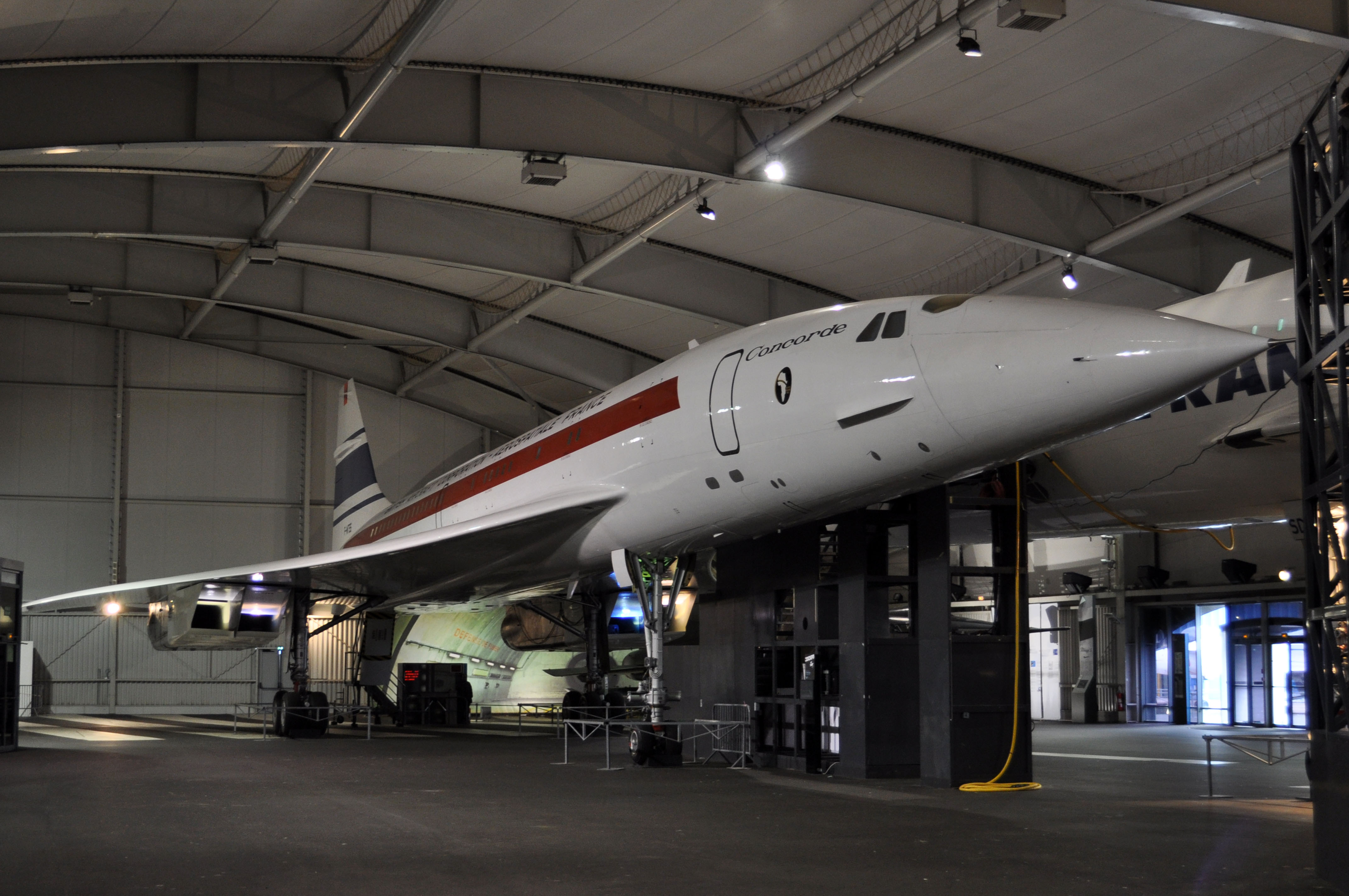
As the flight programme progressed, 001 went on tour: on 4 September 1971 it set out on a sales and demonstration trip that included the first transatlantic crossing by a Concorde. The aircraft accumulated 397 flights and 812 flying hours, of which 255 hours were flown at supersonic speed, a very high proportion that says everything about what it had been built for.
The 1973 eclipse mission
The most singular episode of its career came in 1973. Concorde 001 was modified for that year's solar eclipse mission: portholes were cut into the roof of the fuselage and observation equipment was installed. Flying over Africa at supersonic speed, the aircraft chased the Moon's shadow and produced the longest observation of a solar eclipse achieved up to that point, lasting some 74 minutes. The aircraft still wears the livery of that mission, rooftop portholes included.
Differences from the production aircraft, and retirement
The prototypes differed from the definitive aircraft in wing planform, fuel capacity, engine standard and air intake system. In addition, the droop nose visor of the first two prototypes had been designed before a suitable heat-resistant transparent material existed, and its visibility was so restricted that the United States Federal Aviation Administration objected, forcing a redesign for later airframes. The differences were extensive enough that, by the time the production aircraft appeared, entire areas of the design had to be re-examined in order to obtain certification.
Concorde 001 was retired on 19 October 1973, the day it arrived at the Musée de l'air et de l'espace at Le Bourget Airport, where it remains on public display. In 2003 it was joined there by F-BTSD, one of the Air France production aircraft.
The programme behind it
Concorde 001 was the product of an effort that had begun much earlier. Studies of supersonic transport started in 1954 and led to the Anglo-French treaty of 1962, with programme cost then estimated at £70 million. Construction of the six development aircraft began in February 1965, and the first flight from Toulouse, by 001, came four years later. In between, the ogee wing planform had been chosen after a long process of committees and testing: the British Supersonic Transport Aircraft Committee and the later partnership with Sud Aviation settled on the slender delta configuration in which 001 flew.

The French aircraft carried the binational stamp of the project from the start, even in the name: in France people spoke of «le Concorde», and in Britain simply of «Concorde». In 2006, 37 years after that first test flight, Concorde was voted the winner of the Great British Design Quest organised by the BBC.
Multimedia


-1600.webp)
-1600.webp)
