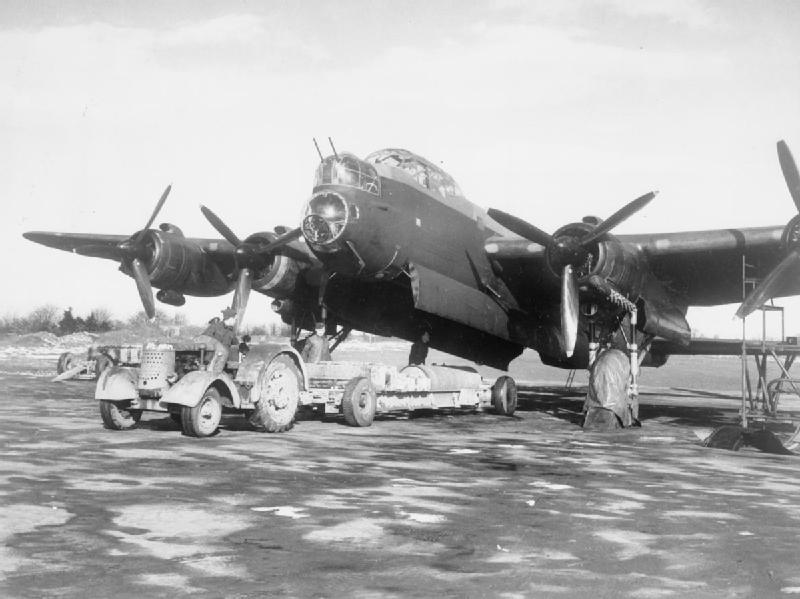
Avro Lancaster variant
Avro Lancaster B.II
The only Lancaster version without Merlin engines: four Bristol Hercules VI or XVI radials, with 300 built by Armstrong Whitworth as insurance against a Merlin shortage.

- November 26, 1941
- First flight
- 300
- Units built
History
The Lancaster B.II was the only version of Avro's bomber not powered by Rolls-Royce Merlin engines. Instead it received four air-cooled Bristol Hercules radials, in either their VI or XVI form. Its purpose was industrial: to provide an alternative source of Lancasters in case the supply of Merlins failed. British engine production was seen as vulnerable to German bombing, and there were worries that American production by Packard would be diverted or stopped if the United States entered the war.
Work on the prototype began soon after the Mk I was complete, and the first B.II prototype flew on 26 November 1941. Series production went to Armstrong Whitworth, which started work in March 1942 and eventually delivered 300 aircraft. Ironically, while Rolls-Royce escaped serious attack, the Armstrong Whitworth factory itself was bombed in June 1942, delaying the new model's appearance.
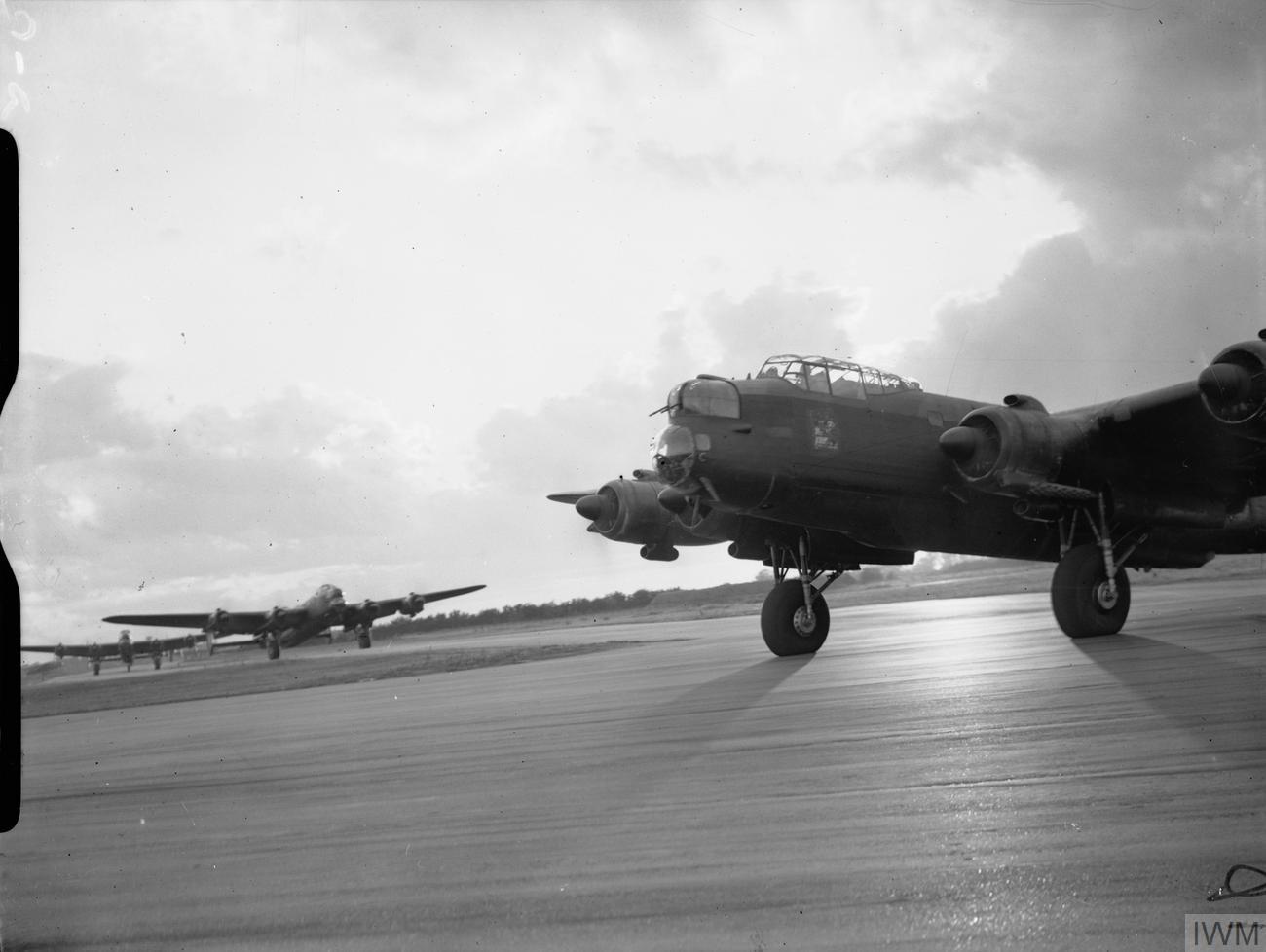
There was one practical difference between the two engine versions: the Hercules VI had manual mixture control, which required an extra lever on the throttle pedestal.
By the time the B.II entered service, in October 1942 according to History of War, the threat to Merlin supply was already receding. Service tests with No. 61 Squadron early in 1943 exposed its main limitation: an unexpectedly low service ceiling. On its first test, against Essen on the night of 11/12 January, two B.IIs joined a force of Mk I Lancasters. While the Mk Is operated at about 6.7 km, the best one of the B.IIs could reach was about 5.6 km, and the second only got to about 4.3 km.
Another limitation was the load: the B.II could carry only about 6.4 t of bombs, against about 8.2 t for the Mk I, which left its performance close to that of the Merlin XX-powered Halifax Mk II. In return it was slightly more robust than the Merlin version, as it lacked the extensive liquid cooling systems the Merlins needed, although flying lower put that robustness to the test more often.
Once the tests were complete, the first squadron to receive it was No. 115 Squadron, which replaced its Wellingtons with the B.II in March 1943; despite the altitude problems, its crews found it a welcome improvement. No. 115 kept it until Merlin-powered Lancaster Is and IIIs began to arrive in March 1944, and the last B.II left the unit in May 1944. Two Royal Canadian Air Force (RCAF) squadrons flew it from Linton-on-Ouse: No. 426 Squadron received it in June 1943 and used it on operations from 17 August 1943 to 1 May 1944, when it moved to the Halifax B.Mk III; No. 408 Squadron exchanged its Halifax B.Mk IIs for the B.II in October 1943 and kept it until July 1944. No. 514 Squadron was an unusual case: it was formed in September 1943 directly on the B.II, first at Foulsham and from November at Waterbeach, within No. 3 Group, and flew it until June 1944, when it moved to Lancaster Is and IIIs.
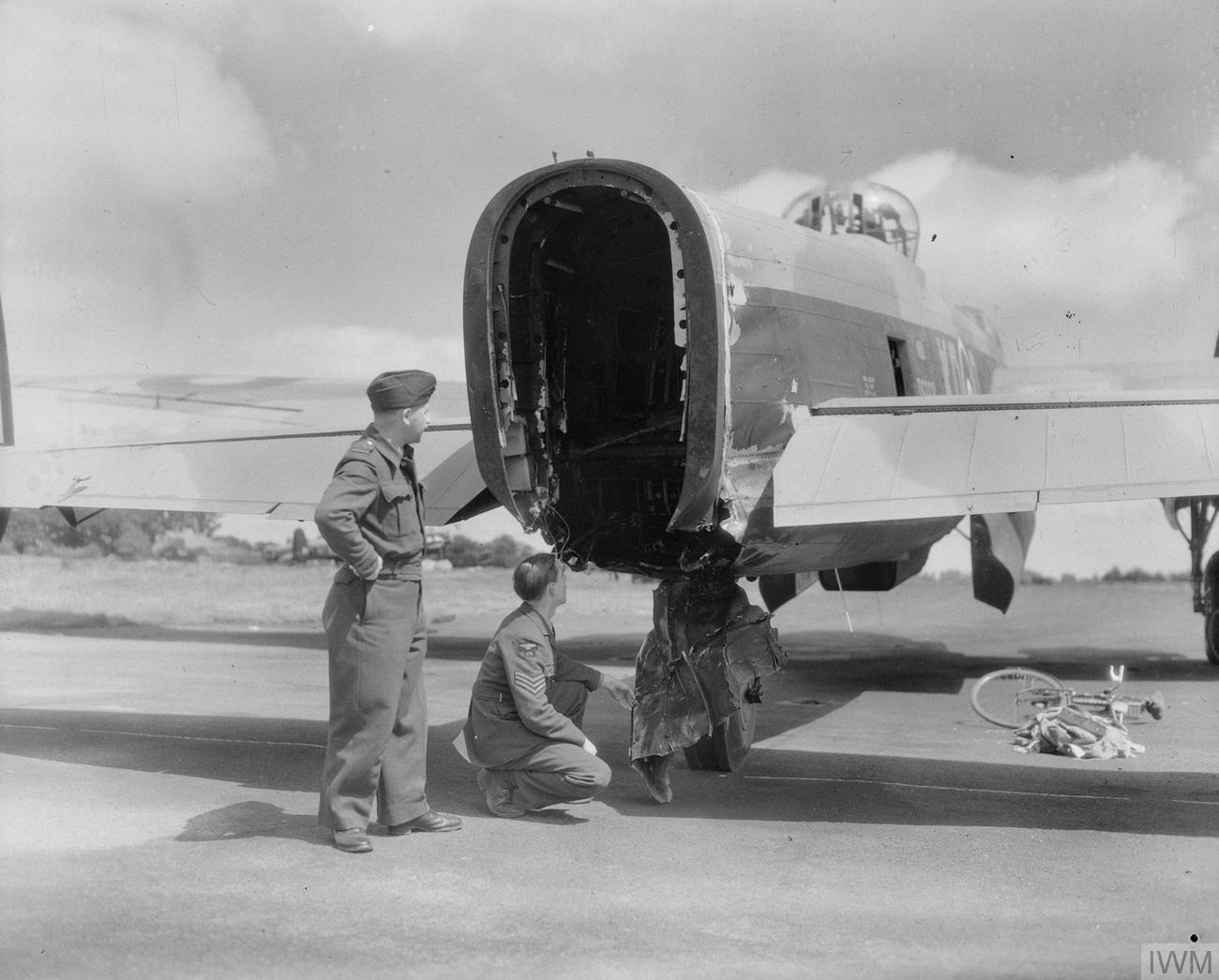
Very early aircraft carried the FN.64 ventral turret, aimed through a periscope that limited the gunner's view to a 20-degree arc and too slow to keep a target in its sights. Apart from early B.Is and the prototype B.IIs it was almost never used, and it was often removed to save weight. That empty opening gained value when, in the winter of 1943/1944, the Luftwaffe began attacking from below with Schräge Musik. On other Lancasters the H2S radar usually occupied that position, but the B.II's bulged bomb bay interfered with its installation, leaving the opening free. Units fitted official and unofficial mounts there for 12.7 mm machine guns or even 20 mm cannon, until an official modification, Mod 925, authorised a 7.7 mm machine gun in the same location, though it was not fitted to all aircraft.
The bulged bomb bay came in three forms: the prototype had a narrow bulge running from just aft of the cockpit to the turret position; early production aircraft had a full-width bulge over the same length; and late production aircraft had bomb bay doors prominently bulged along their whole length.
By the end of 1943 the B.II was being phased out: Armstrong Whitworth had switched to building the Mk I, Merlin production was keeping up with demand, and American output had grown after the United States entered the war. The irony came from the Halifax Mk III, which improved by swapping the Merlin for the Hercules, the very change that had hurt the Lancaster. By D-Day only Nos. 514 and 408 Squadrons were still using the B.II. A small number remained in use as test beds, the last surviving until 1950.
Multimedia


_Squadron_RCAF%2C_with_aircrew.jpg)