Buran-Energia : The Soviet Space Shuttle 2.0 on a Moon Rocket
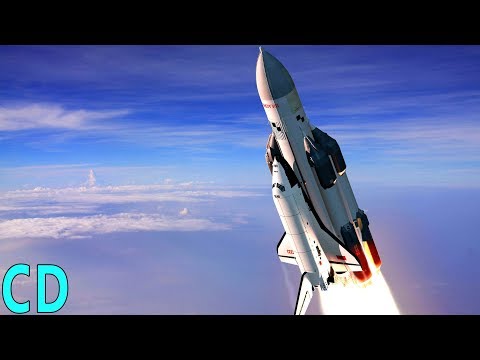
Video from the channel Curious Droid about Energia, linked on its Above Ten Thousand entry. Duration: 13:15. Language: English. Video type: Documentary.
What it's about
The video compares the Soviet Buran orbiter with the US space shuttle. It argues that although they looked alike on the outside, they were conceived as different systems, and that the centerpiece of the Soviet system was the Energia rocket. It also traces the launcher's history and what became of it after the end of the USSR.
Historical context
The STS was announced in 1972. After four failures of the N1 across four launches, Valentin Glushko replaced Vasili Mishin in 1974. In 1976 he was tasked with giving a symmetrical response to the American shuttle. Glushko wanted the launcher to be independent of the orbiter to keep a path to the Moon open. Energia flew for the first time on 15 May 1987 carrying the Polyus payload, which failed to reach orbit due to a sensor fault and fell into the Pacific. On 15 November 1988 it launched Buran on an automatic, uncrewed flight: it circled the Earth twice and landed at Baikonur despite strong crosswinds. In May 2002 the roof of building 112 collapsed, destroying the orbiter and an Energia rocket and killing eight workers.
Key facts
Since the orbiter carried no main engines, Buran could carry 30 tonnes, compared with 24 for the American shuttle. Energia weighed around 2,500 tonnes on the pad and could place up to 100 tonnes into orbit without an orbiter. Each of its four boosters carried an RD-170, a four-chamber engine with 7,900 kN of vacuum thrust. Its derivatives power the Zenit and, in the RD-180 version, the first stage of the Atlas V.