Project Mercury · NASA · Uncrewed
Mercury-Redstone BD
- Mar 24, 1961, 5:30 AM
- Launch date
- 8 min
- Duration
- Success
- Outcome
.jpg)

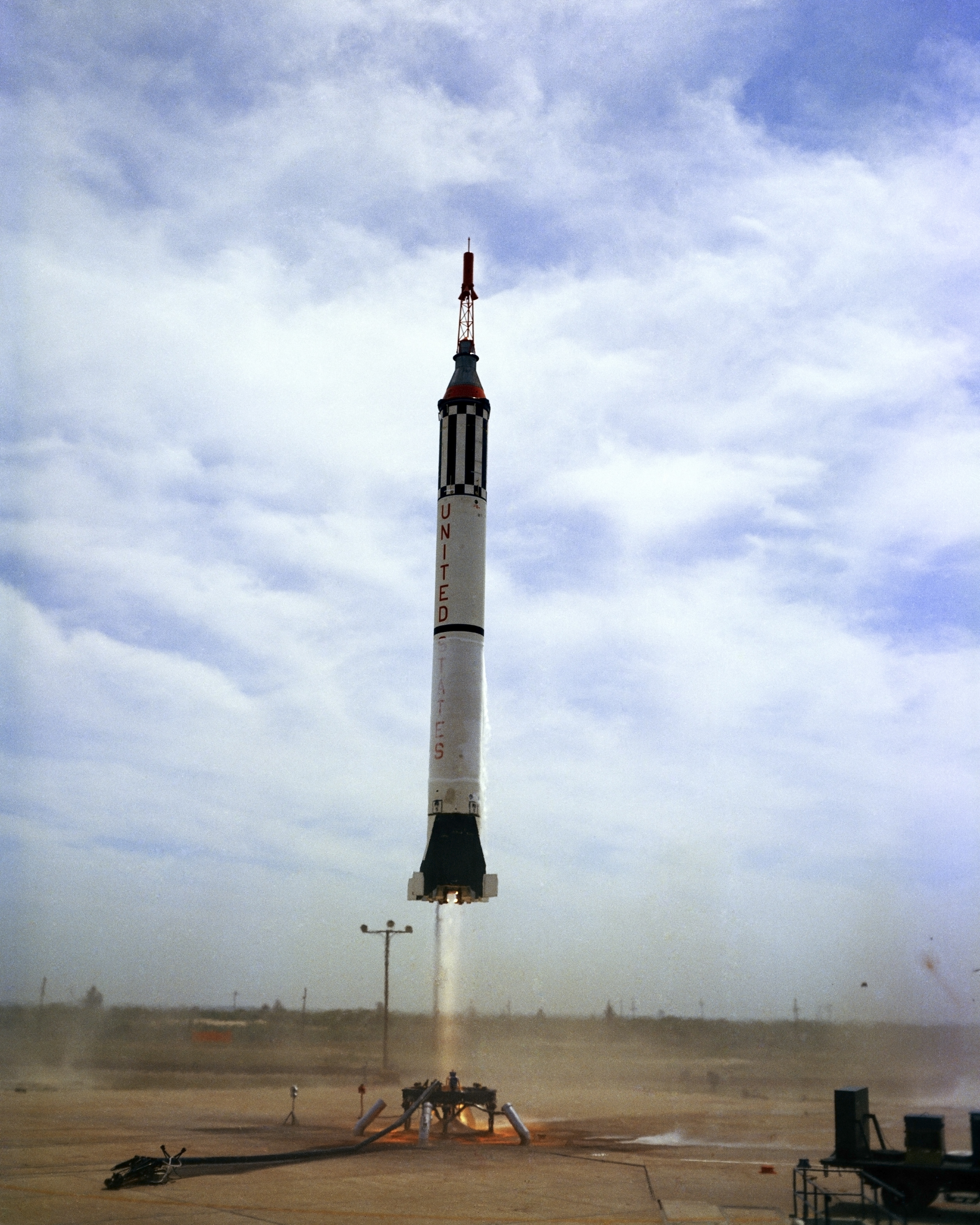
Mercury-Redstone BD — the initials stand for Booster Development — was the uncrewed suborbital flight NASA launched on 24 March 1961 from Launch Complex 5 at Cape Canaveral, Florida, carrying a boilerplate Mercury spacecraft on the Redstone MRLV-5. It was never part of the original programme plan. It was inserted between Mercury-Redstone 2 and the first crewed flight for one reason: the launch vehicle had not yet flown twice in a row the way it was supposed to. The decision came out of the post-flight analysis. Having gone over the vehicle's behaviour on Mercury-Redstone 1A and on Mercury-Redstone 2, the flight that carried the chimpanzee Ham, engineers at the Marshall Space Flight Center and the Space Task Group agreed that several problems still had to be cleared before a man rode the rocket: structural feedback into the control system that made the jet vanes chatter, vibration in the instrument compartment, and the failure of the thrust-controller system. Fixes had been worked out on paper, but Wernher von Braun held that paper was not enough and that a flight was needed to prove them. The modifications MR-BD carried into the air went to the core of the vehicle. The over-acceleration seen on earlier flights had been traced to a servo valve that failed to meter hydrogen peroxide properly to the steam generator and so overdrove the fuel pumps; on MR-BD and on every later Mercury-Redstone the thrust regulator and the velocity integrator were reworked so the rocket could not exceed its speed limit again. Further changes ensured that engine cutoff came from a programmed signal rather than from propellant depletion, the sequence that on MR-2 had triggered an inadvertent abort and fired the launch escape system. Against the harmonic vibration of the elongated upper section, four stiffeners were added to the ballast section and 210 pounds (95 kg) of insulation was applied to the inner skin of the instrument compartment. The flight lasted eight minutes and twenty-three seconds. The stack reached an apogee of 113.5 miles (182.7 km) and a range of 307 miles (494 km), with a peak velocity of 5,123 mph (8,245 km/h) and a peak load of 11 g. There was no plan to separate the boilerplate from the booster: the two fell into the Atlantic together, five miles (8 km) short of the aim point, and sank after setting off a sofar bomb on the way down. Booster performance was excellent apart from some vibration in the adapter area. Every test objective was met, and as a direct result the launch vehicle was man-rated for the planned suborbital flights. The road to Mercury-Redstone 3 was open: six weeks later, on 5 May 1961, Alan Shepard flew the same kind of rocket. It is among the least-told flights of the programme — no crew, no real spacecraft, and an ending on the sea floor — and yet it is the one that turned an Army missile into a vehicle fit to carry people.
Payload
MR-BD carried no crew, no living passenger and no dummy: the payload was a boilerplate Mercury spacecraft, a structural mock-up with no operational systems, fitted with an inert escape rocket and without a retro package or posigrade rockets. NASA lists the flight's payload as "Boilerplate spacecraft, Launch Vehicle MR-5"; the Wikipedia entry credits the mock-up to McDonnell Aircraft and gives it a launch mass of 1,141 kg. No experiments or scientific instrumentation rode inside the mock-up, because the flight was testing the launch vehicle rather than the spacecraft: the stretched Redstone carried four stiffeners added to its ballast section and some 210 pounds (95 kg) of insulation applied to the inner skin of the upper part of the instrument compartment, corrections to the harmonic vibrations seen on earlier flights. There was never any intention of separating the mock-up from the rocket: the two impacted together 307 miles (494 km) downrange, five miles (8 km) short of the plan, and sank in the Atlantic after setting off a sofar bomb on the way down. Sources differ on the launch vehicle's designation: NASA's chronology refers to "Redstone launch vehicle No. 5", its uncrewed-missions page lists it as "Redstone (4)", and Wikipedia calls it "Redstone MRLV-5".
History
The programme reaches an impasse
By the beginning of 1961 crewed Mercury depended entirely on the Redstone. The rocket was not a new machine: it descended from the Army's ballistic missile and from the first stage of the related Jupiter-C, with lengthened tanks to hold enough propellant and with the Rocketdyne A-7 engine of the latest military Redstone in place of the engine the Army was phasing out. On that base a painstaking man-rating effort had been carried out. The standard ST-80 inertial guidance was replaced by the simpler LEV-3 autopilot, less precise but more reliable and accurate enough for the mission. An additional nitrogen bottle was added for tank pressurisation and an extra hydrogen peroxide tank to drive the turbopump through a longer burn. High-quality jet vanes were specified because alcohol and the longer burn time eroded the graphite. Above all, an automatic in-flight abort sensing system was fitted, watching flight control, engine thrust and electrical power and, on detecting an anomaly, shutting down the engine and firing the capsule's escape system. Even the range safety system was reworked, with a three-second delay between engine cutoff and vehicle destruct so the escape tower had time to pull the spacecraft clear.
The result was a paradox. So much had been changed that NASA was not flying a proven rocket but, in effect, a new one, cut off from the accumulated flight data of previous Redstone and Jupiter-C launches. The first three Mercury-Redstone flights bore that out. The first barely left the pad. Mercury-Redstone 1A and Mercury-Redstone 2 both flew and both over-accelerated: the first because of a faulty accelerometer, the second because of a liquid-oxygen regulator that oversupplied the engine and brought thrust termination early. On MR-2, the chimpanzee Ham's flight, that chain ended in an unwanted abort, with the escape tower fired and the capsule coming down far beyond its intended point.
Why one more flight was inserted
The programme chronology sets down the reasoning under the date of 24 March 1961 without ornament: after analysing launch vehicle behaviour on MR-1A and MR-2, officials at the Marshall Space Flight Center and the Space Task Group were of the opinion that a number of problems needed correcting before crewed flight arrived. The list was specific — jet-vane vibration, instrumentation compartment vibration, failure of the thrust-controller system and several other areas needing attention — and engineering had studied the problems and formulated proposed solutions. What was missing was flight evidence. It was felt that a flight was necessary to verify the corrections, and so the Booster Development test was scheduled and flown.
The decision was not unanimous. Von Braun added MR-BD to the schedule between MR-2 and MR-3 over the protests of those who argued that the MR-2 problems had been identified quickly and fixed easily — Alan Shepard among them, the man with most to gain from an earlier crewed launch. Von Braun was adamant: the Redstone could not be considered man-rated until it flew a perfect flight, and vehicle performance on MR-1A and MR-2 had not met acceptable standards for carrying a human passenger. Seen from a distance, the argument captures two schools of flight engineering — one that trusts the diagnosis, and one that trusts only the demonstration.
What was changed on the vehicle
The published test objectives for MR-BD are revealingly short: investigate corrections to booster problems arising from the MR-2 flight, listed as structural feedback into the control system producing vane chatter, instrument compartment vibration, and thrust control malfunction. The entire mission existed to answer those three items.
The cause of the earlier over-accelerations was traced to a servo valve that did not properly regulate the flow of hydrogen peroxide to the steam generator and so overpowered the fuel pumps. On MR-BD and on later Mercury-Redstone vehicles the thrust regulator and the velocity integrator were modified to keep the rocket from exceeding its speed limit again. Further changes were made to prevent engine cutoff from propellant depletion rather than from a programmed signal — precisely the sequence that on MR-2 had produced an inadvertent abort and activation of the launch escape system.
The third front was structural. The topmost section of the elongated Redstone suffered harmonic vibration induced by aerodynamic stress. The answer was to add four stiffeners to the ballast section and to apply 210 pounds (95 kg) of insulation to the inner skin of the upper part of the instrument compartment. It was not an elegant fix — it amounted to stiffening and damping — but it attacked the phenomenon where it showed itself.
A deliberately mute payload
MR-BD carried no operational Mercury spacecraft. The payload was a boilerplate, a structural mock-up, fitted with an inert escape rocket; it had neither a retro package nor posigrade rockets. The reason is that the flight was not testing the spacecraft, it was testing the rocket. Any working capsule system aboard would have added variables without contributing to what was being measured. For the same reason there was no intention of separating booster and boilerplate at all.
Preparation followed the programme's ordinary rhythm in those weeks. On 7 March 1961 Redstone launch vehicle No. 5 was delivered to Cape Canaveral for the Booster Development flight, the same day spacecraft No. 11 arrived for Grissom's crewed ballistic mission. On 20 March 1961 the Marshall Space Flight Center forwarded trajectory data for the test to the Space Task Group and other interested organisations, describing its purpose in terms that left no room for interpretation: to provide a final check of the launch vehicle system prior to the crewed suborbital flights.
The flight of 24 March 1961
Lift-off came at 12:30 a.m. Eastern time from Launch Complex 5 at Cape Canaveral Air Force Station. The mission lasted eight minutes and twenty-three seconds. The stack reached an apogee of 113.5 miles (182.7 km) and covered a range of 307 miles (494 km), with a peak velocity of 5,123 mph (8,245 km/h), a maximum dynamic pressure of 580 psf and a peak load of 11 g.
Rocket and boilerplate came down together, as planned, 307 miles (494 km) downrange, five miles (8 km) short of the aim point, and sank into the Atlantic after setting off a sofar bomb during the descent. Booster performance was excellent with the single exception of some vibration in the adapter area — the very section the stiffeners and insulation had been meant to address. The fix had reduced the problem without eliminating it.
Outcome: the Redstone is man-rated
The official verdict was unequivocal: all test objectives were met and, as a result of the test, the launch vehicle was man-rated for the planned suborbital flights. George Low reported it to the NASA Administrator in a memorandum dated 27 March 1961, three days after the flight, and the programme position was recorded in the Space Task Group quarterly status report for the period ending 30 April 1961. The mission is logged as fully successful.
It is worth measuring what that meant against the calendar. Those same weeks were the programme's worst on the test side: on 18 March 1961, six days before MR-BD, the Little Joe 5A flight had failed again through premature firing of the escape tower, repeating almost point for point the failure of November 1960 and leaving its objectives unmet. Against that background, a flight that goes exactly as written is worth more than its data: it restores confidence.
How it cleared the way to MR-3
With the vehicle man-rated, the next mission on the schedule could be the crewed one. Mercury-Redstone 3 launched on 5 May 1961 with Alan Shepard aboard, and its test objectives — familiarise man with a brief but complete space flight experience, evaluate his ability to perform as a functional unit, study his physiological reactions, and recover astronaut and spacecraft — were those of human exploration rather than of a machine trial. Mercury-Redstone 4, with Grissom, followed on 21 June 1961.
MR-BD also left a less visible legacy. The three uncrewed Mercury-Redstone flights had shown high vibration and structural bending in the adapter area, so Shepard's booster carried 340 pounds of lead-infused plastic in the adapter section together with additional bracing and stiffeners. When Shepard still reported noticeable vibration during launch, Grissom's booster was given still more ballast. The chain of corrections that begins with the MR-2 analysis and runs through MR-BD did not close in March: it went on being tuned flight by flight.
A flight misread on the other side
MR-BD had a curious afterlife in the Soviet Union, where it was taken for a failure. In his diaries Nikolai Kamanin noted that on 24 March the Americans had suffered a big failure, the Mercury capsule having failed to separate from the carrier and sunk in the ocean, and used it to reinforce the view that they would not launch a man before the USSR did. The confusion is understandable from outside: without the flight plan in hand, a rocket and a capsule falling into the sea together look like an accident. It was the opposite. Non-separation was the design of the test, and the joint impact was the sign that everything had gone as intended.
What MR-BD represents
Mercury-Redstone BD is the clearest example of a decision that rarely reaches the popular accounts of the programme: spending a rocket and several weeks of schedule, in the middle of the space race, to test nothing new. Its purpose was not to extend the envelope or to try an untested capability but to demonstrate in flight that already-diagnosed corrections worked. It was, in the most literal sense, the flight that qualified the Redstone to carry people, and the only one in the series that existed solely because qualification demanded it.
Images
Elsewhere
- AmericaSpaceLanzamiento del Mercury-Redstone BD, 24 de marzo de 1961 ↗
- Ninfinger Productions (Scaleroc Vault)MR-BD en la plataforma de lanzamiento 5, Cabo Cañaveral ↗
- Ninfinger Productions (Scaleroc Vault)Cápsula boilerplate del Mercury-Redstone BD ↗
- Ninfinger Productions (Scaleroc Vault)Lanzamiento del MR-BD (foto NASA S61-MRBD5, JSC Digital Images Collection) ↗
- Wikimedia CommonsCápsula boilerplate del Mercury-Redstone BD ↗