Project Gemini · NASA · Uncrewed
Gemini 2
- Jan 19, 1965, 2:03 PM
- Launch date
- 18 min
- Duration
- Success
- Outcome




.jpg)





-800.webp)


_expuesta_en_el_Space_Force_Museum_de_Cabo_Ca%C3%B1averal-800.webp)
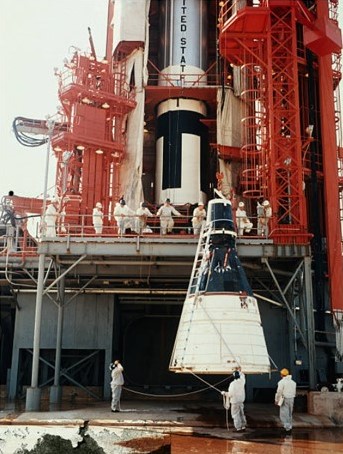
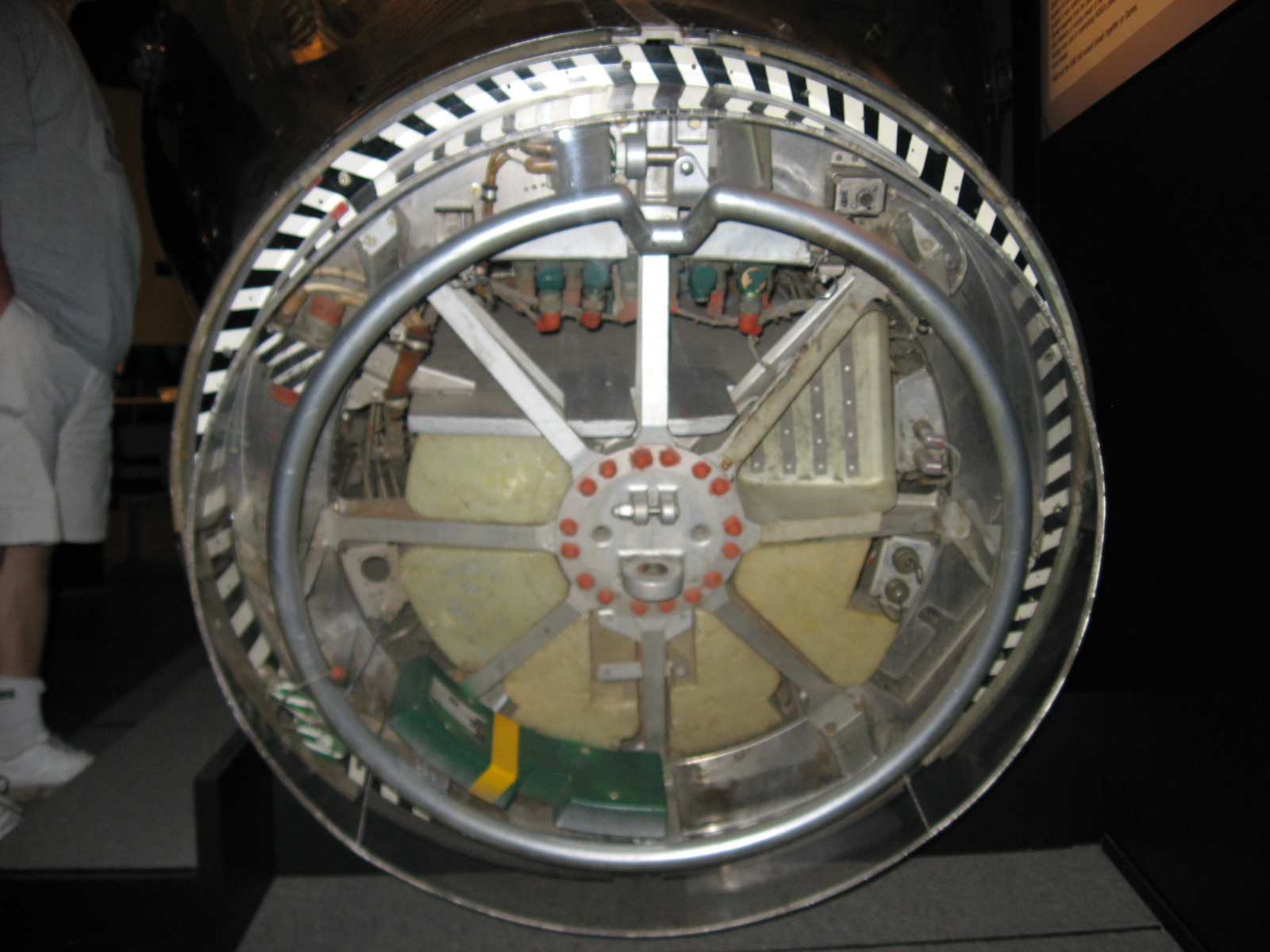
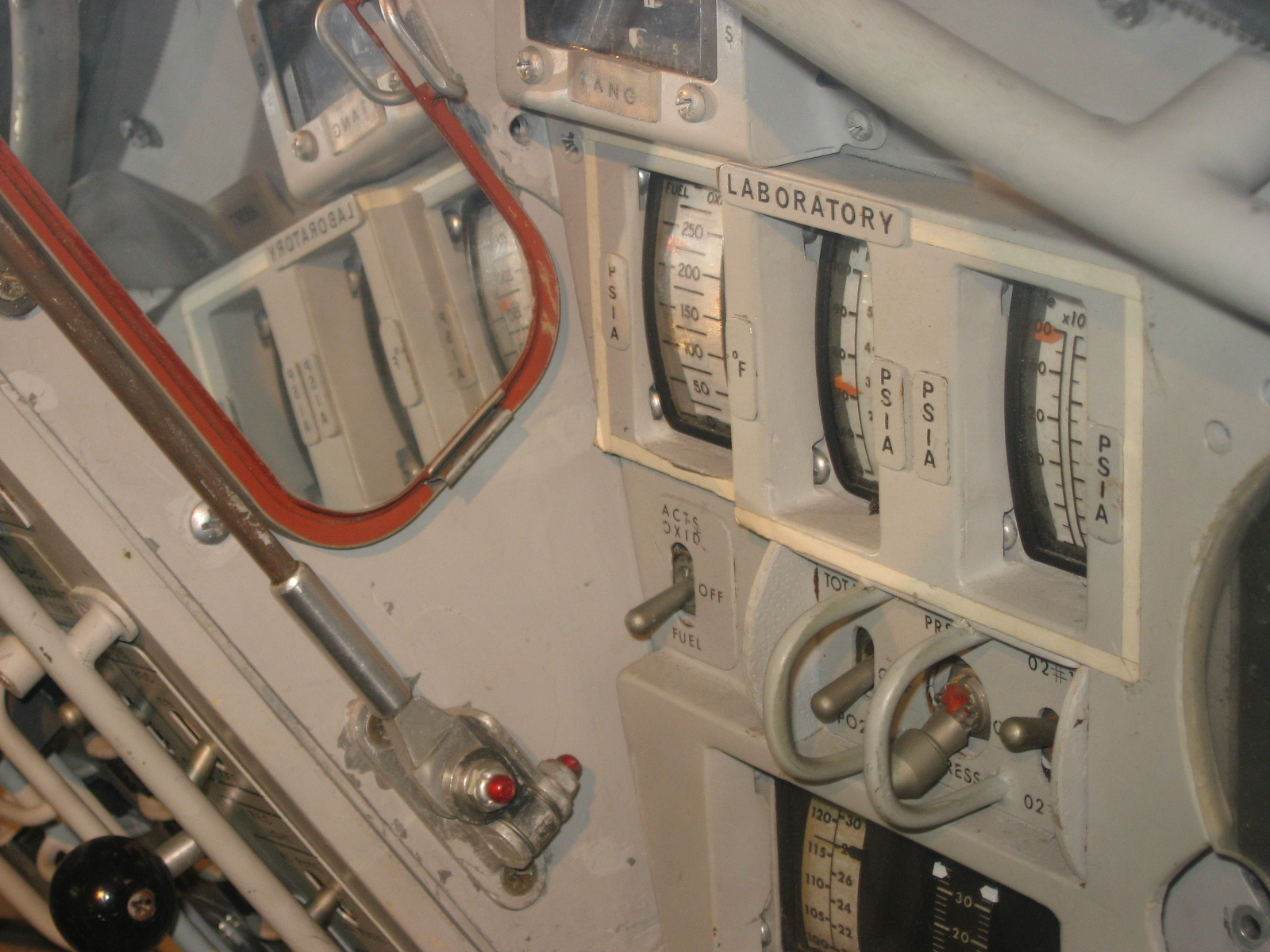
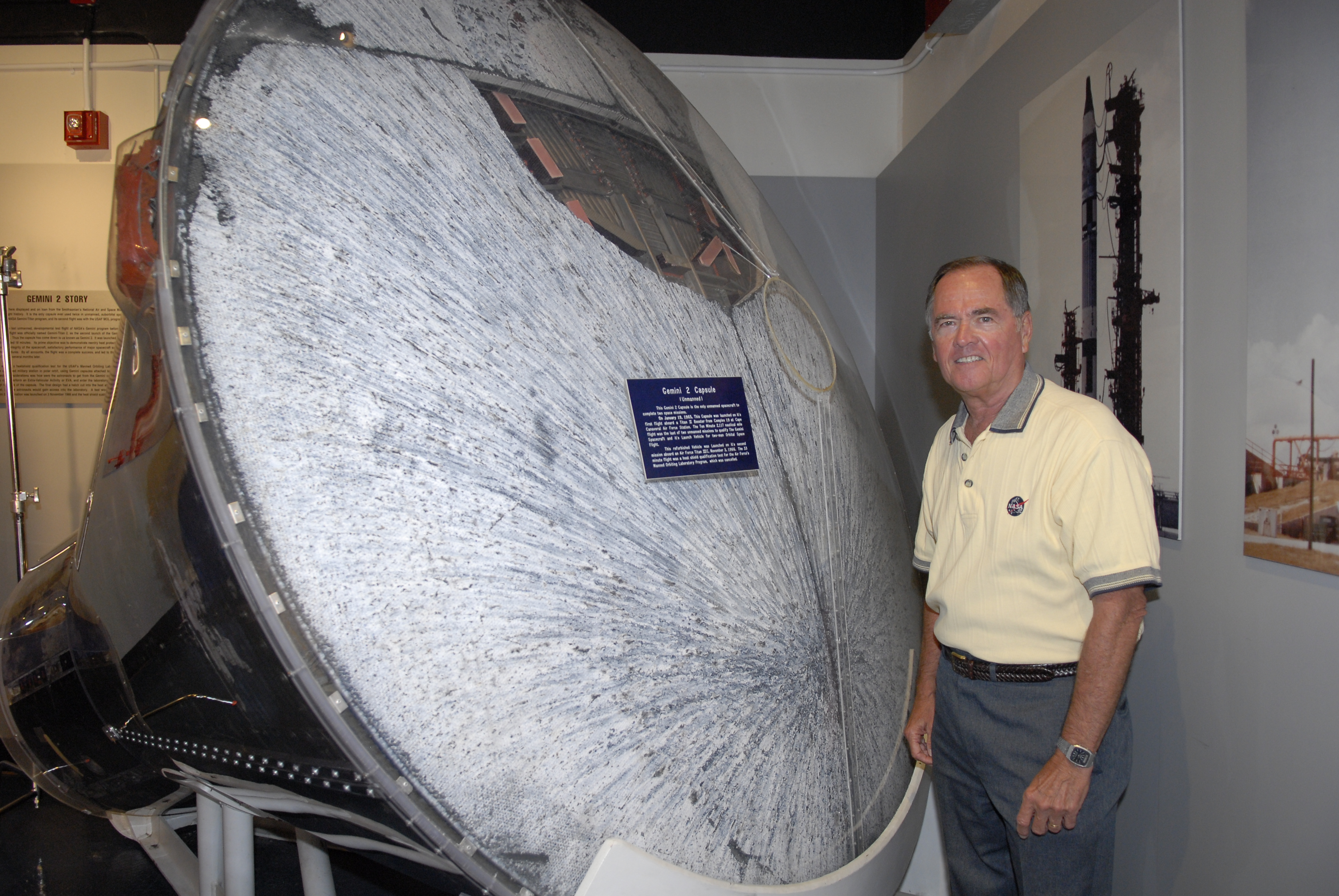
Gemini 2 — officially Gemini-Titan 2, or GT-2 — was the second flight of Project Gemini and the last uncrewed test before the spacecraft carried astronauts. It lifted off from Launch Complex 19 at Cape Kennedy on 19 January 1965 at 14:03:59.861 UTC, flew a ballistic suborbital arc over the Atlantic and splashed down eighteen minutes and sixteen seconds later, 1848 nautical miles (3422.4 km) southeast of the launch site. It carried no crew and was never meant to reach orbit: its purpose was to expose the reentry module's heat shield to a maximum-heating-rate reentry — the most severe condition the spacecraft could face — and to confirm that the structure and its systems survived the full cycle from liftoff to splashdown. The road to that morning was extraordinarily rough. Between August and October 1964 the GLV-2 launch vehicle, already erected on Complex 19, suffered the electromagnetic effects of a nearby lightning strike and the successive threats of hurricanes Cleo, Dora, Ethel and Isbell, which forced the vehicle to be taken down, stored in the missile assembly building and erected again. The damage was severe enough that the Manned Spacecraft Center proposed dropping GLV-2 from the programme altogether; the Air Force Space Systems Division and the contractors argued the opposite, and NASA agreed to fly it. On 9 December 1964, with the engines already ignited, an automatic shutdown aborted the attempt after a loss of hydraulic pressure in the first stage guidance and control system. The 19 January flight met every objective but one: the fuel cell, an older design than the flight configuration, failed during the countdown and was deactivated, so no fuel cell results were obtained. The heat shield and the retrorockets performed as expected, the spacecraft reached the aircraft carrier USS Lake Champlain in excellent condition, and the way was clear for the crewed flight of Gemini 3. The capsule also had a second life: refurbished to the Gemini B configuration, it flew again on 3 November 1966 on a suborbital test for the Air Force Manned Orbiting Laboratory programme, becoming the first spacecraft to be reused since the X-15 rocket plane.
Objectives
Gemini 2 was the second uncrewed test flight of the programme, a sub-orbital ballistic mission whose primary objectives were to demonstrate the heat protection of the reentry module during a maximum heating rate return, the structural integrity of the spacecraft and the performance of its systems. Secondary objectives included obtaining test results on communications, cryogenics, the fuel cell and reactant supply system, and further qualification of the launch vehicle.
Payload
The flight carried the instrumented Gemini spacecraft GT-2, with a launch mass of 3,133.9 kg, uncrewed and run by an onboard automatic sequencer; it was lofted by the second Titan II Gemini Launch Vehicle (GLV-2). Among the systems aboard under test were the cryogenic system and the fuel cells with their reactant supply, which had failed before launch and yielded no test results.
History
A flight that only had to survive reentry
Project Gemini was conceived as the bridge between the single-seat Mercury capsules and the Apollo lunar programme, and its flight plan opened with two uncrewed qualification missions. The first, Gemini 1, had shown in April 1964 that launch vehicle and spacecraft worked together and that the structure withstood the ascent; that spacecraft carried no operational heat shield and was never meant to come back. The second had to answer the complementary and far more dangerous question: whether the spacecraft, with its truncated-cone shape and its ablative shield, could come back through the atmosphere without being destroyed.
That is why Gemini 2 was not an orbital flight. NASA chose a suborbital ballistic profile, a high, short arc over the Atlantic that — precisely because it did not follow the gradual descent of an orbital reentry — subjected the heat shield to the highest heating rate of the programme. As a qualification test it was the most demanding that could be devised: if the shield survived that, it would survive any real reentry.
The mission's primary objectives, as recorded in the programme's official chronology, were three: to demonstrate the adequacy of the reentry module's heat protection during a maximum-heating-rate reentry, to demonstrate the structural integrity of the spacecraft from liftoff through reentry, and to confirm satisfactory performance of the onboard systems. Secondary objectives included obtaining test results on communications, on the cryogenics, on the fuel cell and its reactant supply system, and further qualifying the launch vehicle itself.
GLV-2: a launch vehicle built, accepted and battered
The Gemini launch vehicle, designated GLV-2, was a Titan II modified for crewed use. Its propellant tanks entered major weld fabrication at the Martin plant in Denver in September 1962, in the same batch as those of GLV-1; one tank rejected in that process was replaced by the GLV-2 stage II oxidiser tank, a detail that illustrates how hand-built and full of substitutions the production of the programme's first launch vehicles really was.
Horizontal testing of GLV-2 was completed on 17 January, and before the vehicle was erected in the vertical test facility a longitudinal oscillation kit — a fix for the POGO phenomenon that had been one of the great obstacles to qualifying the Titan II as a crewed launcher — was installed in stage I. Three additional unscheduled tests were run on the vehicle before it was removed from the test facility, among them a radio frequency susceptibility test that required demonstrating that GLV-2 ordnance could withstand an electromagnetic field strength of up to 100 watts per square metre with live ordnance items connected in flight configuration. The vehicle acceptance team inspection was completed on 1 May with GLV-2 found acceptable; the vehicle was de-erected the next day and moved to the assembly area, where between 11 May and 13 June the interim stage I engine was removed and the flight engine installed.
Representatives of the Air Force Space Systems Division, Aerospace Corporation and NASA conducted the official roll-out inspection on 17 and 18 June, and the Space Systems Division formally accepted the vehicle on 22 June. Delivery to the Eastern Test Range — the former Atlantic Missile Range — was rescheduled from 22 June to 10 July, and the launch vehicle was finally airlifted on 11 July. Up to that point the programme was running comfortably: the work schedule had GT-2 flying on 24 August and GT-3 on 16 November, with a four-week slip allowance for each mission. What happened from August onwards dismantled that schedule completely.
The electromagnetic incident of 17 August 1964
On 17 August 1964 a severe electrical storm in the vicinity of Complex 19 interrupted testing of GLV-2. Several observers reported a lightning strike at or near the complex. All testing was halted for a thorough investigation of what the programme documentation recorded as "the electromagnetic incident".
The inspection, completed on 2 September, found no physical markings of any kind at the complex, but did disclose a substantial number of failed components, mostly in the aerospace ground equipment and some in GLV-2 itself. The conclusion was that Complex 19 had not been hit directly: the damage was attributed to the electromagnetic effects of a nearby lightning strike or to the resulting static charges.
The response was drastic, and revealing of the standards applied to a programme meant to carry people. A recovery plan was drawn up to restore confidence in every launch vehicle system, in the ground equipment, in the ground instrumentation and in the facility systems. All components containing semiconductors were replaced, and every test was to be run again as if GLV-2 had just arrived at the Eastern Test Range. In administrative terms, the vehicle went back to square one.
Cleo, Dora, Ethel, Hilda and Isbell: the 1964 hurricane season
Before the recovery from the lightning strike was finished, the hurricane season began. On 27 August Hurricane Cleo struck the Cape Kennedy area. Stage II of GLV-2 was de-erected and stored, the erector was lowered to horizontal and stage I was lashed in its vertical position. Stage II was re-erected on 1 September, power was applied to the launch vehicle on the 2nd, and the subsystem functional verification tests began on 3 September.
They lasted five days. When forecasts indicated that Hurricane Dora would strike Cape Kennedy, both stages of GLV-2 were de-erected on 8 September and secured in the missile assembly building. Hurricane Ethel then threatened the area, and both stages remained in the hangar until 14 September, when they were returned to Complex 19 and re-erected. The functional verification tests, begun again on 18 September, ended successfully on 5 October.
The Atlantic parade was not over. Hurricane Hilda forced the interruption, after seventeen hours, of an at-sea test of the Gemini spacecraft carried out with static article No. 5 that had begun on 30 September; that test did not involve the launch vehicle, but it shows how thoroughly the weather shaped the work of that autumn. And Hurricane Isbell threatened the area on 14 and 15 October: its path ran far enough south of the Cape that de-erection proved unnecessary, though testing was curtailed.
In between, work continued: the prespacecraft mate combined systems test was completed on 6 October at Complex 19, an exercise consisting of an abbreviated countdown and a simulation of flight events, with a simulator representing the electrical characteristics of the spacecraft, whose purpose was to establish confidence in the launch vehicle. Electrical-electronic interference tests were completed on 12 October.
The September decision: drop GLV-2 from the programme?
Lightning and hurricanes piling onto the same vehicle led the Manned Spacecraft Center to propose a radical way out: dropping GLV-2 from Project Gemini because of the possible ill effects of the 17 August electromagnetic incident and of Hurricane Cleo. Under that proposal GLV-3 would have been substituted for the second Gemini mission and the programme would have been shortened by one flight.
On 4 September 1964 the Air Force Space Systems Division, supported by the launch vehicle contractors, recommended the opposite: that GLV-2 be flown as scheduled. After reviewing the incidents, their effects, the corrective action taken and the retesting performed, the Space Systems Division, Martin, Aerospace and Aerojet-General all felt GLV-2 should fly, and NASA accepted the recommendation.
The price was paid in schedule. On 29 September the Gemini Program Manager, Charles W. Mathews, presented the management panel with the new flight schedule resulting from the lightning strike and the hurricane conditions: GT-2 on 17 November, GT-3 on 30 January 1965 and GT-4 on 12 April, with three-month intervals from GT-4 through GT-7 and two and a half months for the rest of the programme. At the same meeting it was decided to remove the fuel cell from GT-4 and substitute batteries, and to fly older versions of the fuel cell on GT-2 to gain flight experience with the component. That September decision would explain the one objective the mission failed to meet.
November: the dress rehearsal
Many ground tests were carried out on the Gemini 2 spacecraft and its Titan in November 1964. On 24 November GT-2 successfully completed the Wet Mock Simulated Launch, a full-scale countdown exercise that included propellant loading. Although the flight would be uncrewed, the occasion was used to rehearse crew suiting and spacecraft ingress and egress procedures: the prime crew for Gemini 3 donned pressure suits and full biomedical instrumentation, assisted by their backup crew and by the space suit, bioinstrumentation and aeromedical personnel who would take part in the GT-3 launch operation. One practical decision came out of it: all physical examinations, bioinstrumentation sensor attachment and suit donning would be carried out in the pilot ready room at Launch Complex 16.
9 December 1964: an automatic shutdown one second after ignition
The GT-2 launch countdown began on 9 December 1964 at 4:00 in the morning, eastern time, and proceeded normally with minor holds until about one second after engine ignition. At that point a shutdown signal from the master operations control set terminated the launch attempt.
The failure sequence ran as follows: a loss of hydraulic pressure in the primary guidance and control system of the launch vehicle's first stage caused an automatic switchover to the secondary guidance and control system. During the 3.2-second holddown that follows the ignition command, that switchover was instrumented as a shutdown command, so the master operations control set killed the launch. It was the malfunction detection system doing exactly what it was asked to do: on a vehicle intended to carry a crew, a guidance switchover on the pad is reason enough not to leave the ground.
The subsequent investigation established that the loss of hydraulic pressure had been caused by the failure of the primary servo-valve in one of the four tandem actuators that control movement of the stage I thrust chambers. All four stage I tandem actuators were replaced with redesigned units. Although some retesting began shortly after the mission was scrubbed, most of the work preparing GLV-2 for another launch attempt was curtailed until the new actuators arrived.
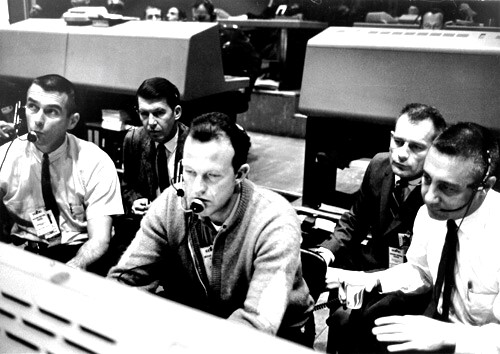
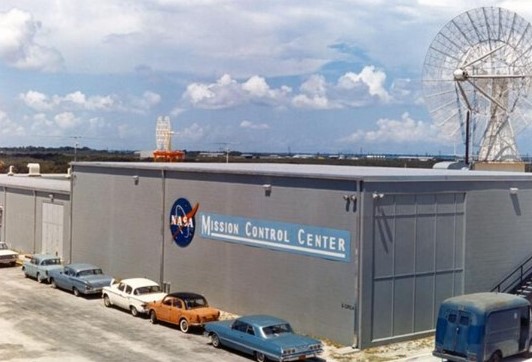
On that same 9 December the Mission Control Center at Houston was used passively and in parallel with the Mission Control Center at the Cape during the launch attempt, primarily to validate the computer launch programmes. Houston received, processed and displayed live and simulated launch vehicle and spacecraft data, and the results were considered very successful. The failed attempt at least served to exercise the centre that would direct every later crewed mission.
19 January 1965: the flight
On 19 January 1965, during the GT-2 countdown, the fuel cell hydrogen inlet valve failed to open. Efforts to correct the problem continued until it became clear that freeing the valve would delay the countdown; work on the fuel cell then stopped and the system was not activated for the flight.
The decision rested on a judgement made months earlier. The fuel cell installed in spacecraft No. 2 was not of the current flight design: when the fuel cell design was changed in January 1964, several cells of the earlier design remained available, and although they were known to have defects, flight testing them together with the reactant supply system was felt to be extremely desirable. It was therefore agreed to fly the entire system on GT-2, but strictly on a "non-interference with flight" basis. When the valve failure threatened to delay the countdown, that rule was applied without argument and fuel cell activation was called off.
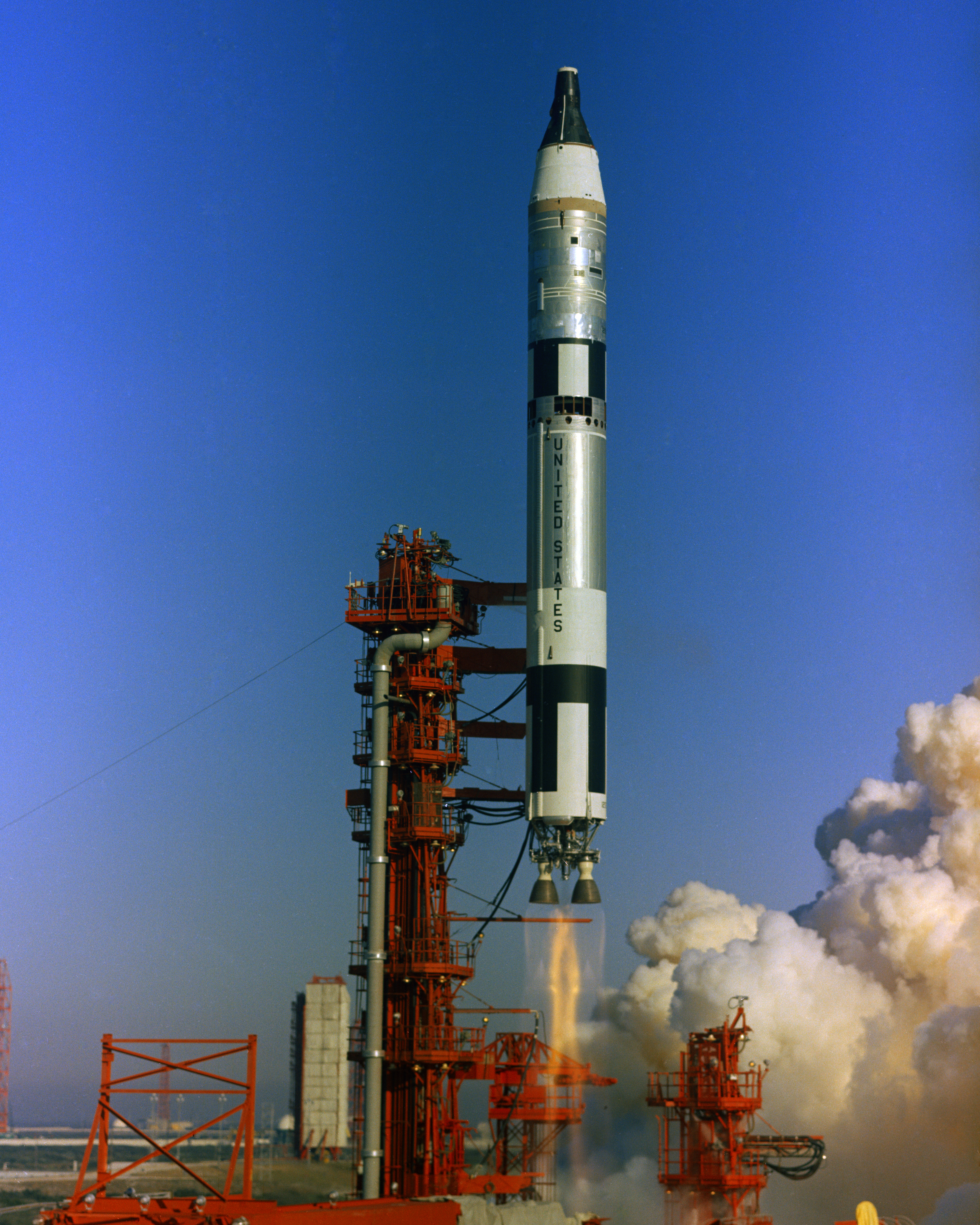
Gemini 2 lifted off from Complex 19 at Cape Kennedy at 14:03:59.861 UTC, 9:04 in the morning eastern time. Shortly after launch the Mission Control Center suffered a power outage and control of the mission was transferred to a tracking ship; the outage was later traced to an overload of the electrical system caused by the network television equipment covering the launch.
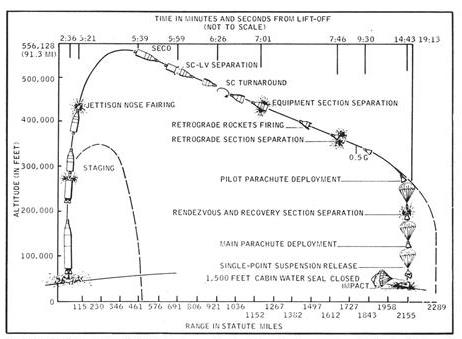
The spacecraft flew a ballistic suborbital arc over the Atlantic Ocean and reached a maximum altitude of 92.4 nautical miles, some 171.1 kilometres. The whole flight was run by an onboard automatic sequencer, with nobody intervening. Retrorockets fired 6 minutes 54 seconds after launch, and the spacecraft landed 11 minutes 22 seconds later, 1848 nautical miles — 3422.4 kilometres — southeast of the launch site, at 14:22:14 UTC. Full duration of the mission was 18 minutes 16 seconds.
Recovery in the Atlantic
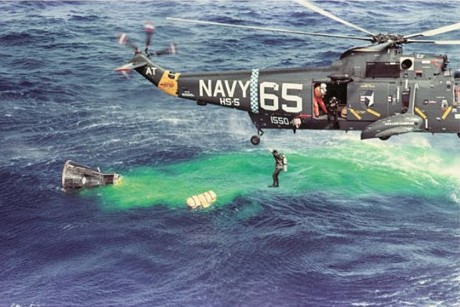
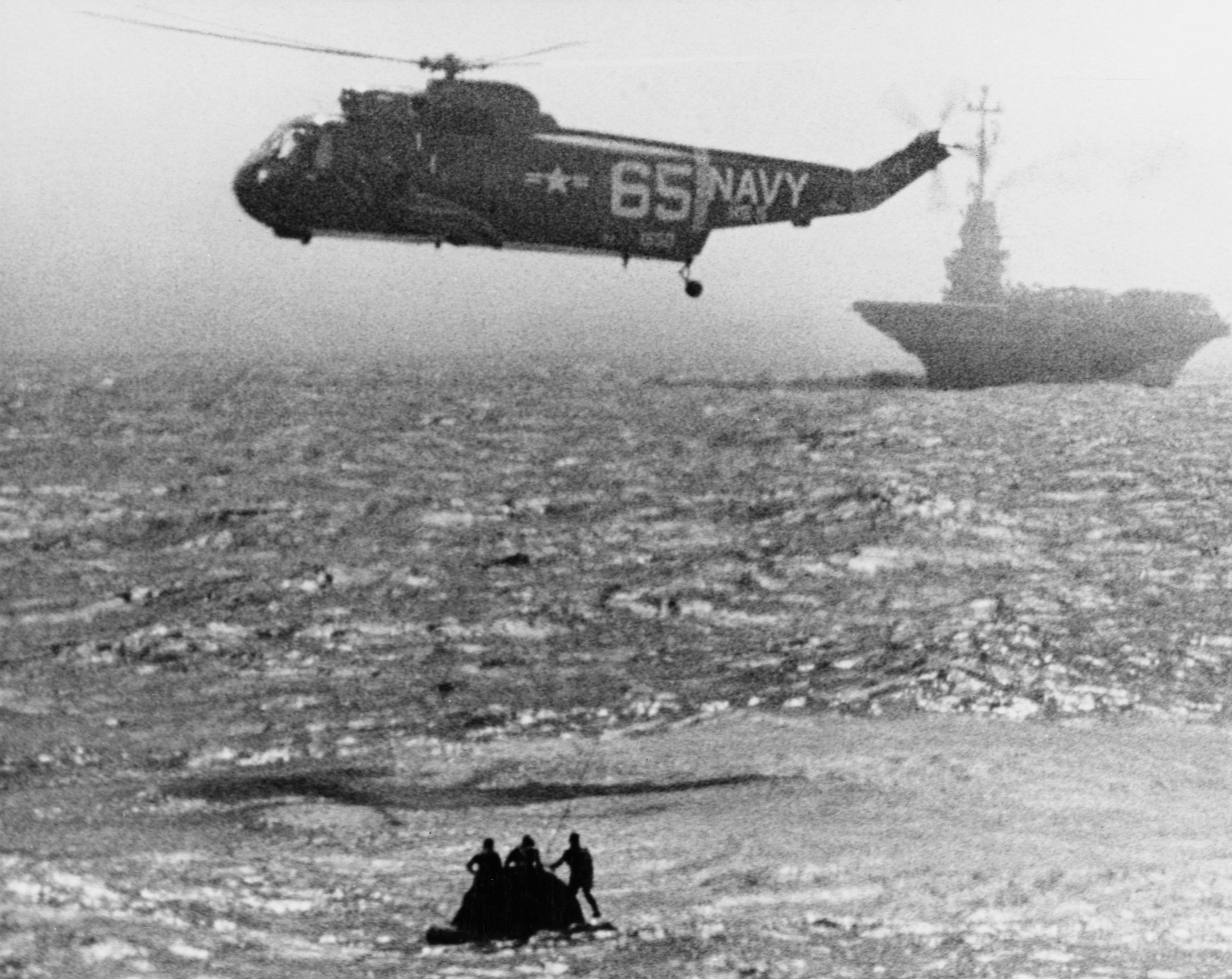
Splashdown occurred 26 kilometres short of the planned impact point and 45 nautical miles from the prime recovery ship, the aircraft carrier USS Lake Champlain. The spacecraft was brought aboard the carrier at 15:52 UTC, 10:52 in the morning eastern time: less than an hour and a half after liftoff, the object that had returned from the edge of the atmosphere was on a ship's deck.
The recovery deployment was characteristic of the era and out of all proportion to the length of the flight: the Gemini 2 mission was supported by 6562 Department of Defense personnel, 67 aircraft and 16 ships.
Results: everything met except the fuel cell
All mission objectives were achieved with one exception: no fuel cell test results were obtained, because the system malfunctioned before liftoff and was deactivated. The heat shield and the retrorockets performed as expected, and the Gemini 2 spacecraft was recovered in excellent condition. One anomaly was noted: the spacecraft cooling system temperature was found to be too high, a finding that fed later work on the coolant system. As on Gemini 1, the cabin carried no seats or crew but flight instrumentation pallets that recorded the behaviour of the structure and the systems throughout the profile.
The practical consequence was immediate, and it was the one that mattered: the Gemini reentry module had been shown to survive the most severe reentry the programme could impose on it, and the spacecraft had come through the full cycle intact. With that result the next flight of the programme could carry people, and it did: Gemini 3 lifted off from the same Complex 19 with Virgil Grissom and John Young in March 1965.
Second life: the spacecraft that flew twice
The story of Gemini 2 did not end on the deck of the Lake Champlain. The reentry module was refurbished to the Gemini B configuration — the variant of the spacecraft planned for the Air Force Manned Orbiting Laboratory programme, with a hatch cut through the heat shield to reach the laboratory — and flew again on 3 November 1966 on a test flight for that programme. It was launched on a Titan IIIC from Complex 40 at Cape Kennedy on a 33-minute suborbital flight, together with the OPS 0855 payload.
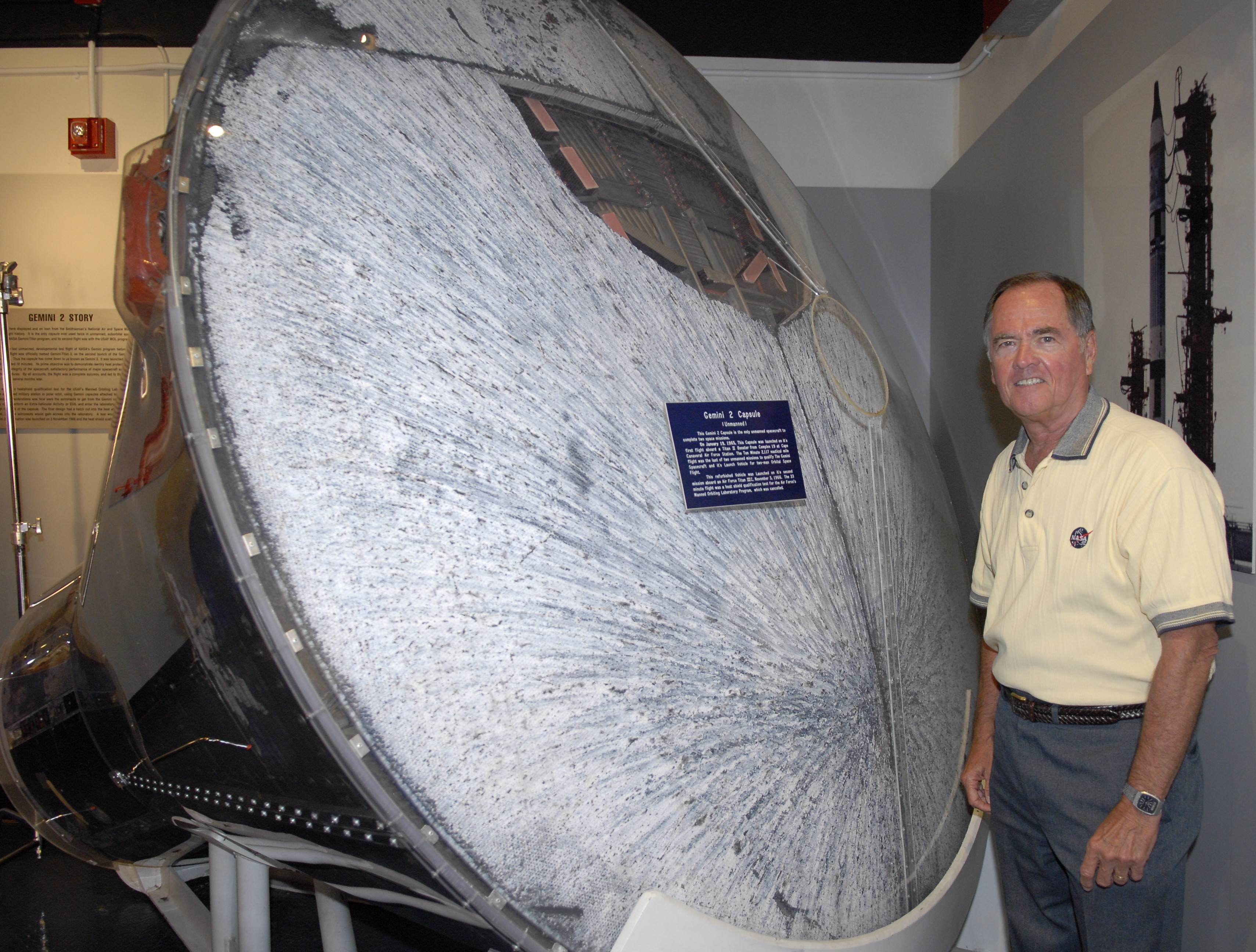
That second flight made the capsule the first spacecraft to make more than one spaceflight since the X-15 rocket plane, and the only one until a Soviet VA spacecraft was reused in 1978. It was also the only American spacecraft to be reused until Space Shuttle Columbia flew its second mission in 1981, and the only American space capsule to be reused until Crew Dragon Endeavour was launched a second time in 2021. It is, in addition, the only Gemini spacecraft to have flown with United States Air Force insignia.
The capsule is preserved on display at the Air Force Space and Missile Museum at Cape Canaveral Air Force Station, a few kilometres from the complex it left twice.
Legacy
Gemini 2 rarely appears in popular accounts of the space programme: it carried no crew, never reached orbit and lasted less than twenty minutes. Its importance lies elsewhere. It was the flight that settled the heat shield question before anyone was inside the spacecraft, and it settled it under the harshest conditions that could be deliberately produced.
It is also a case study in a programme's resilience to accumulated adversity. A nearby lightning strike, four hurricanes, a formal proposal to withdraw the vehicle, an automatic shutdown with the engines already lit and a fuel cell failure during the final countdown: any of those episodes could have ended in a failure or a lost flight. What came out of it was a mission that met every objective but one, with none of the rules that had caused the delays relaxed along the way. And the capsule that survived all of it ended up flying a second time, seven years before anyone was talking seriously about reusing spacecraft.
Images