Apollo 13 : les principales différences entre le film et la réalité
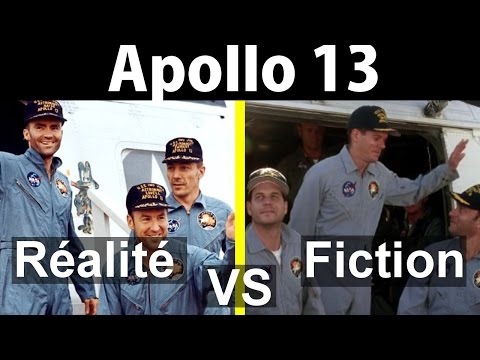
Video from the channel Techniques Spatiales about Apollo 13, linked on its Above Ten Thousand entry. Duration: 26:13. Language: French. Video type: Documentary.
What it's about
A French-language analysis comparing the film Apollo 13, directed by Ron Howard and released in 1995, with what actually happened during the mission. The author alternates scenes from the film with original photographs, footage and audio recordings to point out technical errors and dramatic liberties, while still considering the film one of the most faithful depictions of real spaceflight: Houston's control room and the interiors of the spacecraft were recreated in detail, and the weightlessness scenes were filmed aboard a zero-gravity aircraft.
Historical context
The video recalls several facts about the mission that the film alters. On the night of the first Moon landing, Jim Lovell was not at home but at mission control, as Neil Armstrong's backup. The trip to Acapulco that is cancelled in the film was actually postponed because of Apollo 8. The rocket waited about four months on the launch pad, and the flight director during launch was Milt Windler, not Gene Kranz, since four teams rotated every six hours. The black stripes painted on the Saturn V's first stage belong to the 500F test vehicle, and NASA's "worm" logo did not appear until 1975.
Key facts
There were two explosions seconds apart, and the gas cloud surrounding the spacecraft could even be observed from Earth with telescopes. The spacecraft's movements were less violent than in the film, and the crew did not have any confrontations. Ken Mattingly helped from the ground, as hundreds of people did, but he never got into the simulator during the mission. The adapter for the CO2 filters was based on a solution already studied in Apollo 8 simulations, in which Lovell himself had taken part. The final trajectory correction lasted about fifteen seconds, increased speed by less than 10 km/h, and, unlike what the film shows, had to push perpendicular to the trajectory. The flame of the lunar module's hypergolic engine is almost invisible. Radio silence during re-entry lasted about a minute and a half longer because the entry angle was shallower, and the capsule arrived over the night side of Earth.