Did you know…
Was the Amiot 140 chosen for being the ugliest?
Short answer
Not for being ugly: the Amiot 140M was an undeniably ugly aircraft, with a rectangular fuselage, a thick wing and a glazed gondola beneath the structure, but it delivered the performance the Armée de l'Air required. It answered a 1928 specification for a four-seat, multi-purpose, all-metal twin-engined monoplane.

A competition, four prototypes
The Amiot 140 originated from a 1928 French Air Ministry specification calling for a four-seat, multi-purpose, all-metal twin-engined monoplane. Four companies were contracted to build a prototype, among them the Société d'Emboutissage et de Construction Mécanique (SECM), run by Félix Amiot. Although the aircraft ended up bearing the Amiot name, it was designed by a team led by André Dutartre.
Ugly, but with the required performance
The 140M was an undeniably ugly aircraft, with a rectangular fuselage, a large thick wing, a clumsy nose and a large glazed gondola beneath the structure; even so, it achieved the performance the Armée de l'Air required. It first flew on 12 April 1931 and passed the trials of the CEMA, the air matériel study centre at Villacoublay. It took part in night exercises in July 1933, and on 23 November the Armée de l'Air placed an order for 40 aircraft.
From the 140 to the 143M
Two re-engined prototypes were built, the Amiot 142 and the Amiot 143, and it was the second, with air-cooled radial engines, that entered service as the Amiot 143M. The 143 kept the high wing and fixed landing gear of the 140, as well as a wing thick enough for the crew to reach the engines through a tunnel between the spars. Deliveries began in April 1935 and continued until March 1937, with 138 built.
More questions
Aviation history
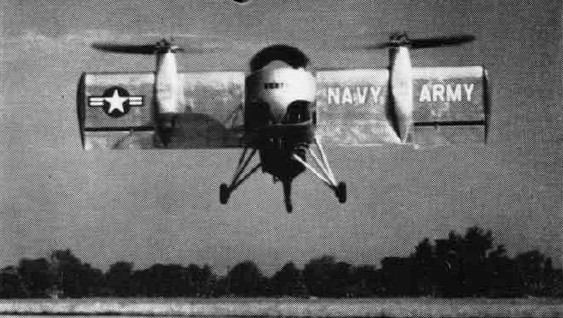
What was special about the Vertol 76?
Vertol's VZ-2 tested the tiltwing concept for vertical take-off and landing. After ground trials beginning in April 1957, it first took off on 13 August only… more…

Aviation history
Which was the most-produced American fighter of the Second World War?
The Republic P-47 Thunderbolt, of which 15,636 or 15,683 units were built, depending on the source. It was also one of the heaviest fighters of the conflict… more…

Aviation history
Who flew the E-66 at 2,149 km/h?
Konstantin or Vladimir Kokkinaki, depending on the source. Konstantin is credited with the absolute record on a closed 100 km circuit, at 2,148.66 km/h, set… more…

Fly-by-Owen (CC BY SA), vía commons Aviation history
How many I-11Bs were built?
Between 208 and around 450, depending on the source: one of the AISA I-11 reference sheets gives 208 examples built, while All-Aero speaks of around 400 built… more…

Aviation history
How many HH-53s could be converted to Pave Low III?
Eight HH-53C aircraft received an improved systems package and were redesignated HH-53H Pave Low III. The other figure in circulation, nine MH-53H and 32… more…

SCDBob (CC BY SA), vía commons Aviation history
What did the A129 Mangusta's armor protect?
The fuselage: the A129's airframe is armored and, according to All-Aero, designed to protect against 12.7 mm rounds, with partial protection against 23 mm… more…


