Did you know…
Why was the D.III's radiator moved to the right side?
Short answer
The Teves und Braun radiator at the center of the upper wing scalded the pilot if punctured. From D.III number 290 onward it was moved to the right, and earlier aircraft got the same change as a field modification. D.III aircraft sent to Palestine used two wing radiators because of the hotter climate.

The radiator at the center of the upper wing
Early Albatros D.III aircraft repeated the solution used on the last D.II: a Teves und Braun radiator shaped like a wing section and mounted at the center of the upper wing, a position where it tended to scald the pilot when punctured. On the D.II, that wing-section radiator had been moved to the center section of the upper wing on late-production examples. There too it proved troublesome, since a leak or combat damage could scald the pilot's face.
From "ear" radiators to the upper wing
The family's lineage came from a different cooling arrangement: in November 1916 Idflieg banned Windhoff side-mounted radiators on operational aircraft, because they sat lower than the engine crankcase they cooled, and a hit on either one could drain the cooling system. The D.II had been designed by Albatros engineers Robert Thelen, Schubert, and Gnädig in response to pilot complaints about the D.I's poor upward visibility. The solution adopted at the time was to move the upper wing 36 cm (14 in) closer to the fuselage and stagger it slightly forward.
The move to the right
Starting with D.III serial number 290, the radiator was moved to the right, and aircraft already built received the same relocation as a field modification. D.III aircraft deployed to Palestine carried two wing radiators to cope with the hotter climate.
More questions
Aviation history
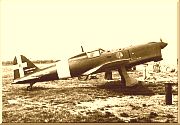
How many SAI.207s were completed out of an order for 2,000?
None: of the order for 2,000 aircraft, no production aircraft were built following the mixed results of the operational evaluation and the signing of the… more…
Aviation history
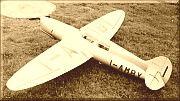
Which touring aircraft is described as "one of the most beautiful of all time"?
It is the Ambrosini S.7, the touring monoplane designed by Sergio Stefanutti. It first flew in July 1939 and was an Italian racing aircraft that flew before… more…
RuthAS (CC BY), vía commons Aviation history
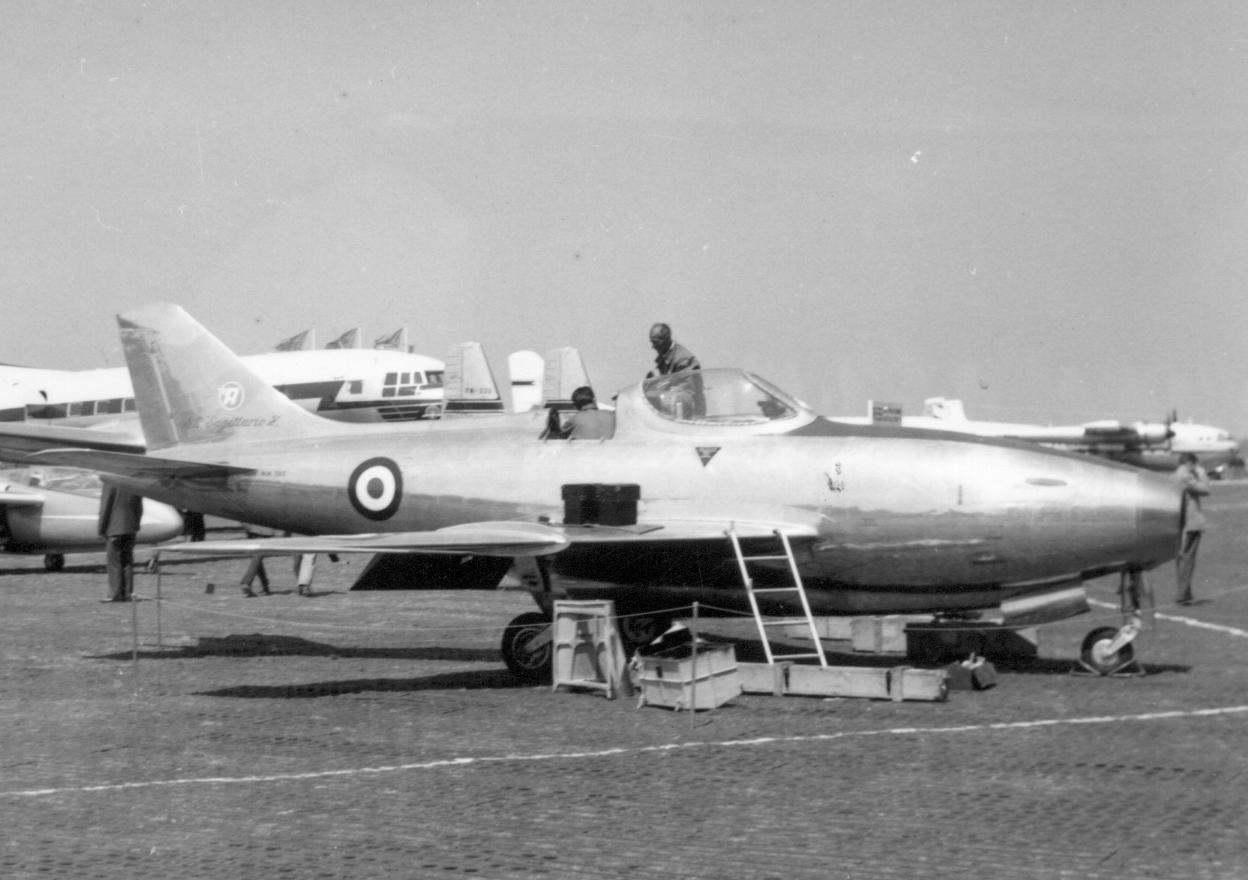
What was the first aircraft designed in Italy to exceed Mach 1.1?
The Aerfer Sagittario 2 reached Mach 1.1 —it did not exceed it— on 4 December 1956, in a dive from 13,725 m and piloted by Lieutenant Colonel Giovanni… more…
Aviation history
Which Italian canard fighter flew in 1939?
The Ambrosini SS.4, a single-seat all-metal canard-configuration fighter, which first flew on 7 March 1939. It was the first Italian canard fighter and was… more…
Aviation history
At what minimum speed was the S.S.3 canard controllable?
The SS.3 Anitra's stall speed was 34 mph (55 km/h). Its top speed, with a 16 hp (12 kW) engine, was 87 mph (140 km/h). It first flew on 2 October 1937 and was… more…
Aviation history
How long did the Israeli F-16s' flight to Osirak last?
About three hours: the eight Israeli F-16As took off from Etzion air base and landed there again after a three-hour mission. At 80 minutes into the flight… more…


