Did you know…
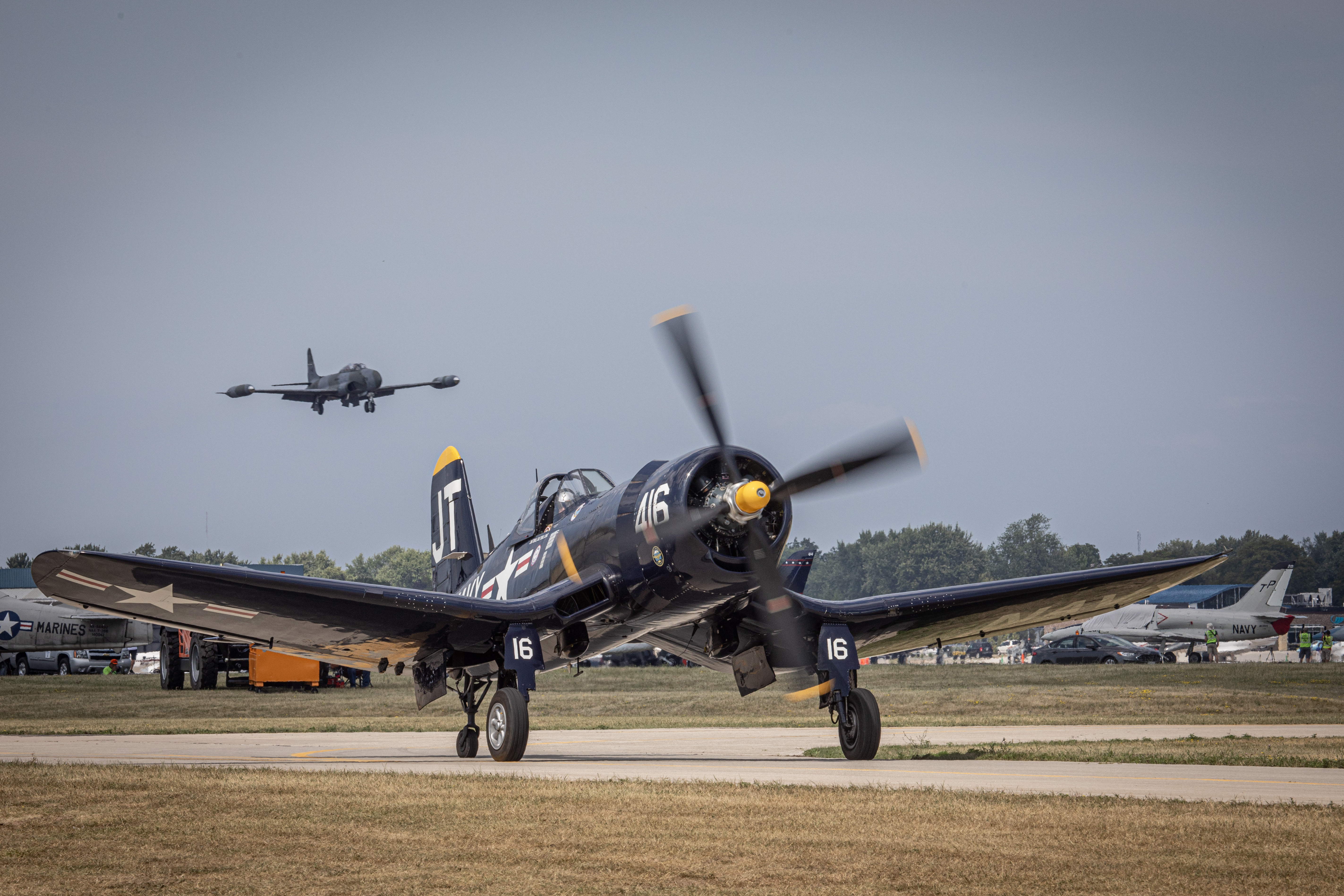
Why do the Corsair's wings join the fuselage at a right angle?
Short answer
Because of the propeller: with the chosen wing chord it was hard to lengthen the gear legs to clear the large propeller, and the solution was the inverted gull wing, which shortened the struts. The negative dihedral of the inner section also let the wing and fuselage meet at the optimal angle to minimize drag, without root fairings.

The problem was the propeller
To accommodate a folding wing, the designers considered retracting the main gear rearward, but with the chosen wing chord it was difficult to make the struts long enough to clear the large propeller, and the solution was the inverted gull wing, which considerably shortened the required strut length. With the chosen chord it was hard for the legs to give the propeller enough clearance, and the inverted gull wing greatly shortened the main gear legs. To keep the huge blades clear of the deck without a stilt-legged gear, Beisel bent the wing: it dropped sharply from the fuselage and rose again toward the tips, the famous inverted gull. Thus propeller clearance was solved by placing the main gear at the lowest point of the V formed by each wing, with a short, sturdy leg.
The angle of the joint
The negative dihedral of the inner wing section also allowed the wing and fuselage to meet at the optimal angle to minimize drag, without resorting to root fairings. The inverted gull design made the most of structural strength through the angle at which the wing joined the fuselage, while minimizing aerodynamic drag.
The silhouette and its cost
Vought's V-166B already featured wing stubs emerging from the fuselage dropping at an angle, with the outer panels climbing back up, giving the aircraft its characteristic inverted gull appearance. The bent wing, however, was heavier and harder to build, which offset those advantages.
More questions
Physics of flight
Why can't a Corsair pilot apply full power when going around after a failed carrier landing?
Because at low speed and high power the Corsair would drop its left wing suddenly and with almost no warning, due to propeller torque. If the throttle was… more…
Physics of flight
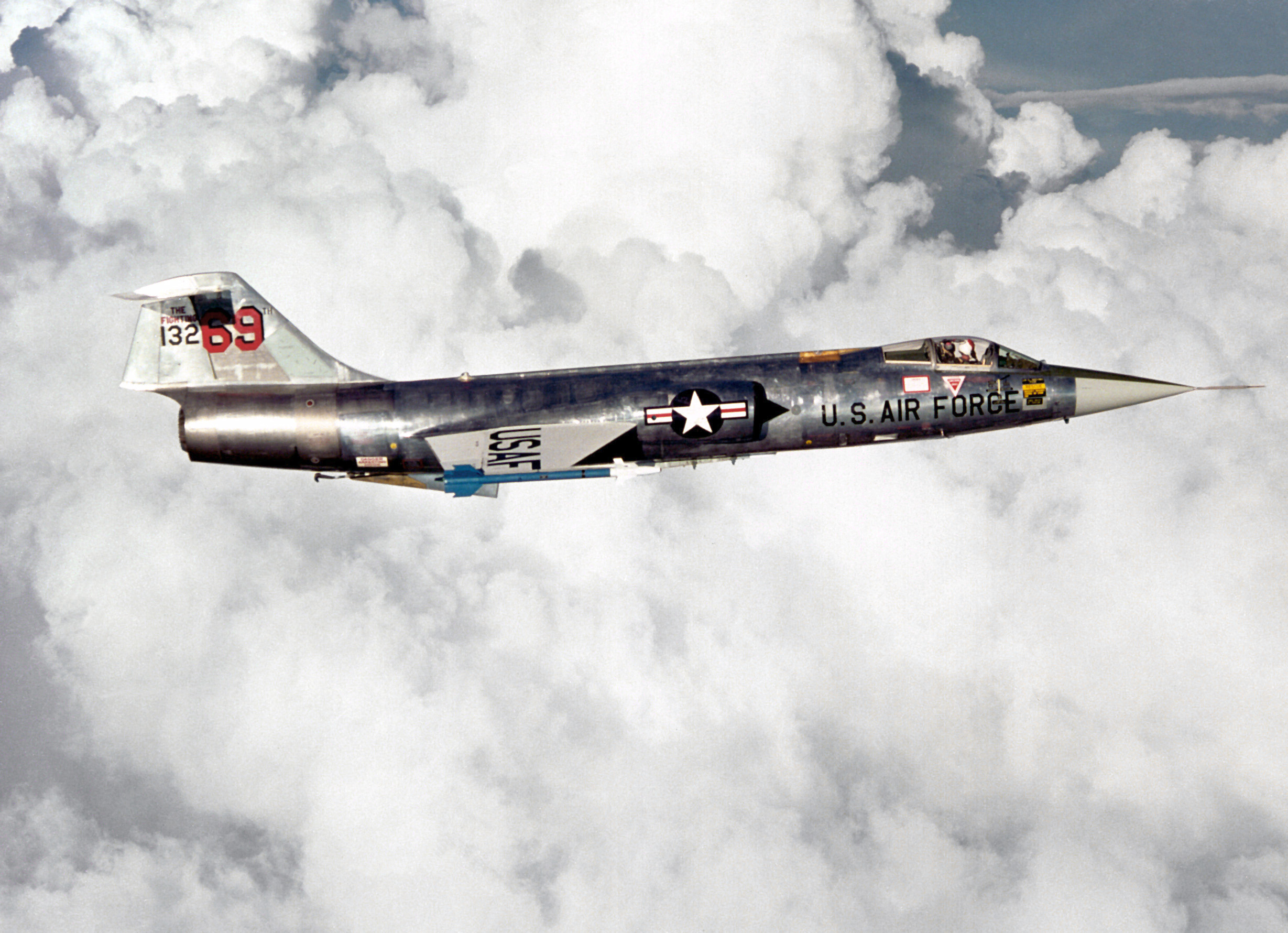
What did the phrase "banking with intent to turn" mean among F-104 pilots?
It was a joke among Canadian F-104 pilots: banking the aircraft "with intent to turn" referred to its poor low-speed turning. Its sustained turn capability… more…
Julian Herzog (Website) (CC BY), vía commons Physics of flight
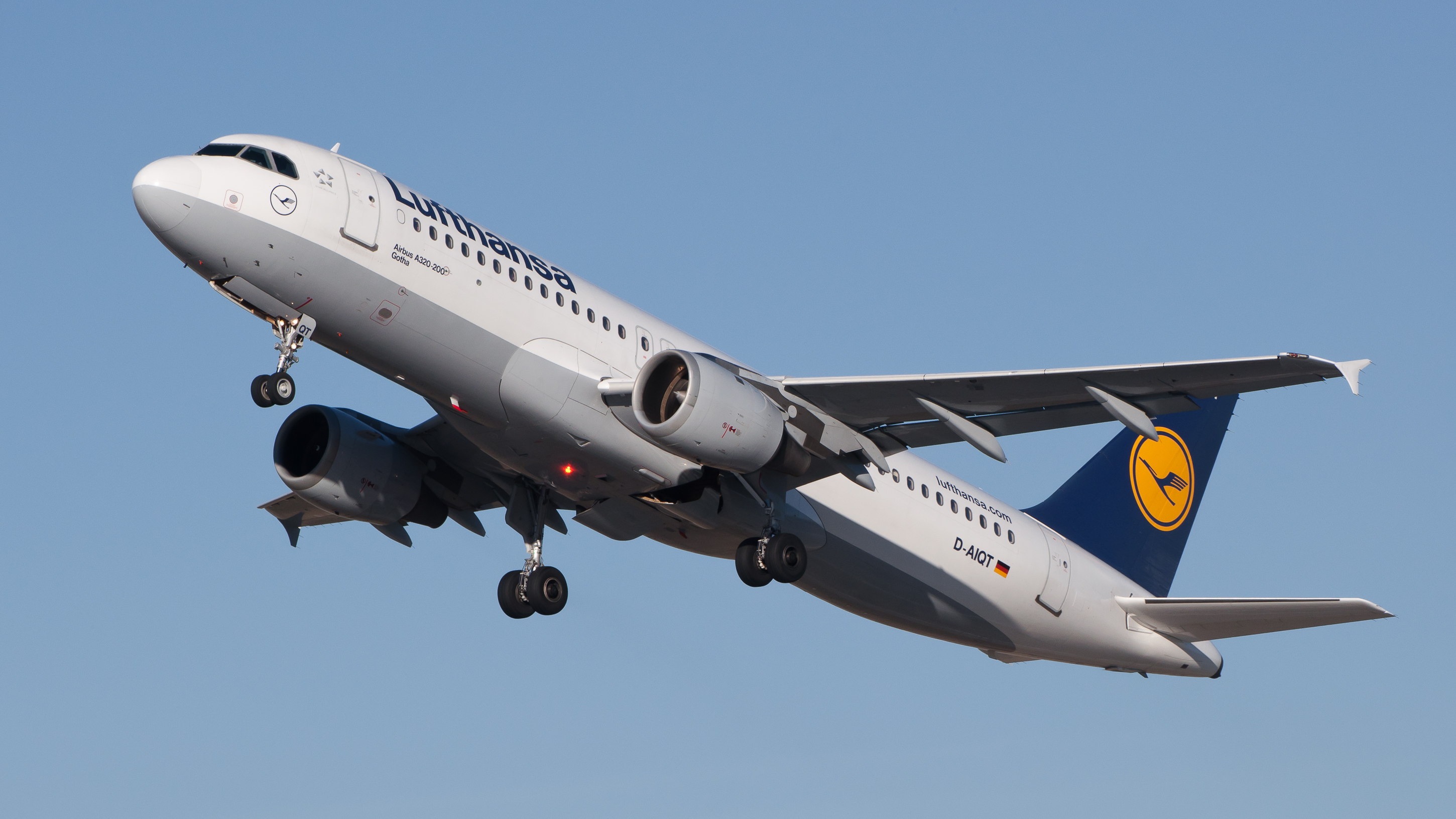
What is "flight envelope protection," which the A320 pioneered?
A set of limits embedded in the flight control software: it calculates the flight envelope, adds a safety margin, and blocks pilot inputs that would take the… more…
Julian Herzog (Website) (CC BY), vía commons Physics of flight
What is the A320's SHARP package for?
SHARP (SHort AiRfield Package) improves takeoff and landing performance on short runways and is designed to increase low-speed lift. It combines aerodynamic… more…
Physics of flight
What flaw sank Vought's all-metal V-141 fighter?
It wasn't a single flaw: tests showed the V-141 still flew poorly, was prone to spinning, and also suffered tail flutter, which is why it was rejected. It… more…
Physics of flight
What wind tunnel did NACA use to study the Corsair, and how big was it?
The full-scale 30- by 60-Foot Tunnel at the Langley Research Center, in Hampton, Virginia. NACA dedicated the facility on 27 May 1931 and used it to test the… more…

