Did you know…
Who created Apollo 11?
Short answer
It wasn't the work of one person. Apollo 11 was a NASA mission built by an industrial consortium: North American Rockwell built the command module Columbia, Grumman designed the lunar module Eagle, and the Saturn V rocket was split among Boeing, North American Aviation, and Douglas Aircraft, under the direction of the Marshall Space Flight Center.

One mission, many manufacturers
Apollo 11 was a NASA program, not the project of a single inventor, and its hardware came out of factories spread across half of North America. The spacecraft itself had three parts. The command module Columbia, the conical capsule that was the only part to return to Earth, was built by North American Rockwell; it was attached to the service module, which carried the main propulsion and consumables. The lunar module Eagle was designed by Grumman: a two-stage vehicle for two crew members, with the landing gear, descent engine, and experiments in the lower stage, and the pressurized cabin and ascent engine in the upper stage.
The rocket, split by stage
The Saturn V was divided among three prime contractors, one per stage. Boeing built the first, the S-IC, at the Michoud plant in New Orleans; North American Aviation built the second, the S-II, in Seal Beach, California; and Douglas Aircraft the third, the S-IVB, in Huntington Beach. IBM designed and built the instrument unit, the ring containing the avionics that governed the whole stack, in Huntsville, Alabama. Overall design direction rested with the Marshall Space Flight Center in Huntsville, with Wernher von Braun leading the technical team and George Mueller overseeing the program.
The real author is the organization
That list of names explains why the question has no individual answer. What made Apollo 11 possible wasn't an invention but a management architecture capable of integrating parts built by rival companies, with interfaces defined down to the millimeter and responsibilities spread across NASA centers. The division by stage itself, with a different company for each section of the rocket, was as much an industrial engineering decision as a technical one: it allowed parallel work and avoided dependence on a single supplier.
More questions
Moon and Mars
How does neil armstrong look like?
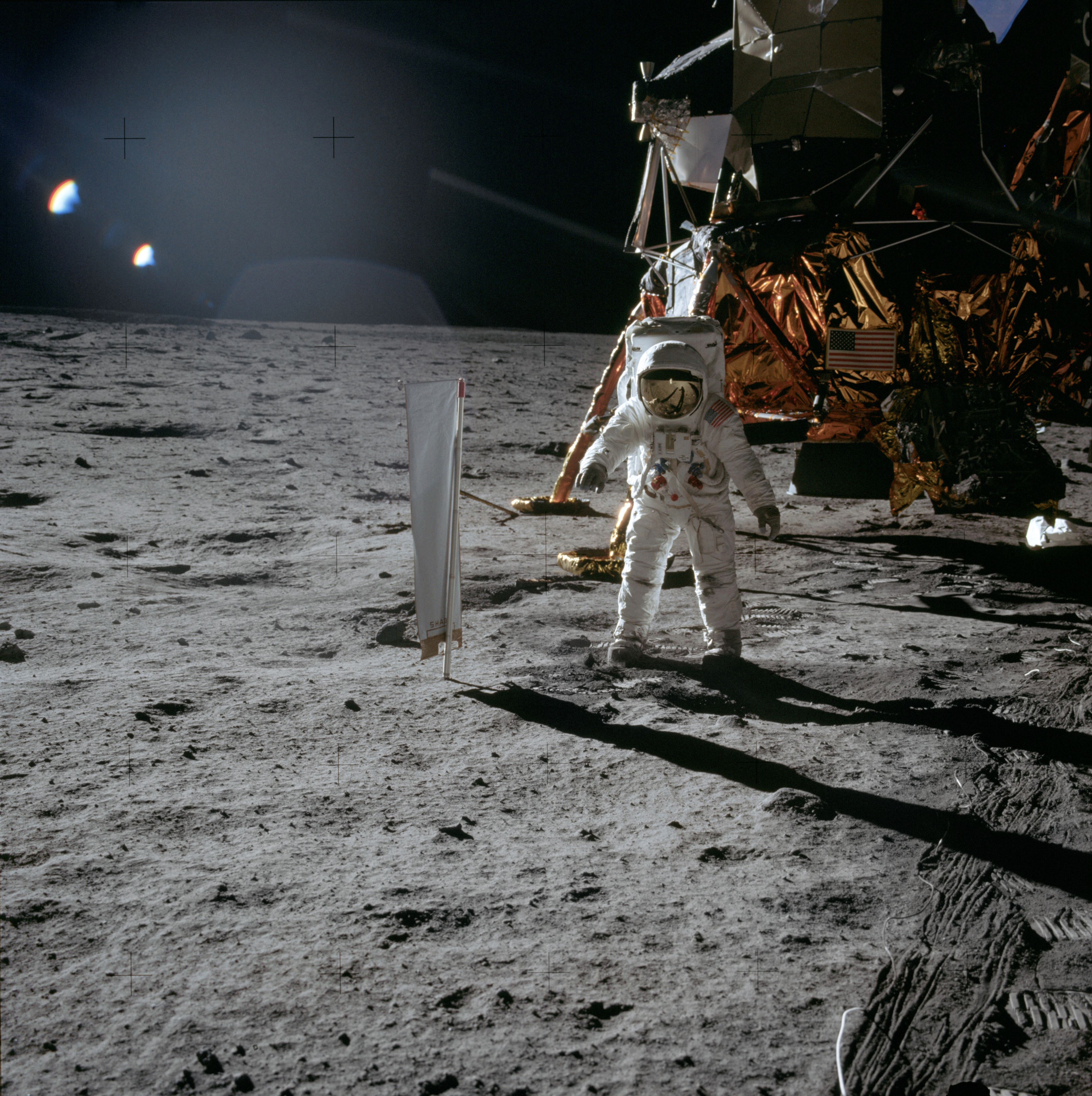
The face most people picture is not his: the gold-visored astronaut in the famous Apollo 11 photograph is Buzz Aldrin, shot by Armstrong. Armstrong himself is… more…

Richard Dorrell (CC BY SA), vía commons Moon and Mars
How does the moon affect the tides?
By pulling unevenly on it. Tidal forces vary inversely as the cube of the distance, so the near side of the Earth is tugged harder than the far side: one… more…
Moon and Mars
Why does neil armstrong have a hollywood star?
Strictly he does not have a star. Armstrong, Aldrin and Collins share four circular monuments resembling the Moon, one at each corner of Hollywood and Vine… more…
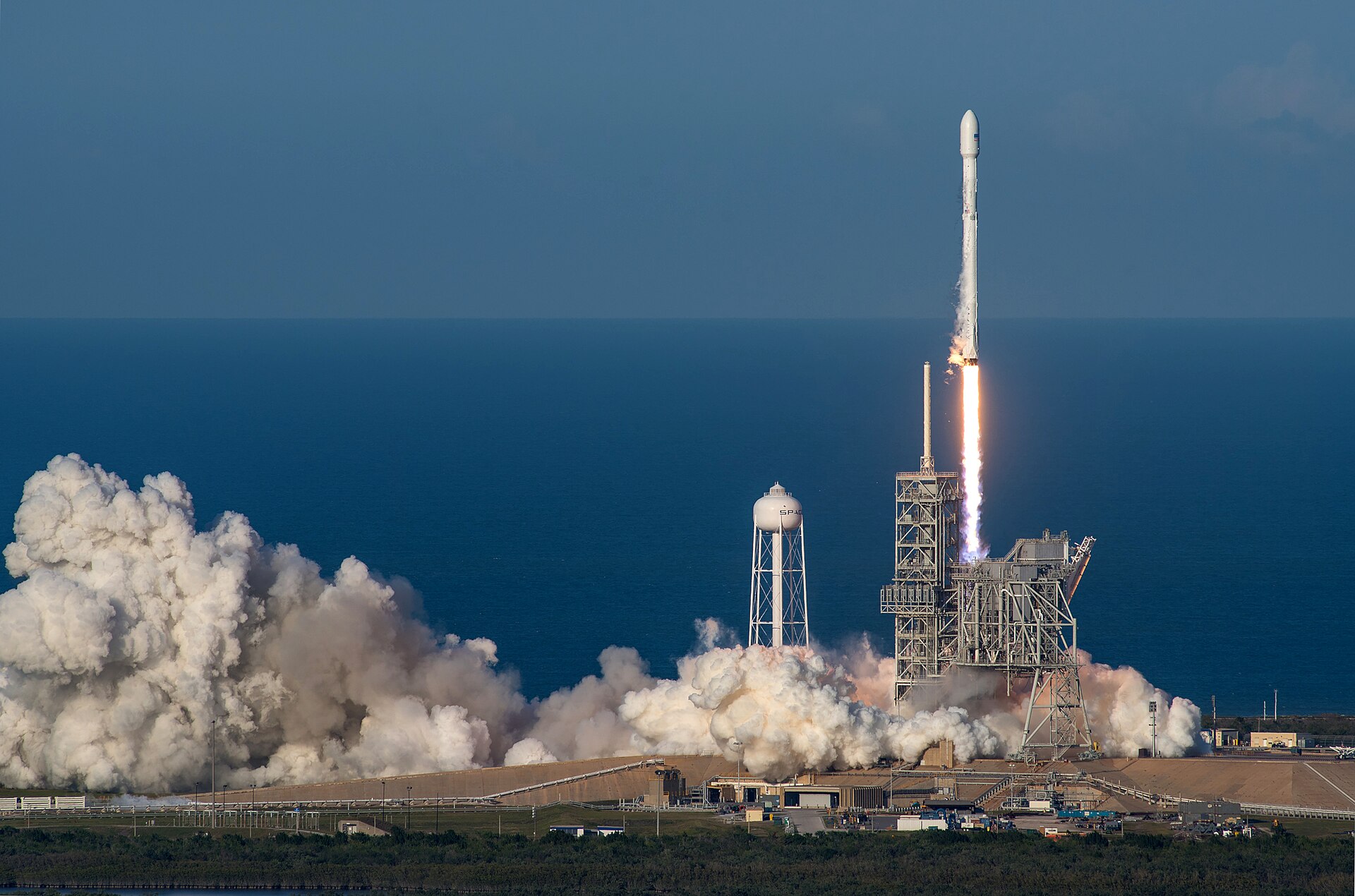
Foto: SpaceX (CC0) Moon and Mars
Why did falcon 9 hit the moon?
Because a spent upper stage on a lunar trajectory has no mission and no way to steer. A Falcon 9 upper stage from the January 2025 Firefly Blue Ghost 1 launch… more…
Moon and Mars
How much apollo 11 cost?
NASA never published a price for Apollo 11 on its own; what is documented is the program. The United States spent $25.8 billion on Project Apollo between 1960… more…
Moon and Mars
How much time neil armstrong spent on moon?
Armstrong and Aldrin spent 21 hours, 36 minutes on the Moon's surface, almost all of it inside the lunar module Eagle. Armstrong stepped onto the surface… more…
