Did you know…
What was the Douglas F6D Missileer?
Short answer
A carrier-based fleet air defense fighter that Douglas designed for a 1959 US Navy requirement and that was never built. It was meant to loiter far from the carrier and shoot down hostile aircraft at 160 km (100 miles) with its radar and long-range missiles. It was canceled in December 1961.

A 1959 idea
Douglas conceived the F6D Missileer as a carrier-based fleet air defense fighter, in response to a 1959 US Navy requirement. The approach was a subsonic platform that would loiter on station along the threat axis, carrying a huge long-range radar and up to eight very-long-range air-to-air missiles. Its job was to patrol for extended periods well away from the Navy's aircraft carriers and engage hostile aircraft at 160 km (100 miles) using that radar and those missiles. It was also meant to be able to operate from Essex-class carriers and remain on station for four hours at 35,000 ft.
Big radar, long missiles
The nose was bulbous because it had to house the dish of the Westinghouse AN/APQ-81 radar, five feet in diameter. The normal load was six missiles, all under the wings, and two more could be carried under the fuselage, which increased the maximum takeoff weight by 4,800 lb. The Eagle missile was accelerated after launch to Mach 3.5 by a large solid-propellant rocket booster and, after a glide phase, a long-burning sustainer motor slowly raised its speed to Mach 4.5.
Why it never flew
Critics within the Navy argued that, once it had fired its missiles, the Missileer would be completely unable to defend itself and would have to return to the carrier as soon as possible to rearm. Those arguments eventually prevailed and, combined with the desire to cut military spending in pursuit of a balanced budget, led to the F6D's cancellation in December 1961. When the F-111B ran into intractable problems as an air-to-air fighter and in carrier operations, the same systems were installed in the F-14 Tomcat.
More questions
Aviation history
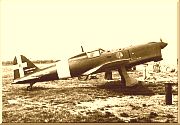
How many SAI.207s were completed out of an order for 2,000?
None: of the order for 2,000 aircraft, no production aircraft were built following the mixed results of the operational evaluation and the signing of the… more…
Aviation history
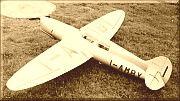
Which touring aircraft is described as "one of the most beautiful of all time"?
It is the Ambrosini S.7, the touring monoplane designed by Sergio Stefanutti. It first flew in July 1939 and was an Italian racing aircraft that flew before… more…
RuthAS (CC BY), vía commons Aviation history
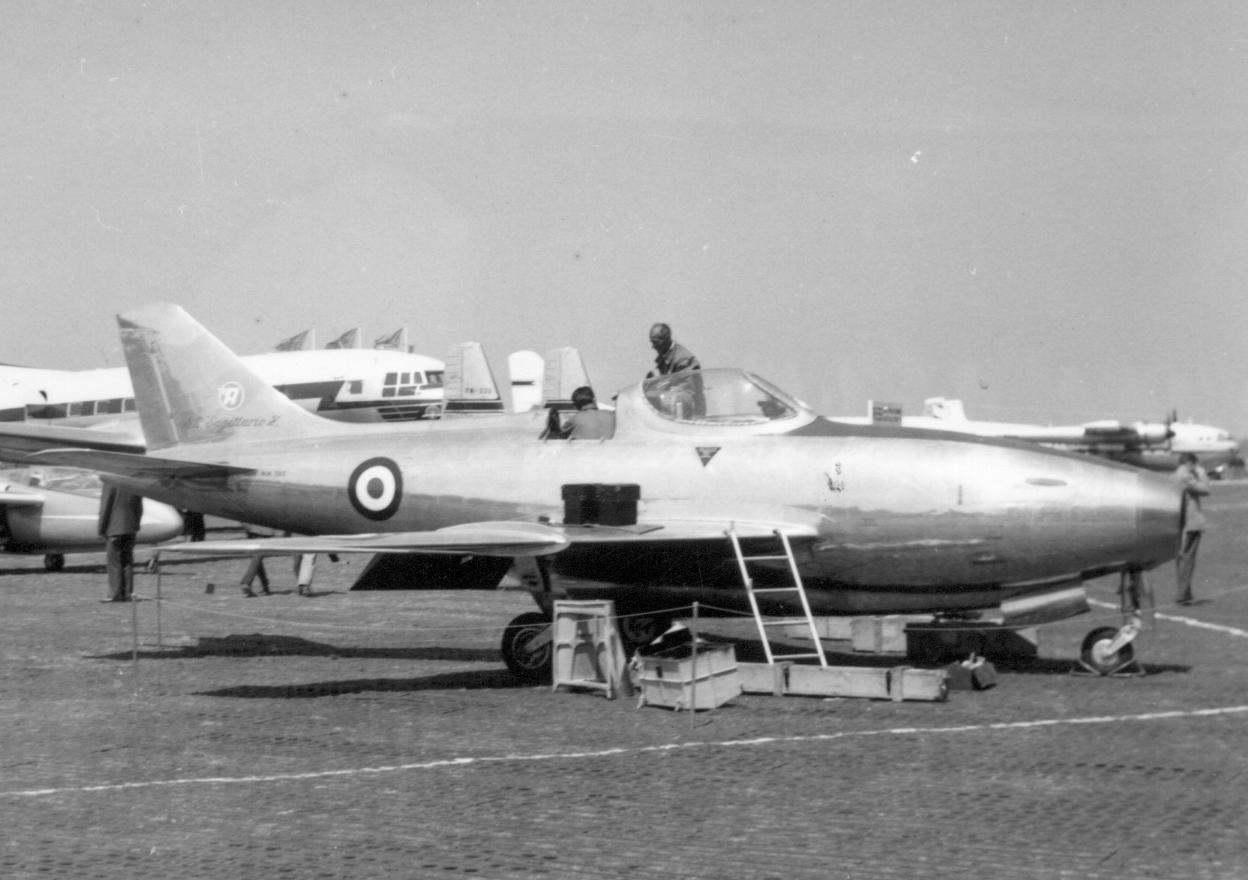
What was the first aircraft designed in Italy to exceed Mach 1.1?
The Aerfer Sagittario 2 reached Mach 1.1 —it did not exceed it— on 4 December 1956, in a dive from 13,725 m and piloted by Lieutenant Colonel Giovanni… more…
Aviation history
Which Italian canard fighter flew in 1939?
The Ambrosini SS.4, a single-seat all-metal canard-configuration fighter, which first flew on 7 March 1939. It was the first Italian canard fighter and was… more…
Aviation history
At what minimum speed was the S.S.3 canard controllable?
The SS.3 Anitra's stall speed was 34 mph (55 km/h). Its top speed, with a 16 hp (12 kW) engine, was 87 mph (140 km/h). It first flew on 2 October 1937 and was… more…
Aviation history
How long did the Israeli F-16s' flight to Osirak last?
About three hours: the eight Israeli F-16As took off from Etzion air base and landed there again after a three-hour mission. At 80 minutes into the flight… more…


