Did you know…
How many seats did a CH-47 Chinook have in Vietnam?
Short answer
As internal cargo, the Chinook can carry 33 to 44 soldiers, or alternatively 24 stretchers plus two medics. The CH-47A had a maximum weight of 33,000 lb (15,000 kg) and a maximum payload of about 10,000 lb (4,500 kg). At the peak of the war, the US Army had 21 Chinook companies in Vietnam.

A cargo hold before a passenger cabin
The Chinook can carry a wide variety of internal loads, including vehicles, artillery pieces, 33 to 44 soldiers, or alternatively 24 stretchers plus two medics. The CH-47A had a maximum weight of 33,000 lb (15,000 kg) and a maximum payload of about 10,000 lb (4,500 kg). The CH-47C had a single cargo hook under the centre of the aircraft, with a maximum capacity of 20,000 pounds. As for powerplant, the CH-47A used Lycoming T55-L7 engines of 2,650 shp, while the CH-47C was fitted with the 3,750 shp T55-L11.
Arrival and deployment in Vietnam
The Chinooks of the 11th Air Assault formed the core of the 228th Assault Helicopter Battalion, which began operations in Vietnam in September 1965. By February 1966, 161 aircraft had been delivered to the Army. At the moment of peak activity in the war, the US Army kept 21 Chinook companies in Vietnam. Of the nearly 750 Chinooks in the fleets of the United States and South Vietnam, around 200 were lost in combat or in wartime operational accidents.
Recovering aircraft and arming the helicopter
Perhaps the Chinook's most cost-effective use was the recovery of other downed aircraft. The "Hook" recovered some 12,000 aircraft valued at more than 3.6 billion dollars over the course of the war. Four CH-47As were converted into gunships, with two fixed forward-firing 20 mm M24A1 cannons and five .50 caliber machine guns.
More questions
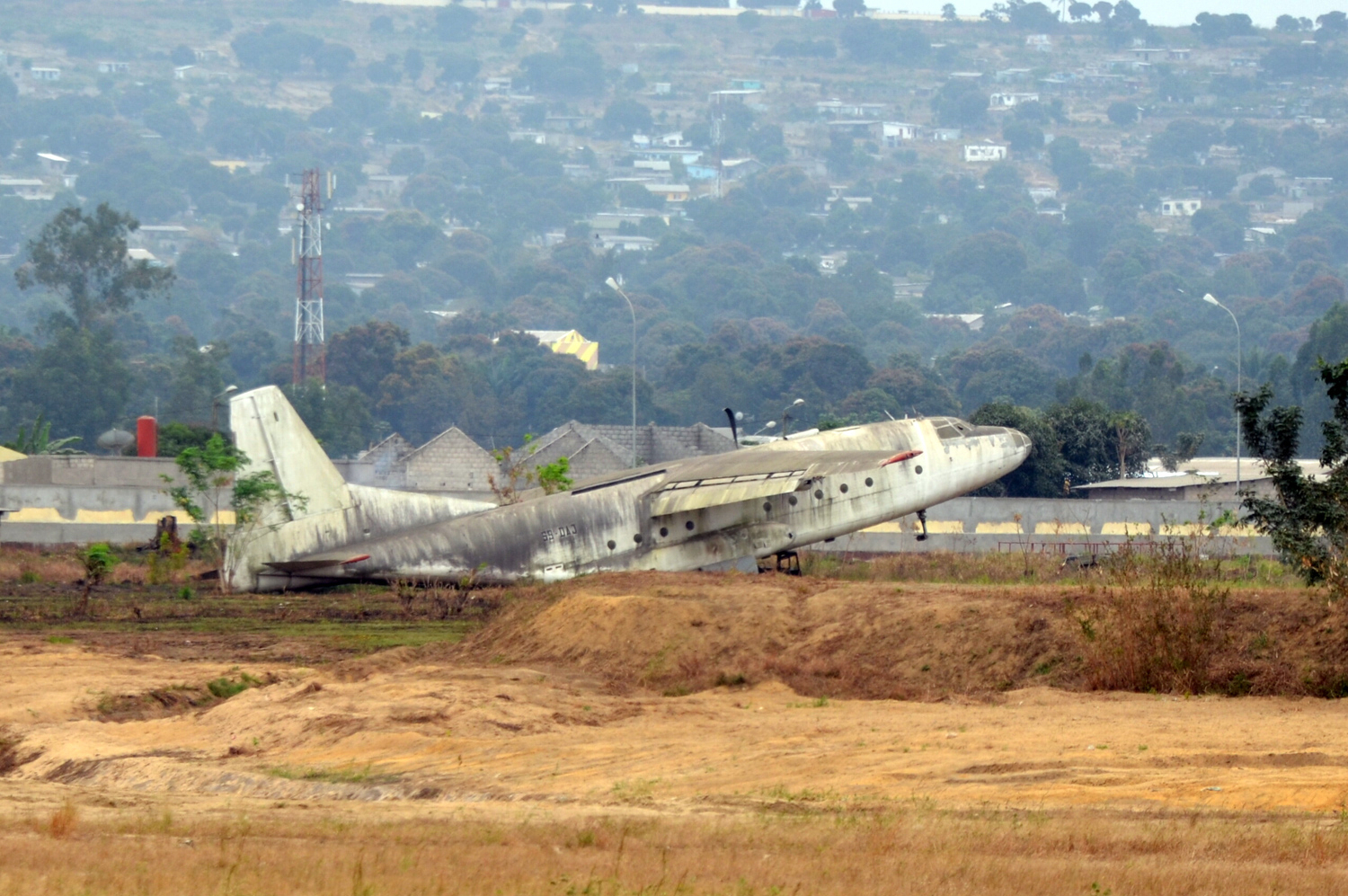
Vitaly Druchenok (CC BY SA), vía commons Aviation history
What "typically Russian" features did the An-8 have?
The An-8 was a Soviet light military transport with a high wing and two turboprops, featuring a glazed nose for the navigator, a chin radome for navigation… more…

RB7MRV (CC BY SA), vía commons Aviation history
Why is the E-25 called "Mirlo"?
Mirlo is the official nickname of the C-101 in Spain. The air force designated it the E.25 Mirlo, "Blackbird" in English, while CASA identified it as the… more…
RB7MRV (CC BY SA), vía commons Aviation history
What did CASA do with the C-101's first flight for safety?
CASA kept it deliberately simple: on 27 June 1977 the P1 only had to check the controls' response, and for extra safety its landing gear was not even… more…
RB7MRV (CC BY SA), vía commons Aviation history
What requirement made the C-101 fly inverted?
Among its requirements, the Aviojet had to be able to remain in inverted flight for 20 s and land at 100 knots (185 km/h). It also had to withstand load… more…

Aviation history
What was the An-2 called before it became an Antonov?
SKh-1. The letters stood for Sel'sko Khozyaystvennyi — pervoy, "agricultural, the first," and corresponded to the first design from Antonov's bureau, later… more…
Aviation history
At what altitude did the weather-research An-4 biplane fly?
Up to 10,000 m: the An-4 — the design-bureau designation for the meteorological An-2ZA, intended for high-altitude weather research — could maintain power up… more…


