Did you know…
How does neil armstrong came back from moon?
Short answer
In three stages. On July 21, 1969, the Eagle lifted off from the Moon at 17:54:01 UTC and docked with the Columbia at 21:34:00 UTC; on July 22, trans-Earth injection at 04:54:42 UTC sent the spacecraft home. It splashed down in the Pacific on July 24 at 16:50:35 UTC, 13 miles from the aircraft carrier USS Hornet.

Liftoff from Mare Tranquillitatis
The return began with the most delicate maneuver of the trip: igniting an engine with no backup. The Eagle's ascent stage separated from the descent stage and lifted off from the Moon at 17:54:01 UTC on July 21, 1969, after 21 hours and 36 minutes on the surface. Michael Collins was waiting above in the Columbia, and docking occurred at 21:34:00 UTC. Armstrong and Aldrin moved into the command module with the 21.55 kg of lunar rock and soil they had collected, leaving the now-useless lunar module behind.
A single burn toward home
What turned a flight around the Moon into a return trip was trans-Earth injection: at 04:54:42 UTC on July 22, the service module's main engine burned for two and a half minutes and pushed the spacecraft out of lunar orbit. It was a maneuver with no backup plan, since a failure there would have left the crew circling the Moon with no possible rescue. From that point on, the journey was essentially a fall into Earth's gravity well, with small course corrections and no braking maneuver: the atmosphere would take care of that.
Splashdown thirteen miles from the Hornet
On July 24, 1969, after a mission time of 195 hours, 18 minutes and 35 seconds, the Columbia splashed down in the Pacific at 16:50:35 UTC (12:50:35 p.m. EDT), at 13°19'N and 169°09'W, 13 miles from the aircraft carrier USS Hornet, which recovered the three crew members. The recovery capped off a procedure rehearsed down to the last detail: the reentry profile had to shed the speed of the return trip without straying outside the thermal corridor, a narrow path between bouncing back into space and coming in too steep. The heat shield and parachutes were the last systems the crew depended on; the only way home was to turn that energy into heat and let the ocean do the rest.
More questions
Moon and Mars
How does neil armstrong look like?
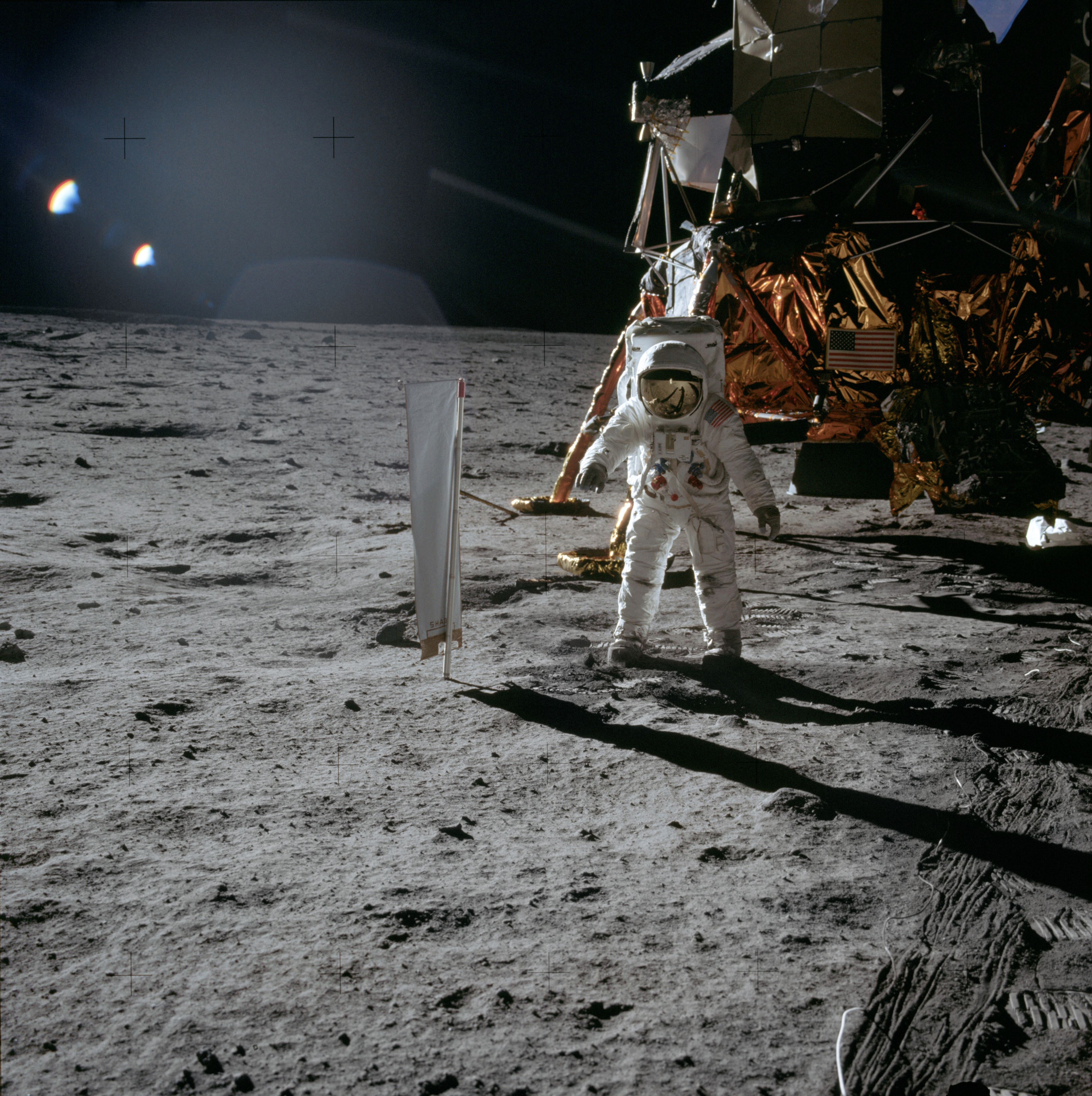
The face most people picture is not his: the gold-visored astronaut in the famous Apollo 11 photograph is Buzz Aldrin, shot by Armstrong. Armstrong himself is… more…

Richard Dorrell (CC BY SA), vía commons Moon and Mars
How does the moon affect the tides?
By pulling unevenly on it. Tidal forces vary inversely as the cube of the distance, so the near side of the Earth is tugged harder than the far side: one… more…
Moon and Mars
Why does neil armstrong have a hollywood star?
Strictly he does not have a star. Armstrong, Aldrin and Collins share four circular monuments resembling the Moon, one at each corner of Hollywood and Vine… more…
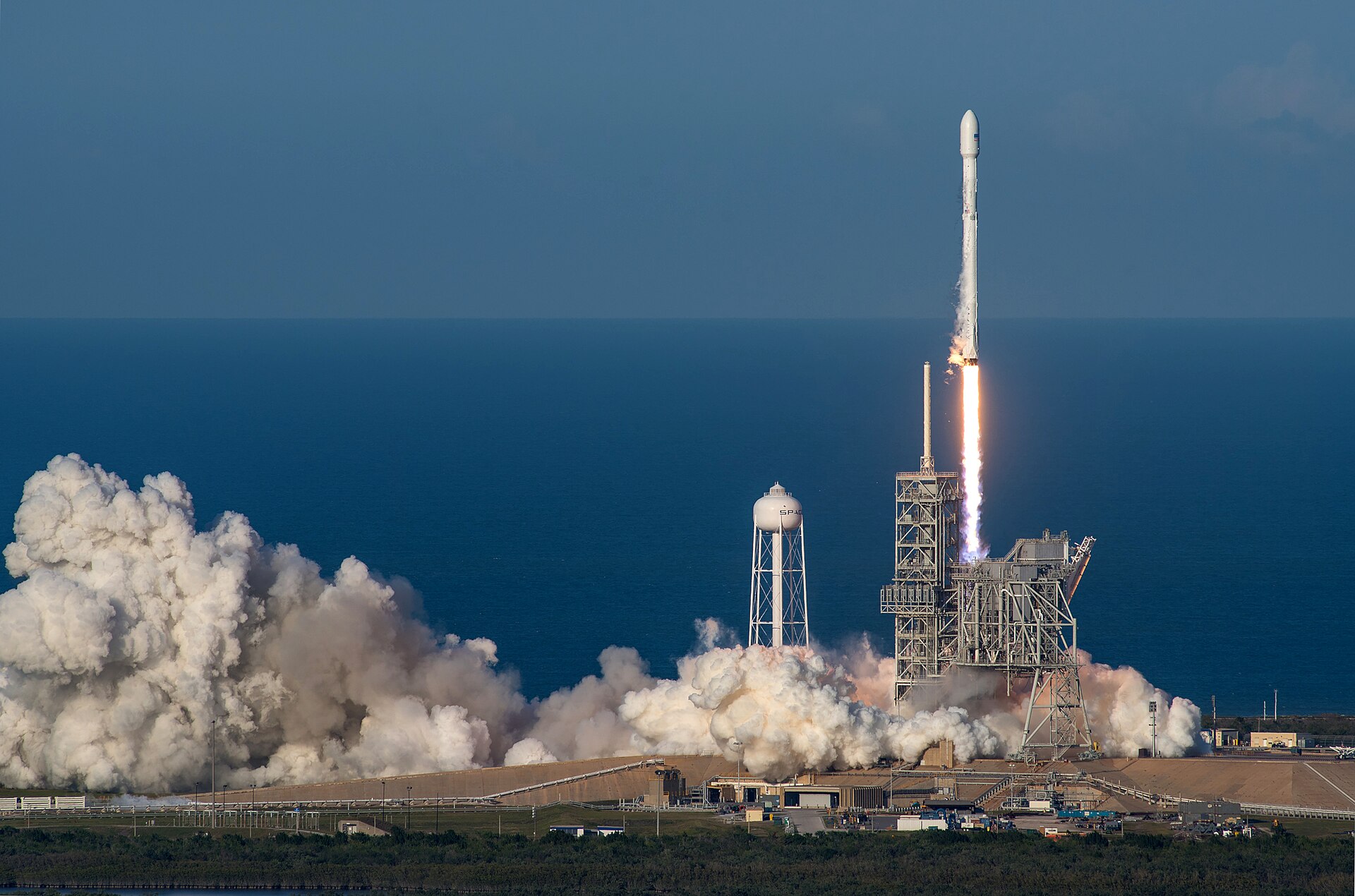
Foto: SpaceX (CC0) Moon and Mars
Why did falcon 9 hit the moon?
Because a spent upper stage on a lunar trajectory has no mission and no way to steer. A Falcon 9 upper stage from the January 2025 Firefly Blue Ghost 1 launch… more…
Moon and Mars
How much apollo 11 cost?
NASA never published a price for Apollo 11 on its own; what is documented is the program. The United States spent $25.8 billion on Project Apollo between 1960… more…
Moon and Mars
How much time neil armstrong spent on moon?
Armstrong and Aldrin spent 21 hours, 36 minutes on the Moon's surface, almost all of it inside the lunar module Eagle. Armstrong stepped onto the surface… more…
