Did you know…
Could Flight 1549's A320 have made it back to LaGuardia?
Short answer
Only in the simulator: tests showed it could return to LaGuardia if it turned toward the airport right after the bird strike. Even so, only seven of thirteen simulated returns succeeded, and the one with a 35-second delay crashed. The NTSB backed Sullenberger's decision.

What the simulators showed
In simulators at Airbus's training center in Toulouse, programmed to recreate the conditions of Flight 1549, pilots repeatedly managed to turn back and land on a runway at LaGuardia after losing engine power. The simulations showed that the aircraft could have made it back to LaGuardia if it had turned toward the airport immediately after the bird strike. Only seven of the thirteen simulated returns to LaGuardia succeeded, and only one of the two attempts to Teterboro.
The time missing from reality
The immediate turn the pilots made in the simulations did not reflect or account for real-world considerations, such as the time needed to recognize the impact and decide on a course of action. A later simulation, in which a 35-second delay was inserted to allow for that, ended in a crash. That scenario would have required Sullenberger to decide immediately, with little or no time to assess the situation, with no way of knowing whether he would succeed and risking a catastrophic accident over a densely populated area.
The verdict
Before the NTSB, Sullenberger argued that there was no time to get the plane to any airport and that attempting it would probably have killed the occupants and more people on the ground. The board concluded that Sullenberger made the right decision, reasoning that the checklist for a dual-engine failure is designed for higher altitudes, where pilots have more time to deal with the situation. Although an emergency return to LaGuardia's runway 13 was technically feasible from the standpoint of the aircraft's performance, the emergency landing on the Hudson appears to have been the more appropriate decision.
More questions
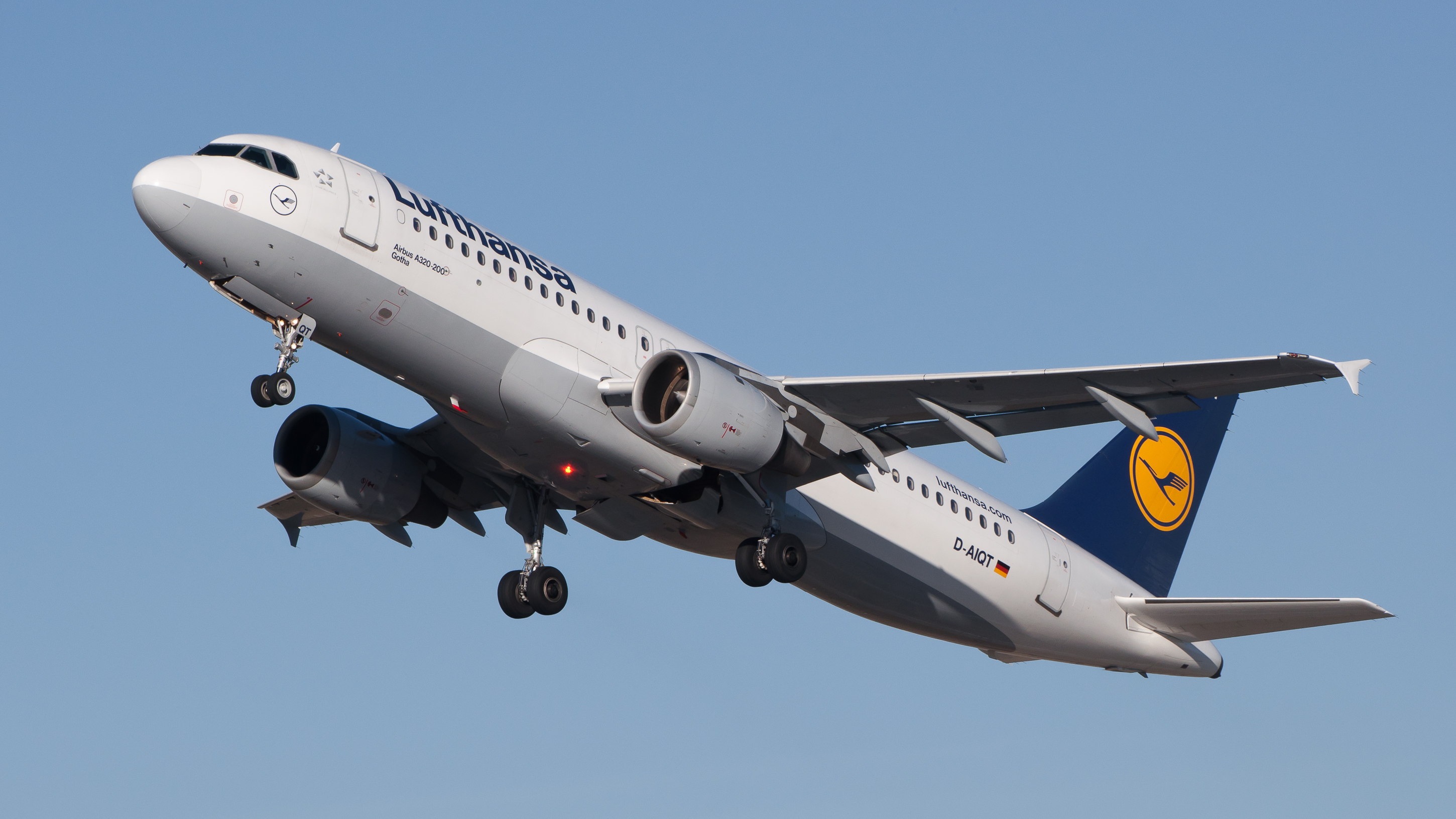
Julian Herzog (Website) (CC BY), vía commons Safety and accidents
Why did Lufthansa leave the last row of its A320neos empty?
To comply with a 31 July 2019 EASA airworthiness directive that temporarily limited the A320neo's center-of-gravity envelope. Lufthansa blocked the last row… more…
Peter Haas (CC BY SA), vía commons Safety and accidents
What is the "pickle fork" that cracked on some Boeing 737 NGs?
It's the main structural member joining the fuselage and the wings. There are four per aircraft, one on each side of the forward and rear attachment frames… more…
Julian Herzog (Website) (CC BY), vía commons Safety and accidents
Did you know the A320 that crashed in Habsheim in 1988 had only been delivered to Air France three days earlier?
True: A320-111 F-GFKC, serial number 9, first flew on 6 January 1988 and was delivered to Air France on 23 June, three days before the accident. On 26 June… more…
Julian Herzog (Website) (CC BY), vía commons Safety and accidents
Did the engines on the Habsheim A320 respond badly when the pilot asked for full power?
No. Five seconds after TO/GA power was applied, engine No. 1 was at 83% N1 and No. 2 at 84%, and 0.6 seconds later both were at 91%. With the CFM56-5 it takes… more…
Julian Herzog (Website) (CC BY), vía commons Safety and accidents
How much time passed between the bird strike and Flight 1549's ditching in the Hudson?
Less than four minutes. The aircraft struck a flock of Canada geese at 3:27:11 p.m., at 2,818 feet (859 m); Sullenberger made the mayday call at 3:27:33 p.m… more…
Julian Herzog (Website) (CC BY), vía commons Safety and accidents
Why did the Hudson A320 carry life vests and rafts even though its route didn't require them?
Because that specific aircraft was certified for extended overwater operations, so it carried extra vests, rafts, and slide-rafts, even though FAA rules… more…
