Did you know…
What was the Douglas F6D Missileer?
Short answer
A carrier-based fleet air defense fighter that Douglas designed for a 1959 US Navy requirement and that was never built. It was meant to loiter far from the carrier and shoot down hostile aircraft at 160 km (100 miles) with its radar and long-range missiles. It was canceled in December 1961.

A 1959 idea
Douglas conceived the F6D Missileer as a carrier-based fleet air defense fighter, in response to a 1959 US Navy requirement. The approach was a subsonic platform that would loiter on station along the threat axis, carrying a huge long-range radar and up to eight very-long-range air-to-air missiles. Its job was to patrol for extended periods well away from the Navy's aircraft carriers and engage hostile aircraft at 160 km (100 miles) using that radar and those missiles. It was also meant to be able to operate from Essex-class carriers and remain on station for four hours at 35,000 ft.
Big radar, long missiles
The nose was bulbous because it had to house the dish of the Westinghouse AN/APQ-81 radar, five feet in diameter. The normal load was six missiles, all under the wings, and two more could be carried under the fuselage, which increased the maximum takeoff weight by 4,800 lb. The Eagle missile was accelerated after launch to Mach 3.5 by a large solid-propellant rocket booster and, after a glide phase, a long-burning sustainer motor slowly raised its speed to Mach 4.5.
Why it never flew
Critics within the Navy argued that, once it had fired its missiles, the Missileer would be completely unable to defend itself and would have to return to the carrier as soon as possible to rearm. Those arguments eventually prevailed and, combined with the desire to cut military spending in pursuit of a balanced budget, led to the F6D's cancellation in December 1961. When the F-111B ran into intractable problems as an air-to-air fighter and in carrier operations, the same systems were installed in the F-14 Tomcat.
More questions
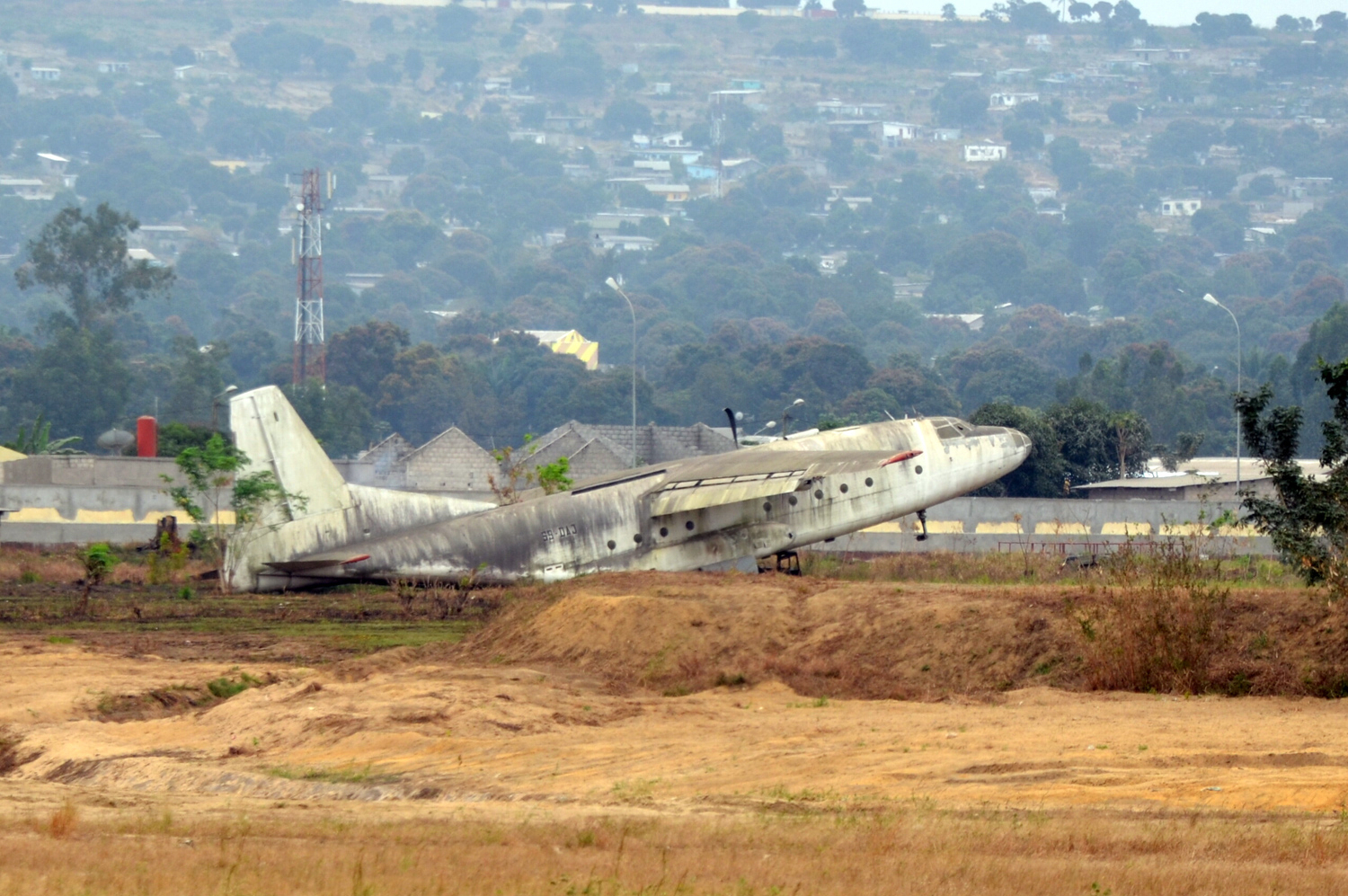
Vitaly Druchenok (CC BY SA), vía commons Aviation history
What "typically Russian" features did the An-8 have?
The An-8 was a Soviet light military transport with a high wing and two turboprops, featuring a glazed nose for the navigator, a chin radome for navigation… more…

RB7MRV (CC BY SA), vía commons Aviation history
Why is the E-25 called "Mirlo"?
Mirlo is the official nickname of the C-101 in Spain. The air force designated it the E.25 Mirlo, "Blackbird" in English, while CASA identified it as the… more…
RB7MRV (CC BY SA), vía commons Aviation history
What did CASA do with the C-101's first flight for safety?
CASA kept it deliberately simple: on 27 June 1977 the P1 only had to check the controls' response, and for extra safety its landing gear was not even… more…
RB7MRV (CC BY SA), vía commons Aviation history
What requirement made the C-101 fly inverted?
Among its requirements, the Aviojet had to be able to remain in inverted flight for 20 s and land at 100 knots (185 km/h). It also had to withstand load… more…

Aviation history
What was the An-2 called before it became an Antonov?
SKh-1. The letters stood for Sel'sko Khozyaystvennyi — pervoy, "agricultural, the first," and corresponded to the first design from Antonov's bureau, later… more…
Aviation history
At what altitude did the weather-research An-4 biplane fly?
Up to 10,000 m: the An-4 — the design-bureau designation for the meteorological An-2ZA, intended for high-altitude weather research — could maintain power up… more…


