Did you know…
How many seats did a CH-47 Chinook have in Vietnam?
Short answer
As internal cargo, the Chinook can carry 33 to 44 soldiers, or alternatively 24 stretchers plus two medics. The CH-47A had a maximum weight of 33,000 lb (15,000 kg) and a maximum payload of about 10,000 lb (4,500 kg). At the peak of the war, the US Army had 21 Chinook companies in Vietnam.

A cargo hold before a passenger cabin
The Chinook can carry a wide variety of internal loads, including vehicles, artillery pieces, 33 to 44 soldiers, or alternatively 24 stretchers plus two medics. The CH-47A had a maximum weight of 33,000 lb (15,000 kg) and a maximum payload of about 10,000 lb (4,500 kg). The CH-47C had a single cargo hook under the centre of the aircraft, with a maximum capacity of 20,000 pounds. As for powerplant, the CH-47A used Lycoming T55-L7 engines of 2,650 shp, while the CH-47C was fitted with the 3,750 shp T55-L11.
Arrival and deployment in Vietnam
The Chinooks of the 11th Air Assault formed the core of the 228th Assault Helicopter Battalion, which began operations in Vietnam in September 1965. By February 1966, 161 aircraft had been delivered to the Army. At the moment of peak activity in the war, the US Army kept 21 Chinook companies in Vietnam. Of the nearly 750 Chinooks in the fleets of the United States and South Vietnam, around 200 were lost in combat or in wartime operational accidents.
Recovering aircraft and arming the helicopter
Perhaps the Chinook's most cost-effective use was the recovery of other downed aircraft. The "Hook" recovered some 12,000 aircraft valued at more than 3.6 billion dollars over the course of the war. Four CH-47As were converted into gunships, with two fixed forward-firing 20 mm M24A1 cannons and five .50 caliber machine guns.
More questions
Pedro Argao (CC BY SA), vía commons Aviation history
What is the most exported Spanish aircraft in aviation history as of 1982?
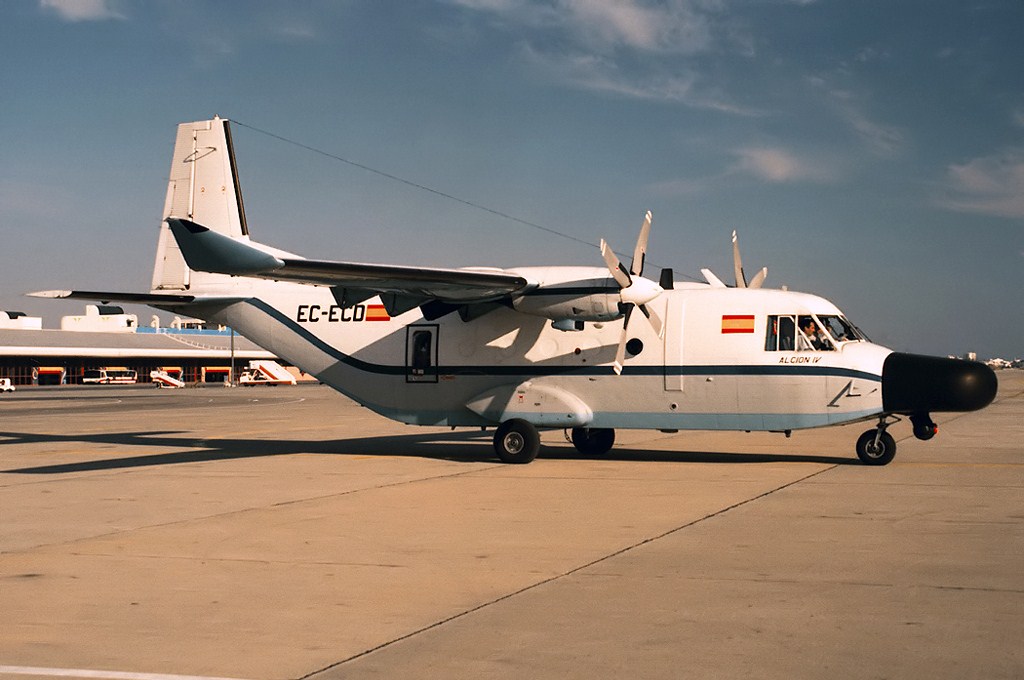
The CASA C-212 Aviocar, with 478 aircraft sold in total — a figure covering its whole commercial career, not just 1982 — of which 126 were built under license… more…

RB7MRV (CC BY SA), vía commons Aviation history
Why were pure turbojets ruled out for the C-101?
Due to cost and fuel consumption: CASA soon ruled out the pure turbojets from General Electric and Rolls-Royce. Turbofans' efficiency and savings were well… more…
RB7MRV (CC BY SA), vía commons Aviation history
Where was the C-101's spin tested?
In Lille, France, where the Aviojet's tunnel campaign closed with spin behavior tests on a 1/18 scale model. In flight, spinning was part of the test phase… more…
RB7MRV (CC BY SA), vía commons Aviation history
Where was the C-101 tested at low and high speed?
The low-speed tests were done in tunnel No. 1 of the National Institute of Aerospace Technology (INTA) "Esteban Terradas," using a 1/7 scale model. The… more…
RB7MRV (CC BY SA), vía commons Aviation history
How was the C-101 camouflaged at Farnborough?
With a camouflage scheme closer to a Saab Viggen's than to a Spanish Air Force aircraft's: at Farnborough the Aviojet appeared dressed "the Swedish way." The… more…
Vitaly Druchenok (CC BY SA), vía commons Aviation history
What "typically Russian" features did the An-8 have?
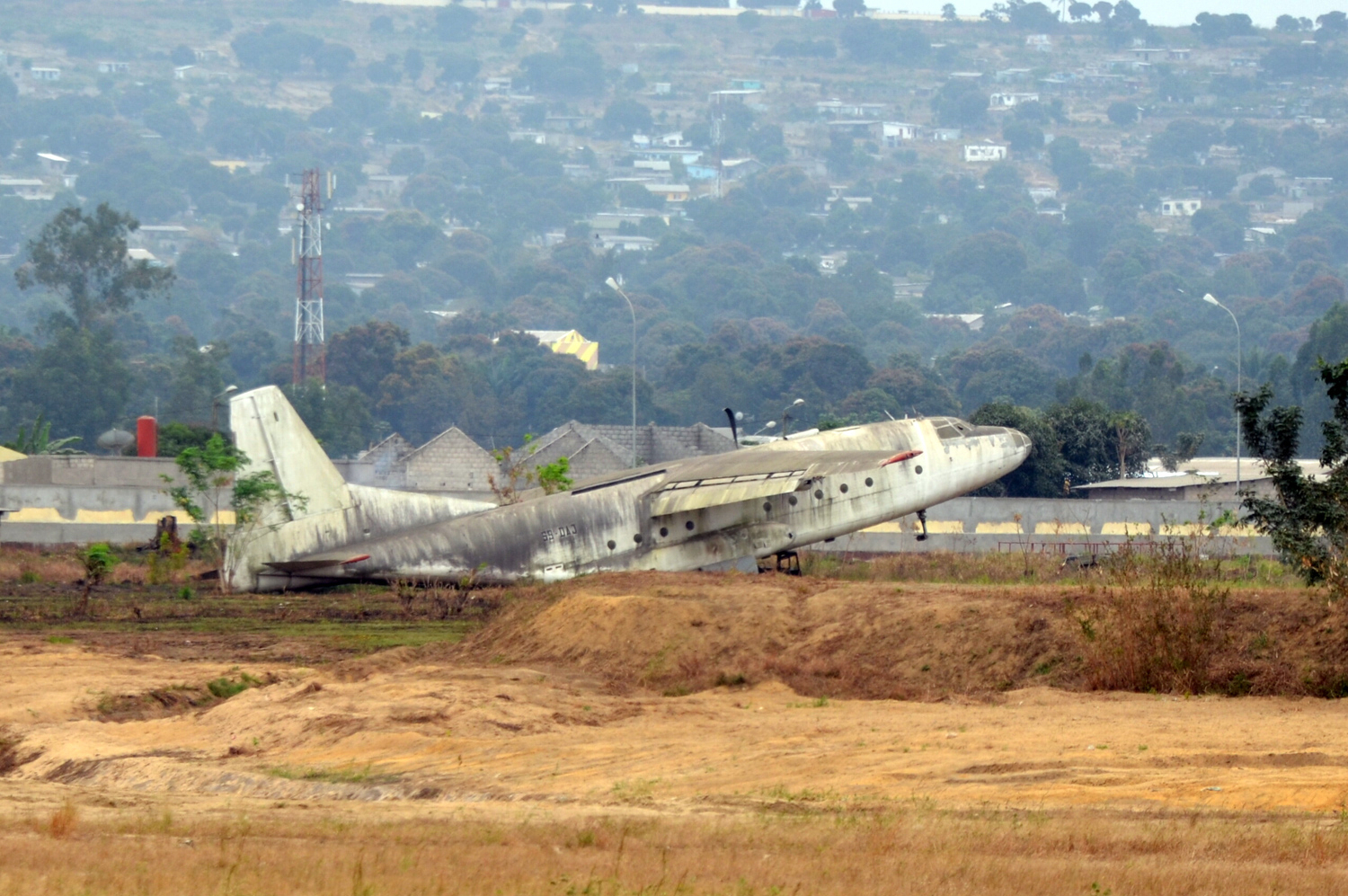
The An-8 was a Soviet light military transport with a high wing and two turboprops, featuring a glazed nose for the navigator, a chin radome for navigation… more…


