Mitsubishi A6M Zero variant
Mitsubishi A6M Zero A6M8 Tipo 0 Modelo 64
Final Zero variant, re-engined with the 1,560 hp Mitsubishi Kinsei 62 in place of the Sakae. It was the fastest Zero (about 573 km/h), but only two prototypes flew in 1945: bombing of the engine plant and the end of the war killed a planned run of 6,300 aircraft.

- April 1, 1945
- First flight
- 2
- Units built
History
The A6M8 Type 0 Model 64 was the last development of the Mitsubishi A6M Zero carrier fighter and the only member of the family to abandon the Nakajima Sakae in favour of Mitsubishi's own Kinsei 62, a fourteen-cylinder two-row radial with water-methanol injection rated at 1,560 hp (1,163 kW) for take-off, roughly 60 per cent more than the engine of the original A6M2. The designation needs a word of explanation: in Japanese naval nomenclature the Model 54 was the prototype and the Model 64 the planned production version. The French source adds that the first prototype was built on a Model 52 Hei airframe (hence "54"), whereas the second and the production machines were to use the Model 63 airframe, hence "64".
Fitting the Kinsei to the Zero was an old idea. Japanese sources record that it had been officially examined three times before it finally happened. The first was during the design of the A6M3, when the Kinsei Model 50 was considered alongside the Sakae 21, which was eventually chosen. The second came in the autumn of 1943, when the Navy planned to cut Sakae output so that Nakajima could concentrate on the new Homare: the estimates showed that re-engining the Model 52 would cut range by about 20 per cent for no real gain in speed, would push wing loading up to interceptor levels and would need close to a year before production could start, so the Navy preferred to push the Raiden instead and dropped the conversion. The third occasion arrived in 1945, when Sakae production at Nakajima ceased altogether to give priority to the 2,000 hp Homare, and Mitsubishi was at last allowed to install its own engine, already proven on the Army's Ki-100 and on the Navy's Yokosuka D4Y Suisei carrier bomber.
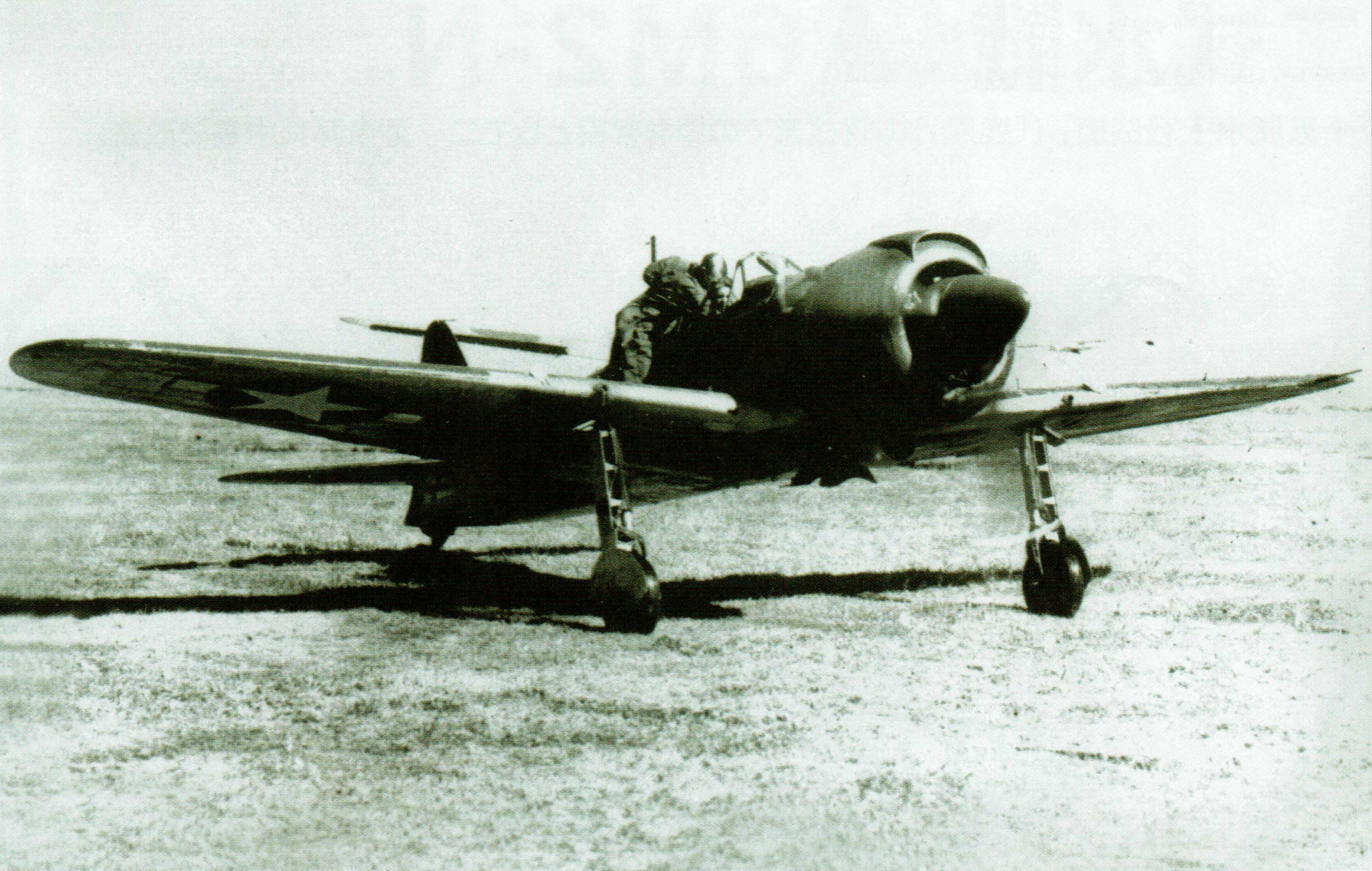
The Kinsei had a larger diameter than the Sakae, so the cowling and nose had to be extensively redesigned. The 13.2 mm cowl machine gun of the Model 52 Hei was deleted, the carburettor intake was enlarged, a long intake duct similar to that of the Nakajima B6N Tenzan torpedo bomber was added, and a large propeller spinner borrowed from the Suisei Model 33, which used the same engine, was fitted. The armament was reduced to the wing weapons: two 13.2 mm Type 3 machine guns and two 20 mm Type 99 cannon. Like the Model 62 and Model 63, the Model 64 was also intended for the fighter-bomber role, special-attack missions included: it could carry a 250 kg bomb under the fuselage and, to avoid losing endurance, two 150-litre drop tanks under the wings. Even so, the Navy insisted that it should first of all be a pure fighter.
The outcome was the fastest Zero of all: at a normal loaded weight of more than 3,100 kg (the Spanish source quotes a normal take-off weight of 3,150 kg) it reached about 573 km/h (572.3 km/h in the Japanese documentation, 309 knots in the French) and regained a rate of climb comparable to that of the A6M5a, together with much of the agility that successive additions of armour and armament had eroded. The price was range: the tanks had lost capacity when they were protected, the fuselage tank was given over to water-methanol, and the Kinsei burned more fuel than the Sakae, so the Zero's legendary endurance vanished and the Model 64 took on the character of a local-defence fighter, which by that stage of the war mattered little.
The first prototype was completed in April 1945 and trials were encouraging enough for the Navy to order an ambitious programme of 6,300 A6M8s. It was never fulfilled: months earlier, B-29 raids on Nagoya had wrecked the Mitsubishi engine plant that built the Kinsei 62, and the general collapse of industry and the shortage of materials made production impossible. The order to build the Model 64 in quantity was issued in July 1945, but the surrender came before a single production aircraft appeared. Only the two prototypes were completed and flown, and they were still under test when the war ended; one of them was later evaluated by US forces at Misawa Air Base. For decades hardly any documentation on the A6M8 survived and the exact shape of its nose remained a mystery, until photographs and drawings found in recent years confirmed the Suisei spinner and propeller. With it the story of the Zero came to an end, a fighter that had to fly with the Sakae to the very last.
Multimedia
