Hawker Hurricane: The Neodoxy of Western Fighters | Corrupted Intel Files
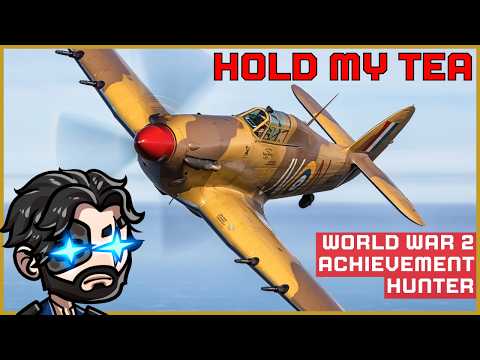
Video from the channel Captain Slicerax about Hawker Hurricane, linked on its Above Ten Thousand entry. Duration: 47:07. Language: English. Video type: Documentary.
What it's about
An explainer piece covering the full history of the Hawker Hurricane, from its design in the mid-1930s to its retirement after the Second World War. The author argues that the aircraft pioneered much of how Western Allied air power was used in the war: first aircraft with a Merlin engine, first Western fighter converted into a ground-attack aircraft, first to use air-launched rockets in combat, and the first lent to the Soviet Union under lend-lease. The tone is humorous, with plenty of video-game references.
Historical context
Faced with German rearmament starting in 1933, designer Sydney Camm began from Hawker's Fury biplane and ended up proposing a new monoplane built around the Rolls-Royce PV.12 engine, later named Merlin. The Air Ministry formalised it in specification F.36/34 and ordered a prototype. The need to build many aircraft quickly led to keeping the traditional structure of steel tubing, wood and fabric. The prototype flew on 6 November 1935, and the first order, for 600 aircraft, came on 3 June 1936. The video covers the Battle of France, the Battle of Britain, North Africa, naval use on CAM ships and as the Sea Hurricane, and service in the USSR, Burma and India.
Key facts
According to the video, around 500 Hurricane Mk Is were in service across 18 squadrons when the war broke out. In the Battle of Britain it is credited with 656 of the 1,185 claimed kills, and Eric Nicolson of No. 249 Squadron received the only Victoria Cross awarded to a Fighter Command pilot. The Polish 303 Squadron stood out as the battle's most effective unit. Later versions carried twelve machine guns (Mk IIB), four 20 mm Hispano cannons (Mk IIC) and two 40 mm Vickers S cannons (Mk IID), the latter first used at Bir Hakeim in June 1942. Catapult-launched Hurricats achieved nine kills in nine combat launches. Production ended in July 1944, with cited figures ranging from more than 12,000 to about 14,500 aircraft. The RAF retired it in January 1947, and Portugal kept it in service until 1954.