Aviação geral · Civil · Estados Unidos
Lockheed Vega
- 4 de julho de 1927
- Primeiro voo
- 1928
- Entrada ao serviço
- Em serviço
- Estado
- 132
- Unidades construídas


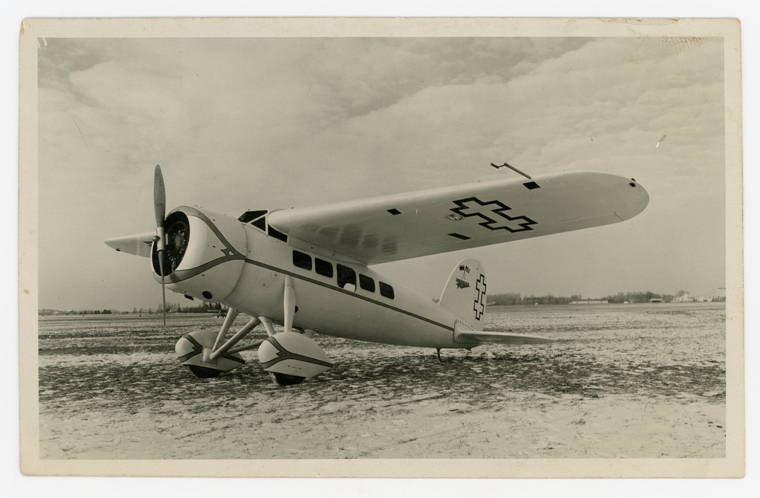


O Lockheed Vega foi um monoplano de asa alta e cabina fechada que a Lockheed começou a construir em 1927 e que deveu a sua fama à velocidade e ao alcance que lhe davam uma fuselagem monocasco de madeira e uma asa em consola. Com exemplares deste modelo, Amelia Earhart atravessou o Atlântico a solo e Wiley Post deu duas vezes a volta ao mundo.
Eventos relacionados
Fichas relacionadas
Categoria
História
O Vega nasceu de uma encomenda interna: a Lockheed queria um avião para as suas próprias rotas e pediu a John Knudsen Northrop e a Gerald Vultee, que mais tarde fundariam as respetivas empresas, um aparelho robusto para o piloto e quatro passageiros que fosse além disso um dos mais rápidos do seu tempo. A resposta foi uma fuselagem monocasco de contraplacado laminado num molde de betão, fechada sobre uma estrutura de nervuras de madeira, e uma asa em consola de uma só longarina que, por não poder atravessar essa fuselagem, foi montada sobre ela. Só o motor e o trem de aterragem ficaram fora do afinamento aerodinâmico e, ainda assim, as versões de série carenaram as rodas com perfis em lágrima. O primeiro Vega 1, batizado Golden Eagle e movido por um radial Wright J-5 Whirlwind de 225 hp, voou da fábrica de Los Angeles a 4 de julho de 1927: cruzava a 120 mph e atingia 135 mph.
A procura chegou de proprietários privados antes de chegar das companhias aéreas. No final de 1928 tinham sido entregues 68 aparelhos e, nas National Air Races de Cleveland de 1929, os Vega arrecadaram todos os prémios de velocidade. Nesse mesmo ano a Lockheed apresentou o Vega 5, com o Pratt & Whitney Wasp de 450 hp e uma carenagem NACA que melhoraram o desempenho o suficiente para acrescentar dois lugares e subir a velocidade de cruzeiro para 155 mph e a máxima para 165 mph; desta variante saíram 64 exemplares, muitos destinados a transporte executivo, mas também a companhias como a Pan American ou a Transcontinental and Western Air. Em 1931 o Corpo Aéreo do Exército dos Estados Unidos comprou dois Vega de fuselagem metálica construídos pela Detroit Aircraft Corporation. A contagem total da produção varia consoante a fonte entre 128 e 132 aparelhos, uma margem que reflete a dispersão do fabrico entre a Lockheed, a Detroit e outras oficinas.
A lista de marcas conseguidas com o Vega explica o seu lugar na história melhor do que os seus números de venda. Em 1928 o Yankee Doodle serviu para bater os recordes transcontinentais: a 19 e 20 de agosto Arthur C. Goebel voou de Los Angeles a Garden City em 18 horas e 58 minutos, o primeiro voo sem escalas de oeste para leste, e a 25 de outubro Charles B. D. Collyer cobriu o sentido contrário em 24 horas e 51 minutos, antes de morrer a 3 de novembro ao tentar melhorar a marca. Com um Vega 5B matriculado NC7952, Amelia Earhart fez a primeira travessia transatlântica de uma mulher a solo, da Terra Nova à Irlanda; com o Winnie Mae, Wiley Post deu duas vezes a volta ao mundo e demonstrou a existência da corrente de jato; e Hubert Wilkins empregou um Vega com flutuadores nos primeiros voos sobre o Ártico e a Antártida. Não era um avião fácil: a visibilidade frontal e lateral a partir da cabina era muito limitada e Elinor Smith escreveu que planava como «uma rocha a cair de uma montanha». Tanto o aparelho de Earhart como o Winnie Mae conservam-se hoje no National Air and Space Museum de Washington.
Variantes
| Vega 1 | DL-1 | DL-1A Special | DL-1B | UC-101 | Vega 2 | Vega 2A | Vega 2D | Vega 5 | Vega 5A Executive | Vega 5B | Vega 5C | Y1C-12 | Y1C-17 | |
|---|---|---|---|---|---|---|---|---|---|---|---|---|---|---|
| Primeiro voo | 4 de julho de 1927 | — | — | — | — | — | — | — | — | — | — | — | — | — |
| Tipo de aeronave | Pioneering airliner | Pioneering airliner | Record-setting aircraft | Pioneering airliner | Light military transport | Pioneering airliner | Pioneering airliner | Pioneering airliner | Pioneering airliner | Pioneering airliner | Record-setting aircraft | Pioneering airliner | Light military transport | Light military transport |
| Grupo motopropulsor | 1 × Wright J-5 Whirlwind radial of 164 kW (220 hp); the first airframes flew with bare cylinders, before the NACA cowling. | 1 × Pratt & Whitney R-1340 Wasp C radial of 336 kW (450 hp). | 1 × Pratt & Whitney R-1340 Wasp SC1 radial. | 1 × Pratt & Whitney R-1340 Wasp C radial of 336 kW (450 hp). | 1 × Pratt & Whitney R-1340 Wasp C radial of 336 kW (450 hp). | 1 × Wright J-6 Whirlwind radial of 224 kW (300 hp), a third more power than the Vega 1's J-5 on the same airframe. | 1 × Wright J-6 Whirlwind radial of 224 kW (300 hp). | 1 × Pratt & Whitney R-985 Wasp Junior radial of 224 kW (300 hp), replacing the Whirlwind on two converted Vega 1s and one Vega 2. | 1 × Pratt & Whitney R-1340 Wasp radial of 336 kW (450 hp) in Wasp B form; Wasp A of 410 hp and Wasp C1 of 420 hp were also certificated. The NACA cowling introduced here cut drag enough to allow two more seats. | 1 × Pratt & Whitney R-1340 Wasp C radial of 336 kW (450 hp). | 1 × Pratt & Whitney R-1340 Wasp B radial of 336 kW (450 hp); the aircraft Amelia Earhart flew solo across the Atlantic had that Wasp B swapped for a Wasp C before the flight. | 1 × Pratt & Whitney R-1340 Wasp C nine-cylinder air-cooled radial rated at 336 kW (450 hp), with NACA cowling and a two-blade propeller; in continuous civil rating the same Wasp C was certificated at 420 hp at 2,000 rpm at sea level. | 1 × Pratt & Whitney R-1340 Wasp C radial of 336 kW (450 hp). | 1 × Pratt & Whitney R-1340 Wasp SC radial of 336 kW (450 hp), on a DL-1B Special airframe with single-strut landing gear. |
| Motorização | 1 × Wright J-5 Whirlwind | 1 × Pratt & Whitney R-1340 Wasp C | 1 × Pratt & Whitney R-1340 Wasp SC1 | 1 × Pratt & Whitney R-1340 Wasp C | 1 × Pratt & Whitney R-1340 Wasp C | 1 × Wright J-6 Whirlwind | 1 × Wright J-6 Whirlwind | 1 × Pratt & Whitney R-985 Wasp Junior | 1 × Pratt & Whitney R-1340 Wasp (Wasp A/B/C1) | 1 × Pratt & Whitney R-1340 Wasp C | 1 × Pratt & Whitney R-1340 Wasp B | 1 × Pratt & Whitney R-1340 Wasp C | 1 × Pratt & Whitney R-1340 Wasp C | 1 × Pratt & Whitney R-1340 Wasp SC |
| Potência unitária | 220 hp | 451 hp Melhor valor da linha | — | 451 hp Melhor valor da linha | 451 hp Melhor valor da linha | 300 hp | 300 hp | 300 hp | 451 hp Melhor valor da linha | 451 hp Melhor valor da linha | 451 hp Melhor valor da linha | 451 hp Melhor valor da linha | 451 hp Melhor valor da linha | 451 hp Melhor valor da linha |
| Comprimento | — | 8,4 m Melhor valor da linha | — | — | — | — | — | — | — | — | — | 8,4 m Melhor valor da linha | — | — |
| Envergadura | — | 12,5 m Melhor valor da linha | — | — | — | — | — | — | — | — | — | 12,5 m Melhor valor da linha | — | — |
| Altura | — | — | — | — | — | — | — | — | — | — | — | 2,6 m | — | — |
| Área alar | — | — | — | — | — | — | — | — | — | — | — | 25,5 m² | — | — |
| Peso vazio | — | — | — | — | — | — | — | — | — | — | — | 1163 kg | — | — |
| MTOW | — | — | — | — | — | — | — | — | — | — | — | 2041 kg | — | — |
| Velocidade máxima | 217 km/h | 286 km/h | — | — | — | 249 km/h | — | — | 266 km/h | — | 290 km/h | 298 km/h | — | 356 km/h Melhor valor da linha |
| Velocidade de cruzeiro | 190 km/h | 246 km/h | — | — | — | 214 km/h | — | — | 249 km/h | — | 249 km/h | 266 km/h Melhor valor da linha | — | — |
| Teto de serviço | — | — | — | — | — | — | — | — | — | — | — | 5800 m | — | — |
| Razão de subida inicial | — | — | — | — | — | — | — | — | — | — | — | 6,6 m/s | — | — |
| Alcance | 1448 km Melhor valor da linha | 966 km | — | — | — | 1287 km | — | — | 1167 km | — | 1110 km | 1167 km | — | — |
| Raio de ação | 0 km Melhor valor da linha | 0 km Melhor valor da linha | 0 km Melhor valor da linha | 0 km Melhor valor da linha | 0 km Melhor valor da linha | 0 km Melhor valor da linha | 0 km Melhor valor da linha | 0 km Melhor valor da linha | 0 km Melhor valor da linha | 0 km Melhor valor da linha | 0 km Melhor valor da linha | 0 km Melhor valor da linha | 0 km Melhor valor da linha | 0 km Melhor valor da linha |
| Condições de alcance | Range of about 1,448 km, enough for the ocean and polar crossings that made the type famous. | Range of 966 km at a 246 km/h cruise, with a 286 km/h maximum. | — | — | — | Range of 1,287 km at a 214 km/h cruise, with a 249 km/h maximum. | — | — | Range of 1,167 km at a cruise of about 249 km/h. | — | Standard range of 1,110 km at a 249 km/h cruise; record aircraft carried extra tankage that multiplied it. | Range of 1,167 km at a 266 km/h cruise, with a 298 km/h maximum, a 5,800 m service ceiling and an initial climb of 6.6 m/s. Standard tankage was 610 litres; record aircraft carried auxiliary tanks far beyond that. | — | At 356 km/h it was, at the time, the fastest aeroplane on the US Army inventory. |
| Armamento | None | None | None | None | None | None | None | None | None | None | None | None | None | None |
| Carga bélica máxima | 0 kg Melhor valor da linha | 0 kg Melhor valor da linha | 0 kg Melhor valor da linha | 0 kg Melhor valor da linha | 0 kg Melhor valor da linha | 0 kg Melhor valor da linha | 0 kg Melhor valor da linha | 0 kg Melhor valor da linha | 0 kg Melhor valor da linha | 0 kg Melhor valor da linha | 0 kg Melhor valor da linha | 0 kg Melhor valor da linha | 0 kg Melhor valor da linha | 0 kg Melhor valor da linha |
| Capacidade de carga | Five seats: pilot and four passengers in an enclosed cabin. | Metal-fuselage Vega: Detroit Aircraft Corporation replaced the wooden monocoque with a duralumin one, leaving the wooden wing unchanged. | One-off racing and record aircraft with a metal fuselage, extra fuel tankage and customer modifications; it flew on the US, British and Australian registers. | Seven seats on Detroit's duralumin fuselage; one example came from the rebuild of the DL-1 prototype. | One civil Vega 5C impressed by the US Army Air Forces in 1942 and used as an unarmed light transport. | Five seats including the pilot. | Seven seats. Redesignation of a single Vega 2 recertificated for higher gross weight. | Standard Vega passenger cabin; one example flew on floats. | Six passengers and pilot after the seating increase the Wasp made possible. | Executive version of the Vega 5, with a plush interior and fewer seats than the airline layout. | Seven seats including the pilot, at higher gross weights than the Vega 5 for scheduled airline work. | Six passengers and one pilot. The moulded plywood monocoque fuselage carried no internal bracing, leaving a clear cabin for passengers, baggage and mail; the 5C added enlarged tail surfaces for higher gross weights. | Single service-test aircraft for the US Army Air Corps: a metal-fuselage DL-1 with additional tankage, flown as an unarmed fast transport. | Single unarmed service-test aircraft for the US Army Air Corps. |
| Tripulação | 1 Melhor valor da linha | 1 Melhor valor da linha | 1 Melhor valor da linha | 1 Melhor valor da linha | 1 Melhor valor da linha | 1 Melhor valor da linha | 1 Melhor valor da linha | 1 Melhor valor da linha | 1 Melhor valor da linha | 1 Melhor valor da linha | 1 Melhor valor da linha | 1 Melhor valor da linha | 1 Melhor valor da linha | 1 Melhor valor da linha |
| Passageiros | 4 | 6 Melhor valor da linha | — | 6 Melhor valor da linha | — | 4 | — | — | 6 Melhor valor da linha | — | 6 Melhor valor da linha | 6 Melhor valor da linha | — | — |
| Unidades construídas | 28 | 4 | 1 | 4 | 1 | 5 | 1 | 3 | 64 Melhor valor da linha | 9 | 29 | 30 | 1 | 1 |
Imagens