Avião comercial · Civil · Reino Unido
BAe Jetstream
- 28 de março de 1980
- Primeiro voo
- 1982
- Entrada ao serviço
- Em serviço
- Estado
- 492
- Unidades construídas
-800.webp)
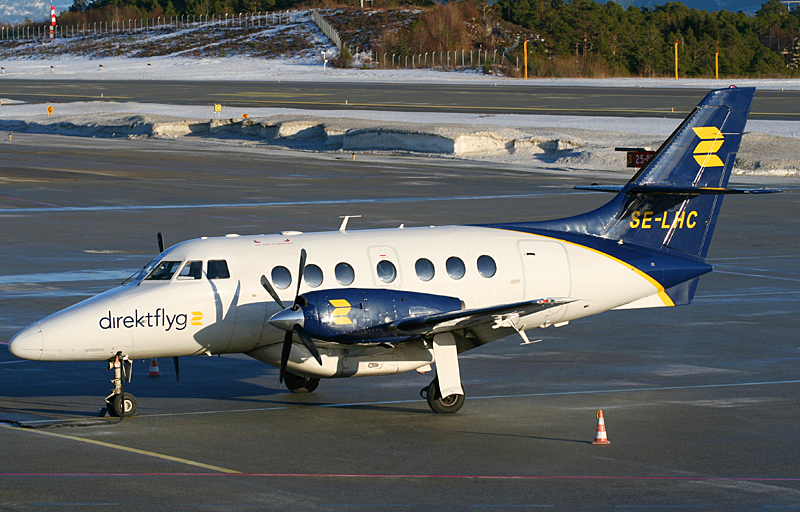
O BAe Jetstream foi a atualização, pela British Aerospace, do pequeno turbo-hélice pressurizado herdado da Handley Page. Rebatizado Jetstream 31, voou a 28 de março de 1980 e tornou-se um dos aviões de linha de 19 lugares mais habituais dos anos oitenta.
Eventos relacionados
Fichas relacionadas
Categoria
Desenho de três vistas
História
Quando a Scottish Aviation foi nacionalizada e integrada na British Aerospace em 1978, a empresa herdou o projeto do Jetstream da Handley Page e decidiu que merecia outra oportunidade. O trabalho foi encarado como um «Mark 3»: motores Garrett TPE331 em vez dos Turbomeca Astazou originais, com mais potência, um regime plano de 1.020 shp face a um limite termodinâmico de 1.100, e intervalos de revisão mais longos. Com eles, o avião pôde ser oferecido em configuração de 18 lugares, em seis filas e com corredor descentrado, e, com injeção de água e metanol, descolar à carga máxima a partir de mais campos, algo que pesava no interior dos Estados Unidos e na Austrália.
O resultado, o Jetstream 31, voou a 28 de março de 1980 e obteve o certificado britânico a 29 de junho de 1982. Desta vez o mercado respondeu como a Handley Page esperara no seu tempo e várias centenas de aparelhos saíram da fábrica ao longo da década. Em 1985 planeou-se outra melhoria de motor, que voou em 1988 como Jetstream Super 31, comercializado também como Jetstream 32. Nesse mesmo ano de 1985, a Royal Navy encomendou quatro Jetstream T.3 como aviões de treino de operadores de radar, que acabaram dedicados ao transporte de entidades oficiais.
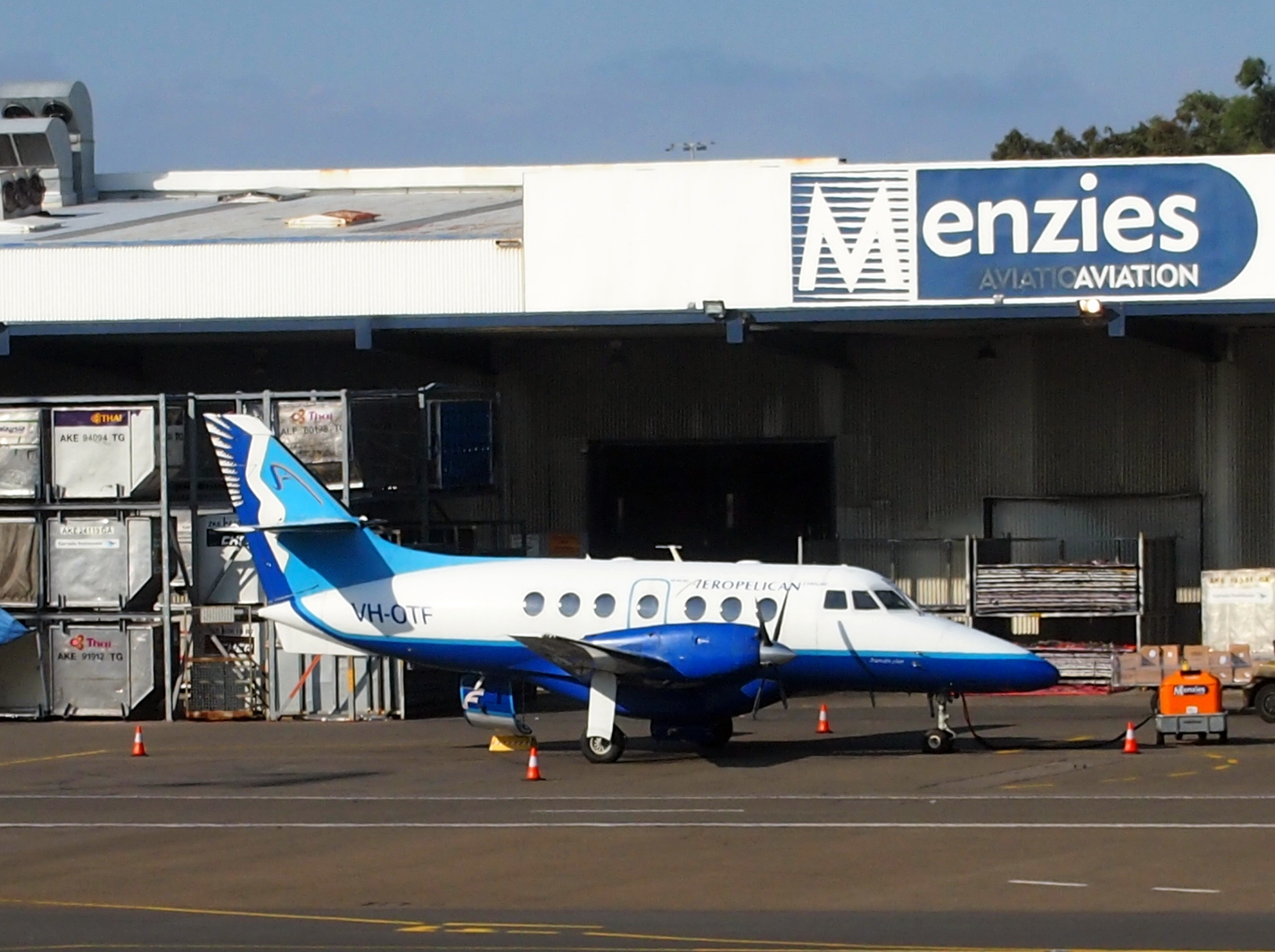
A produção das séries 31 e 32 encerrou em 1993, com 386 aparelhos entregues; a Wikipédia cifra em 492 o total construído da família. Nesse mesmo ano, a British Aerospace converteu Jetstream em marca para todos os seus bimotores turbo-hélice: o alongado Jetstream 41 e o BAe ATP, rebatizado Jetstream 61, ainda que o nome nunca tenha chegado a usar-se em serviço. O Jetstream 51 e o 71 foram propostos e não chegaram a ser construídos. Os 31 e os 32 continuam a ganhar a vida em linhas regionais: em julho de 2019 havia 70 em serviço comercial, 49 deles na América.
Variantes
| Jetstream 1 | Jetstream 31 | Century III | Jetstream 200 | Jetstream 31 Corporate | Jetstream 31EP | Jetstream 31EZ | Jetstream 31 Special | Jetstream 32EP | Jetstream 3M (C-10A) | Jetstream Executive Shuttle | Jetstream QC | Jetstream Super 31 (Jetstream 32) | Jetstream T.1 | Jetstream T.2 | Jetstream T.3 | Riley Jetstream | |
|---|---|---|---|---|---|---|---|---|---|---|---|---|---|---|---|---|---|
| Primeiro voo | 18 de agosto de 1967 | 28 de março de 1980 | — | — | — | — | — | — | — | — | — | — | — | — | — | — | — |
| Tipo de aeronave | Regional turboprop airliner | Regional turboprop airliner | Regional turboprop airliner | Regional turboprop airliner | Turboprop executive transport | Regional turboprop airliner | Turboprop maritime patrol aircraft | Transporte utilitario turbohélice | Regional turboprop airliner | Light turboprop military transport | Turboprop executive transport | Regional turboprop airliner | Regional turboprop airliner | Military trainer | Military trainer | Military trainer | Regional turboprop airliner |
| Grupo motopropulsor | Two Turbomeca Astazou XIV turboprops rated at 625 kW (850 shp) each, with three-blade Hamilton Standard propellers. | Two Garrett TPE331-10UG-513H turboprops rated at 701 kW (940 shp) each, driving four-blade Dowty Rotol propellers. | Two Garrett AiResearch TPE331 turboprops rated at 673 kW (902 shp) each, replacing the French Astazou. | Two Turbomeca Astazou XVIC turboprops rated at 687 kW (921 shp) each. | Two Garrett TPE331-10UG-513H turboprops rated at 701 kW (940 shp) each. | Two Garrett TPE331-10UG-513H turboprops rated at 701 kW (940 shp) each. | Two Garrett TPE331-10UG-513H turboprops rated at 701 kW (940 shp) each. | 2 × turbohélice Garrett TPE331-10UG-513H de 701 kW (940 shp) unitarios. | Two Garrett TPE331-12UHR-701H turboprops rated at 761 kW (1,020 shp) each. | Two Garrett AiResearch TPE331-3A-301W turboprops, the US engine that replaced the French Astazou. | Two Garrett TPE331-10UG-513H turboprops rated at 701 kW (940 shp) each. | Two Garrett TPE331-10UG-513H turboprops rated at 701 kW (940 shp) each. | Two Garrett TPE331-12UAR-701H turboprops rated at 761 kW (1,020 shp) each, driving four-blade Dowty Rotol or McCauley propellers. | Two Turbomeca Astazou XVI turboprops, the same as on the civil Jetstream 200 it derives from. | Two Turbomeca Astazou XVI turboprops, inherited from the T.1 the conversion starts from. | Two Garrett TPE331-10UG turboprops rated at 701 kW (940 shp) each — the engine change that sets the T.3 apart from the Astazou-powered T.2. | Two Pratt & Whitney Canada PT6A turboprops, replacing the original Astazou. |
| Motorização | 2 × Turbomeca Astazou XIV | 2 × Garrett TPE331-10UG-513H | 2 × Garrett AiResearch TPE331 | 2 × Turbomeca Astazou XVIC | 2 × Garrett TPE331-10UG-513H | 2 × Garrett TPE331-10UG-513H | 2 × Garrett TPE331-10UG-513H | 2 × Garrett TPE331-10UG-513H | 2 × Garrett TPE331-12UHR-701H | 2 × Garrett AiResearch TPE331-3A-301W | 2 × Garrett TPE331-10UG-513H | 2 × Garrett TPE331-10UG-513H | 2 × Garrett TPE331-12UAR-701H | 2 × Turbomeca Astazou XVI | 2 × Turbomeca Astazou XVI | 2 × Garrett TPE331-10UG | 2 × Pratt & Whitney Canada PT6A |
| Potência unitária | 838 hp | 940 hp | 903 hp | 921 hp | 940 hp | 940 hp | 940 hp | 940 hp | 1021 hp Melhor valor da linha | — | 940 hp | 940 hp | 1021 hp Melhor valor da linha | — | — | 940 hp | — |
| Comprimento | — | 14,4 m | — | 14,4 m Melhor valor da linha | — | — | — | — | — | — | — | — | 14,4 m | — | — | — | — |
| Envergadura | — | 15,9 m Melhor valor da linha | — | 15,9 m Melhor valor da linha | — | — | — | — | — | — | — | — | 15,9 m Melhor valor da linha | — | — | — | — |
| Altura | — | 5,2 m | — | 5,3 m Melhor valor da linha | — | — | — | — | — | — | — | — | 5,2 m | — | — | — | — |
| Área alar | — | 25,1 m² Melhor valor da linha | — | 25,1 m² Melhor valor da linha | — | — | — | — | 25,1 m² Melhor valor da linha | — | — | — | 25,1 m² Melhor valor da linha | — | — | — | — |
| Peso vazio | — | 4360 kg | 3719 kg | 3485 kg Melhor valor da linha | — | — | — | — | — | — | — | — | 4578 kg | — | — | — | — |
| MTOW | — | 6954 kg | 5670 kg | 5700 kg | — | — | — | — | — | — | — | — | 7350 kg Melhor valor da linha | — | — | — | — |
| Velocidade máxima | — | 487 km/h | — | 454 km/h | — | — | — | — | — | — | — | — | 489 km/h Melhor valor da linha | — | — | — | — |
| Velocidade de cruzeiro | — | 426 km/h | 483 km/h Melhor valor da linha | 433 km/h | — | — | — | — | — | — | — | — | 452 km/h | — | — | — | — |
| Altitude de cruzeiro | — | 7620 m | — | — | — | — | — | — | — | — | — | — | 7620 m | — | — | — | — |
| Teto de serviço | — | 7620 m Melhor valor da linha | — | 7620 m Melhor valor da linha | — | — | — | — | — | — | — | — | 7620 m Melhor valor da linha | — | — | — | — |
| Razão de subida inicial | — | 10,6 m/s | — | 12,7 m/s Melhor valor da linha | — | — | — | — | — | — | — | — | 11,4 m/s | — | — | — | — |
| Alcance | — | 1260 km | 3090 km Melhor valor da linha | 2220 km | 1760 km | — | — | — | — | — | 1760 km | — | 1192 km | — | — | — | — |
| Raio de ação | 0 km Melhor valor da linha | 0 km Melhor valor da linha | 0 km Melhor valor da linha | 0 km Melhor valor da linha | 0 km Melhor valor da linha | 0 km Melhor valor da linha | 0 km Melhor valor da linha | 0 km Melhor valor da linha | 0 km Melhor valor da linha | 0 km Melhor valor da linha | 0 km Melhor valor da linha | 0 km Melhor valor da linha | 0 km Melhor valor da linha | 0 km Melhor valor da linha | 0 km Melhor valor da linha | 0 km Melhor valor da linha | 0 km Melhor valor da linha |
| Condições de alcance | The Astazou proved underpowered for the design and cost the aircraft range and payload against what had been promised. | Maximum range 1,259 km (680 nm). With 19 passengers and reserves it drops to 1,185 km, rising to 1,760 km with 12 and 2,130 km with nine. Certified maximum operating altitude is 25,000 ft (7,620 m). | 3,090 km (1,920 miles) on the 426 US gallon fuel load. | Range of 2,220 km with a 25,000 ft (7,620 m) ceiling. | 1,760 km with 12 passengers and reserves. | Refinements aimed at short-field and hot-and-high capability. | Patrol endurance depends on altitude and surveillance profile; no specific published figure. | Alcance equivalente al del Jetstream 31 de línea. | The aerodynamic refinements target payload-range and short-field capability. | No published range figures exist for the military version. | 1,760 km with 12 passengers and reserves. | Range equivalent to that of the airline Jetstream 31. | 1,192 km with 19 passengers and reserves. Certified maximum operating altitude is 25,000 ft (7,620 m). | Flown on short-radius training sorties; no published range figure for the military version. | Flown on training profiles over the sea; no published range figure. | Flown on training profiles over the sea; no published range figure for the military version. | No published range figures exist for the conversion. |
| Armamento | None | None | None | None | None | None | None | Ninguno | None | None | None | None | None | None | None | None | None |
| Carga bélica máxima | 0 kg Melhor valor da linha | 0 kg Melhor valor da linha | 0 kg Melhor valor da linha | 0 kg Melhor valor da linha | 0 kg Melhor valor da linha | 0 kg Melhor valor da linha | 0 kg Melhor valor da linha | 0 kg Melhor valor da linha | 0 kg Melhor valor da linha | 0 kg Melhor valor da linha | 0 kg Melhor valor da linha | 0 kg Melhor valor da linha | 0 kg Melhor valor da linha | 0 kg Melhor valor da linha | 0 kg Melhor valor da linha | 0 kg Melhor valor da linha | 0 kg Melhor valor da linha |
| Carga útil | 1814 kg Melhor valor da linha | 1805 kg | — | — | — | — | — | — | — | — | — | — | — | — | — | — | — |
| Capacidade de carga | Pressurised 12-seat cabin, up to 18 in high density; volume-limited maximum payload of 1,814 kg. | Pressurised 19-seat cabin in three-abreast rows; 12 seats in the corporate layout and nine in the executive one. Maximum payload is 1,805 kg, with a baggage bay limited to 315 kg that the optional 205 kg ventral pod extends. | Century Aircraft (Amarillo, Texas) conversion of HP.137 airframes, air-conditioned and pressurised to 6.5 psi; Volpar of Van Nuys did the engine installation. | Pressurised 16-seat cabin; fuel capacity of 384 imperial gallons (1,745 litres). | Twelve-seat corporate cabin, with more room per passenger than the 19-seat airline interior. | Enhanced-performance version of the Jetstream 31, with the same 19-seat cabin. | Exclusive economic zone surveillance interior: observer consoles and search windows in place of the passenger cabin. | Transporte utilitario derivado del Jetstream 31, con interior adaptable a misiones mixtas de pasaje y carga. | 19-seat cabin. Enhanced-performance retrofit offered from 1997, with aerodynamic refinements that improve payload and hot-and-high operation. | Cargo door and accommodation for 12 passengers or six stretchers. The US Air Force ordered a batch as the C-10A and cancelled it in October 1969 over delivery delays; none was ever handed over. | Executive shuttle layout seating 12 passengers. | Quick-change layout: the seats come out to switch from passengers to freight between rotations. | Same 19-seat cabin as the Jetstream 31, with an extra overwing emergency exit on the left side and higher maximum weights. | Multi-engine training cabin: student and instructor stations in place of the passenger seats. Ordered as the Jetstream 201 to replace RAF Training Command's Vickers Varsity. | T.1 conversion for Royal Navy observer training, with a nose-mounted MEL E90 radar and consoles for the mission crew. | Jetstream 31 airframe adapted to Royal Navy observer training, with an underfuselage Racal ASR360 search radar in place of the T.2's nose-mounted MEL E90. | Riley Aircraft (Carlsbad, California) conversion of a handful of early Jetstream 1s; the nacelles are recognisable by their bottom intake and side exhausts. |
| Tripulação | 2 Melhor valor da linha | 2 Melhor valor da linha | 2 Melhor valor da linha | 2 Melhor valor da linha | 2 Melhor valor da linha | 2 Melhor valor da linha | 2 Melhor valor da linha | 2 Melhor valor da linha | 2 Melhor valor da linha | 2 Melhor valor da linha | 2 Melhor valor da linha | 2 Melhor valor da linha | 2 Melhor valor da linha | 2 Melhor valor da linha | 2 Melhor valor da linha | 2 Melhor valor da linha | 2 Melhor valor da linha |
| Passageiros | 12 | 19 Melhor valor da linha | — | 16 | 12 | — | — | — | 19 Melhor valor da linha | 12 | 12 | — | 19 Melhor valor da linha | — | — | — | — |
| Unidades construídas | 36 | 220 Melhor valor da linha | — | — | — | — | — | — | — | — | — | — | 161 | 26 | 14 | 4 | — |