Family: Soyuz
Soyuz 2.1a
Launch statistics
- 82
- Launches (as of July 27, 2026)
- 2
- Successes
- 0
- Failures
- 100.0 %
- Success rate


-1600.webp)
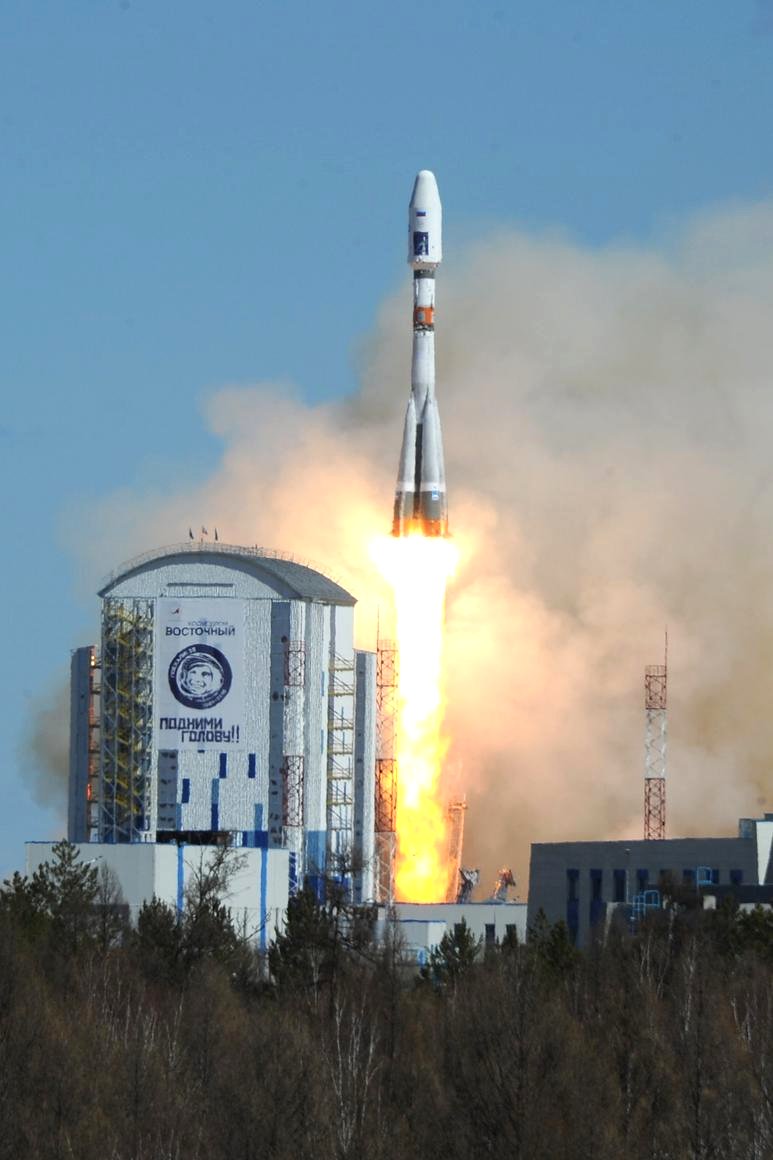

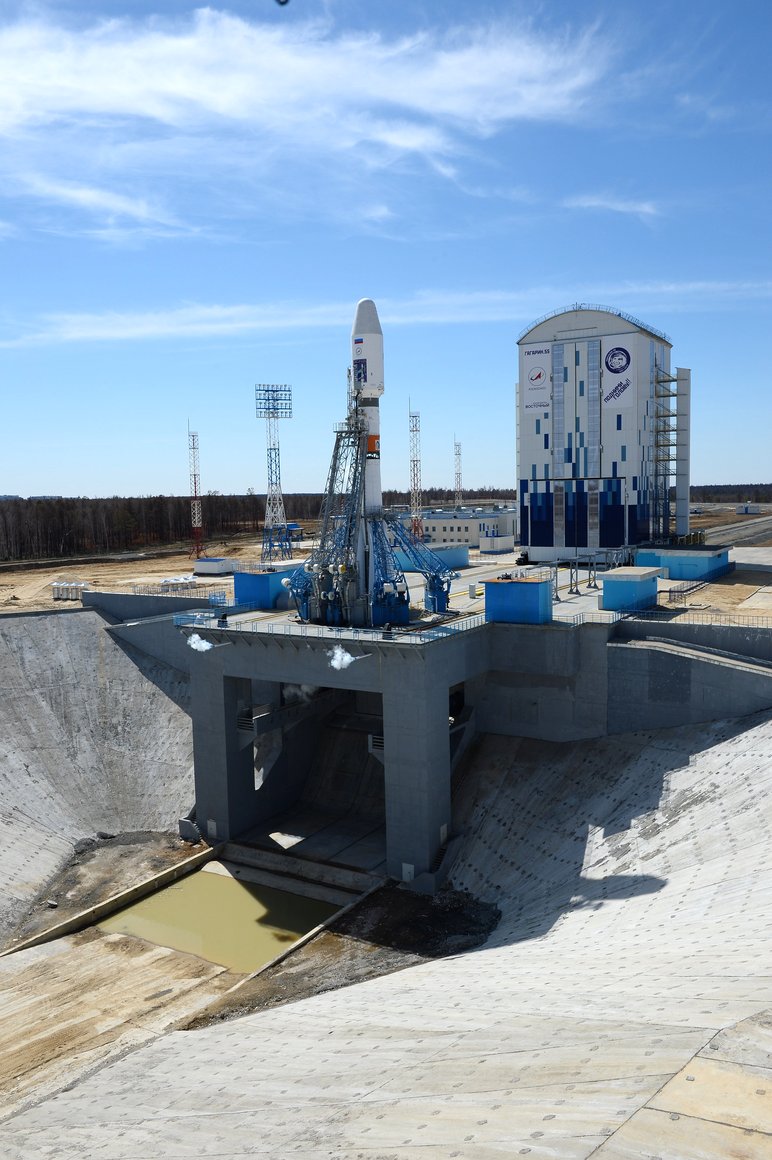
The Soyuz-2.1a is the baseline model of the Russian Soyuz-2 launcher family — that is, a specific configuration within that series rather than a standalone rocket. Soyuz-2 as a whole is a series of expendable medium-lift launch vehicles, the seventh major iteration of the Soyuz family and itself a descendant of the R-7 missile. It is developed and built by the Progress Rocket Space Centre (RKTs Progress) in Samara. What sets the 2.1a apart from its predecessors is the introduction of the family's digital flight control system, replacing the analogue avionics of earlier Soyuz rockets. The new avionics are physically lighter, allow in-flight trajectory adjustments and support larger payload fairings, opening the way to heavier commercial satellites. The variant also uses the upgraded RD-107A and RD-108A engines. Its third stage retains the RD-0110 engine of the classic Soyuz vehicles, but with enlarged propellant tanks and a revised structure shared with the Soyuz-2.1b; together these changes raised payload capacity by about 300 kg. Compared with the 2.1a, the 2.1b swaps the RD-0110 for the more efficient RD-0124 and delivers markedly greater performance. The vehicle can fly as a three-stage rocket for low Earth orbit or add a fourth stage — most commonly the Fregat or Fregat-M tug, with the smaller Volga as a cheaper option — to reach higher orbits. It is active and flies from Baikonur, Plesetsk and, since 2016, Vostochny, carrying payloads such as Progress MS cargo ships, crewed Soyuz MS spacecraft, and weather and remote-sensing satellites.
History
From the 'Rus' programme to Soyuz-2
Development began in the early 1990s under the 'Rus' programme, led by RKTs Progress with backing from the Russian government. After the dissolution of the Soviet Union, the aim was to consolidate Soyuz production inside Russia, remove dependence on foreign-supplied components, and modernise launchers — the Soyuz-U and Molniya-M — that still relied on a 1960s analogue control system built by the Ukrainian Polisvit design bureau.
Digital avionics and new engines
Work on the digital flight control system started in 1993 at NPO Avtomatiki in Yekaterinburg, using triple-redundant computers and dual gyroscopes. In parallel, the RD-107A and RD-108A engines of the boosters and core stage were upgraded with redesigned injectors that improved combustion efficiency, and a new third-stage engine, the oxygen-rich staged-combustion RD-0124, was prepared. Financial constraints in the late 1990s forced a phased rollout: the engines arrived first on the transitional Soyuz-FG, while the avionics and structural changes debuted on the 2.1a and the RD-0124 was held back for the 2.1b.
Entry into service
Soyuz-2.1a first flew on 8 November 2004 from Plesetsk on a suborbital test mission whose third stage came down in the Pacific. The first attempt to reach orbit, with the MetOp-A satellite, was scrubbed in July 2006 after the onboard computer failed to verify the launch azimuth; the flight was finally conducted in October 2006, at which point the variant entered operational service.
Replacing the older fleet, and crewed flight
Between 2010 and 2019 the Soyuz-2 family progressively replaced the Molniya-M, Soyuz-U and Soyuz-FG. The first launch from Vostochny Cosmodrome took place on 28 April 2016, following specific modifications that allow the rocket to stay fuelled on the pad and support vertical payload integration. On 9 April 2020 a Soyuz-2.1a flew its first crewed mission, Soyuz MS-16 to the International Space Station. The most recent launch of the variant recorded in the article is dated 14 July 2026.
Launch timeline
| Date | Launch site | Outcome | Payload |
|---|---|---|---|
| Jul 14, 2026, 2:47 PM | 31/6 | Success | Soyuz MS-29 will carry two cosmonauts and one astronaut to the International Space Station aboard the Soyuz spacecraft from the Baikonur Cosmodrome in Kazakhstan. The crew consists of Roscosmos cosmonauts Pyotr Dubrov and Anna Kikina, as well as NASA astronaut Anil Menon. |
| Apr 25, 2026, 10:21 PM | 31/6 | Success | Progress resupply mission to the International Space Station. |
Images