Orbital Pegasus XL - NuSTAR Launch
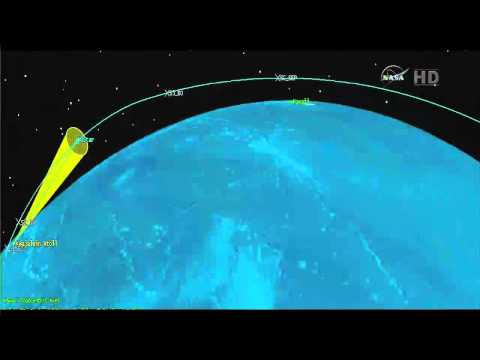
Video from the channel ISSSPACE about Pegasus XL, linked on its Above Ten Thousand entry. Duration: 19:16. Language: English. Video type: Launch.
The mission
The recording captures the NASA TV broadcast of the launch of a Pegasus XL carrying the NuSTAR observatory, a space telescope that searches for black holes and studies the ultimate fate of stars and galaxies. Launch control for Pegasus provides commentary on the flight.
Sequence
After the countdown, the rocket drops from the carrier aircraft and ignites the first stage a few seconds later. It passes through maximum dynamic pressure and climbs past 100,000 feet. The first stage then shuts down and separates, and the second stage burns for about 70 seconds, during which the fairing separates. A coast phase of about six minutes follows, during which the reaction control system holds the vehicle's orientation. The vehicle passes about 220 miles in altitude at 11,400 miles per hour and coasts up toward about 387 miles, with telemetry received via TDRS and the Hawaii station. After a reorientation maneuver, the third stage ignites around the 573-second mark and burns for about 70 seconds.
Outcome
When the third stage shuts down, the vehicle is in orbit. It rotates 180 degrees, releases NuSTAR 821 seconds after launch, and performs a maneuver to avoid re-contact. Initial data show an orbit of 632.8 km apogee, 626.9 km perigee and 6.024 degrees of inclination, as planned. The observatory is acquired via TDRS and begins deploying its solar panels, five in total, in an operation lasting about six minutes.