Family: Long March · SAST
Long March 6
Launch statistics
- 15
- Launches (as of July 27, 2026)
- 1
- Successes
- 0
- Failures
- 100.0 %
- Success rate


_rocket%2C_rendering_without_background.png)
_lifting_off_from_Taiyuan%2C_7_May_2024-1600.webp)
_rocket%2C_rendering_without_background_(brightened).png)
_rocket%2C_rendering.png)

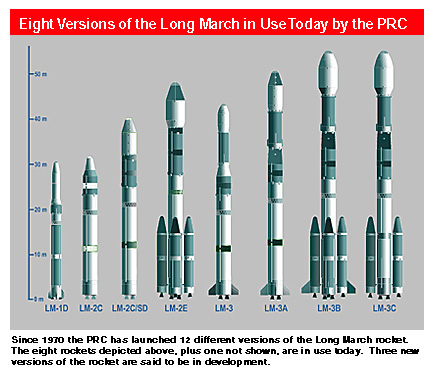
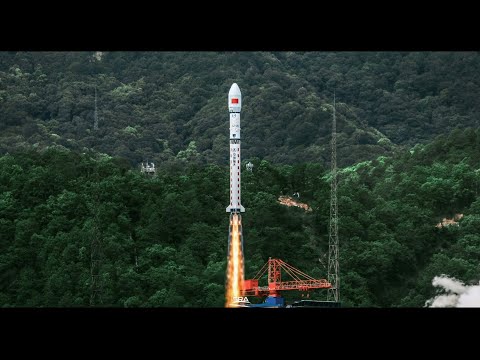
The Long March 6 (Chang Zheng 6, abbreviated CZ 6 inside China and LM 6 for export) is a Chinese liquid-fuelled launch vehicle of the Long March family, developed by the China Aerospace Science and Technology Corporation together with the Shanghai Academy of Spaceflight Technology. Designed during the 2000s and first flown in 2015, it belongs to the new generation of Chinese launchers as a light-capacity, "high-speed response" option complementing the heavy-lift Long March 5 and the mid-heavy Long March 7. Its first stage is derived from the boosters developed for the Long March 5 and is powered by a single YF-100 engine burning kerosene and liquid oxygen; the maiden flight was also the first flight of that engine design. The second stage, 2.25 m in diameter, carries one YF-115, and the third stage uses storable dinitrogen tetroxide and UDMH propellants. The vehicle stands 29 m tall on a 3.35 m core, weighs 103,000 kg at liftoff and can place at least 1,000 kg into Sun-synchronous orbit. This entry covers the original three-stage configuration. The family has since branched out: the Long March 6A adds four strap-on solid boosters, an elongated first stage and a new second stage of the same diameter as the first, while the Long March 6C is slightly shorter than the 6A and drops the solid boosters. Flight statistics for the baseline CZ-6 are tallied separately from both variants.
History
An independent product within the new generation
Although it was completed at almost the same time as the Long March 5 and Long March 7, the CZ-6 was an entirely separate product built by a young team at the Shanghai Academy of Spaceflight Technology. It shares little more than tank diameters and propulsion with the other two — even the avionics are different. Its place in the fleet is to cover the payload range between the medium Long March 7 and the very light Long March 11.
Maiden flight
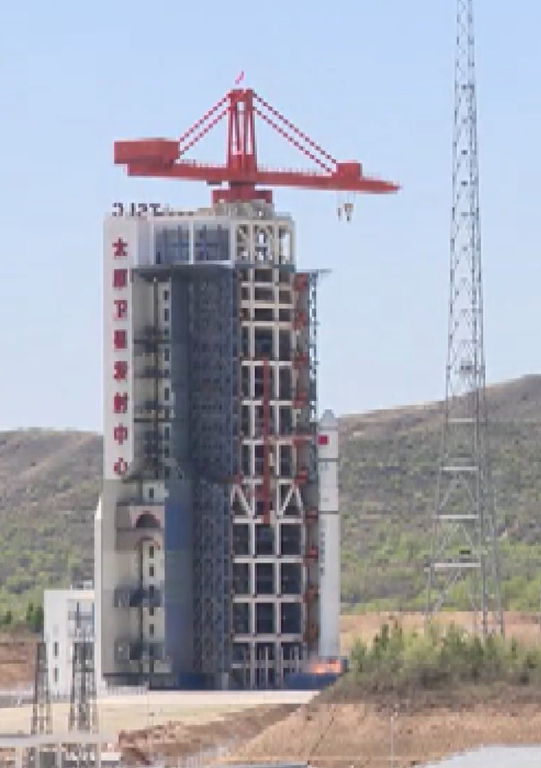
The first CZ-6 lifted off on 19 September 2015 at 23:01 UTC from Launch Area 16 at the Taiyuan Satellite Launch Center, placing a swarm of twenty small university and experimental satellites into Sun-synchronous orbit. It was also the debut of the YF-100 engine, which generates 1,340 kN of thrust burning kerosene and liquid oxygen and whose validation opened the way for the whole new generation of Chinese launchers.
Operations and family branching
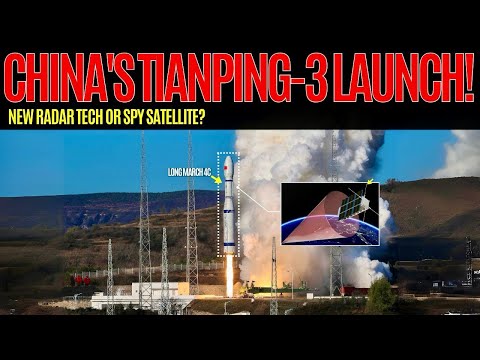
Taiyuan LA-16 has remained the model's only pad. Its payloads have been mostly commercial constellations and Earth-observation satellites — Jilin-1, Ningxia-1, ÑuSat, Zhuzhou-1, Guangmu-1, Tianping-3 — alongside technology missions of the Shiyan series. Flight 15, on 25 April 2026, carried PRSC-EO3 to low Earth orbit. Meanwhile the family expanded: the Long March 6A, with four strap-on solid boosters and at least 4,000 kg to Sun-synchronous orbit, made its maiden flight on 29 March 2022, and the Long March 6C, without those boosters and slightly shorter, flew successfully on 7 May 2024. Both variants keep their own launch records.
Launch timeline
| Date | Launch site | Program | Outcome | Payload |
|---|---|---|---|---|
| Apr 25, 2026, 12:15 PM | Launch Complex 16 | — | Success | Optical Earth observation satellite for the Pakistan government's SUPARCO. |
Versions
| CZ-6C | |
|---|---|
| First launch | May 7, 2024 |
| Last launch | August 25, 2026 |
| Powerplant | First stage of 3.35 m with two YF-100 engines (YF-100K according to Gunter's Space Page) and 2376 kN combined thrust; 2.9 m second stage with one 180 kN YF-115. Both burn RP-1 kerosene and liquid oxygen; no solid boosters and no third stage. |
| Propellant | LOX / RP-1 |
| Height | 43 m |
| Diameter | 3.4 m |
| Mass | 217,000 kg |
| Liftoff thrust | 2,376 kN |
| Stages | 2 |
| LEO capacity | 4,500 kg |
| SSO capacity | 2,400 kg |
| Reusable | No |
Images