Family: Kuaizhou
Kuaizhou 11
Launch statistics
- 6
- Launches (as of July 27, 2026)
- 1
- Successes
- 0
- Failures
- 100.0 %
- Success rate
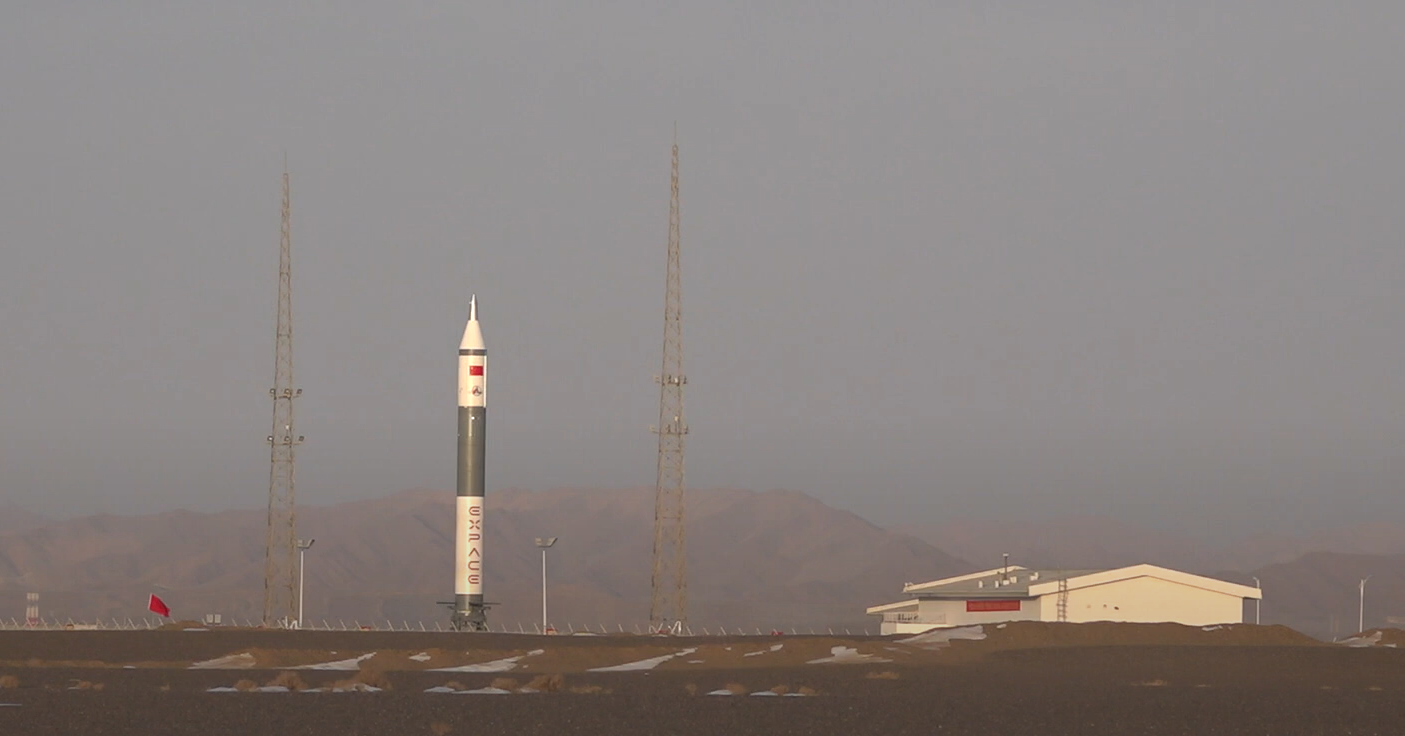
Kuaizhou 11 (KZ-11) is the largest model in the Kuaizhou family, a Chinese series of "quick-reaction" orbital launch vehicles manufactured by ExPace, the commercial subsidiary of the state-owned CASIC. The name Kuaizhou means "speedy vessel", and the concept defining the whole family is a storable solid-propellant rocket carried and erected on a transporter erector launcher, able to lift off from rough terrain with a launch readiness time that can be as short as several hours. Compared with Kuaizhou 1 and 1A, flying since 2013 with three solid stages and a liquid fourth stage integrated into the satellite system, the KZ-11 is a substantially larger vehicle: 2.2 m in diameter, about 78 tonnes at liftoff and fairings of 2.2 to 2.6 m. Its stated capacity is 1,500 kg to low Earth orbit and 1,000 kg to a 700 km Sun-synchronous orbit, far beyond the 200 kg the KZ-1A places in that same orbit. The series grew out of CASIC's anti-satellite and missile-defence interceptor technology, in particular the DF-21 intermediate-range ballistic missile, with the declared aim of rapidly replacing Chinese satellites damaged or destroyed in orbit. The low infrastructure requirements translate into an advertised price under US$10,000 per kilogram of payload. The KZ-11 operates from the Jiuquan Satellite Launch Center.
History
Origins of the family
Development of the Kuaizhou vehicles began in 2009, based on CASIC's missile-defence interceptor and anti-satellite rockets. The aim was an integrated system able to rapidly replace Chinese satellites damaged in an act of aggression in orbit, and the vehicle came to be operated by the PLA Rocket Force. Kuaizhou 1 made its maiden flight on 25 September 2013 from Jiuquan with a natural-disaster monitoring satellite; the second followed on 21 November 2014. The commercial Kuaizhou 1A version debuted on 9 January 2017, placing three small satellites into polar orbit. ExPace emerged as the commercial arm of the programme and China's first commercial space base was announced in Wuhan.
A troubled KZ-11 debut
The Kuaizhou 11 maiden flight took place on 10 July 2020 from Jiuquan, carrying the Jilin-1-02E and Centispace-1-S2 satellites. The launch failed and the model was even labelled retired in April 2022. Later that year, however, it emerged that a second attempt was being prepared for December, and on 7 December 2022 the KZ-11 returned to service successfully, delivering the Xingyun Jiaotong VDES payload to Sun-synchronous orbit.
Consolidation
Since that recovery the vehicle has flown regularly: on 21 May 2024 with four satellites, on 13 December 2025 with the DEAR-5 mission, on 16 March 2026 with eight satellites and on 17 June 2026 with the CentiSpace-1 Group 05 payload. In total it has flown 6 launches, of which only the first failed. In parallel, CASIC has announced still larger models in the same family, the KZ-21 and KZ-31, with projected capacities of 20,000 kg and 70,000 kg respectively.
Launch timeline
| Date | Launch site | Outcome | Payload |
|---|---|---|---|
| Jun 17, 2026, 3:58 AM | Launch Area 95A | Success | Note: Unofficial reports indicate there may be 1 or more additional satellites that failed to separate from the upper stage, however this is not officially confirmed. Chinese commercial small satellites by Beijing-based company Future Navigation for providing GNSS augmentation signals services from LEO. They are part of a planned 160 satellites constellation. |
Images